
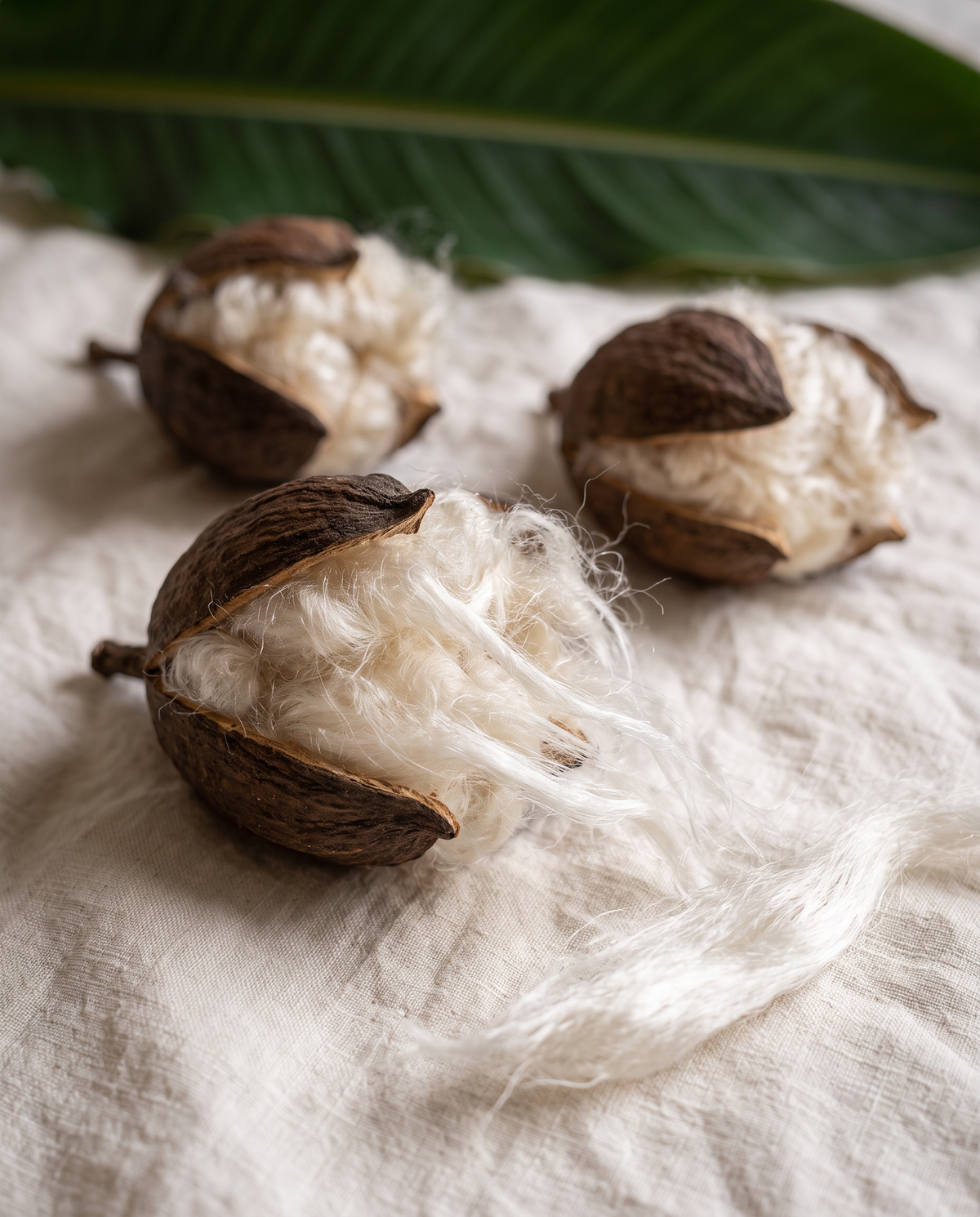
01 · The fill
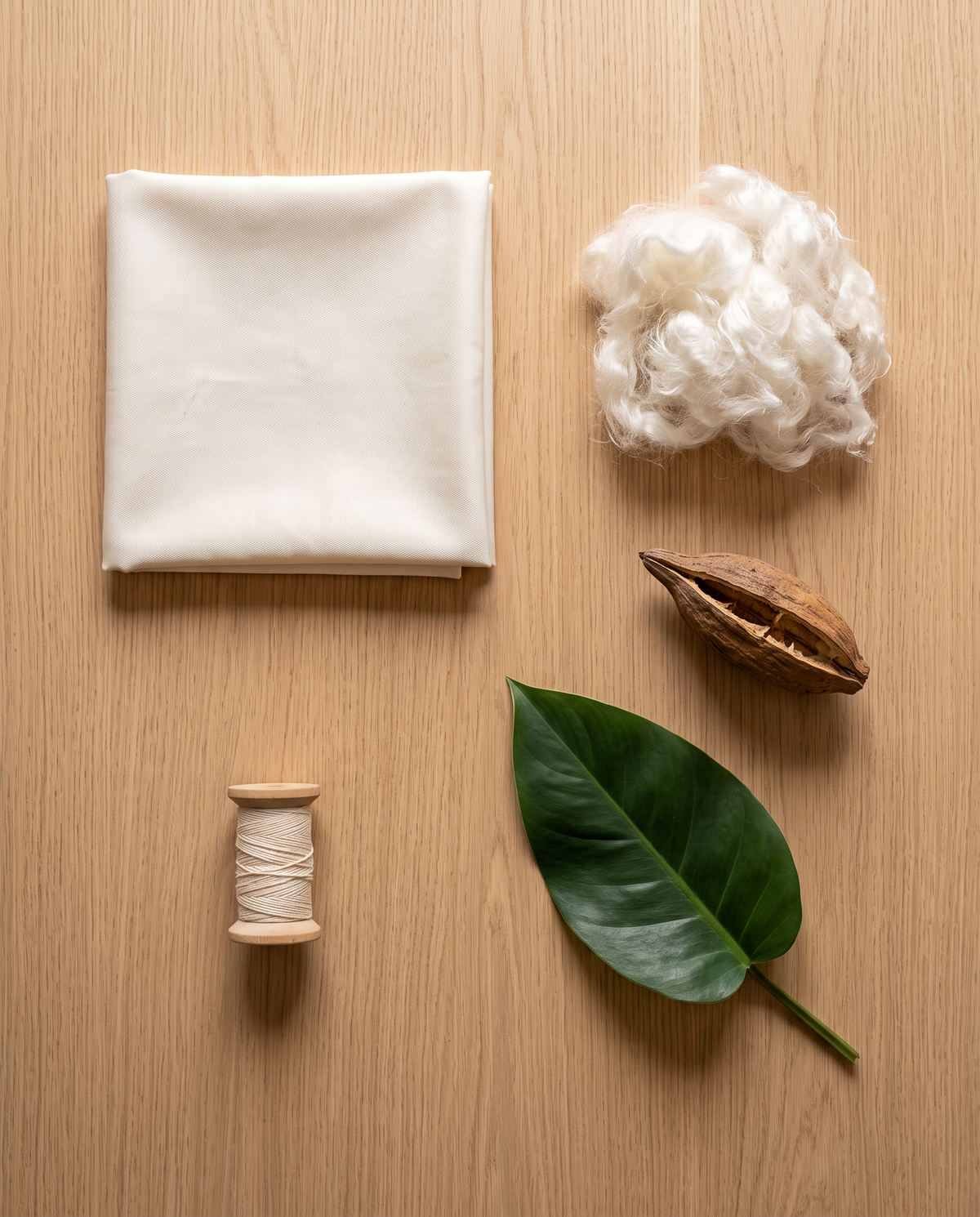
100% wild harvested kapok
Gathered from the seed pods of wild ceiba trees rather than farmed. Silky to the touch and many times lighter than cotton, it shapes around your head and neck instead of pushing back.


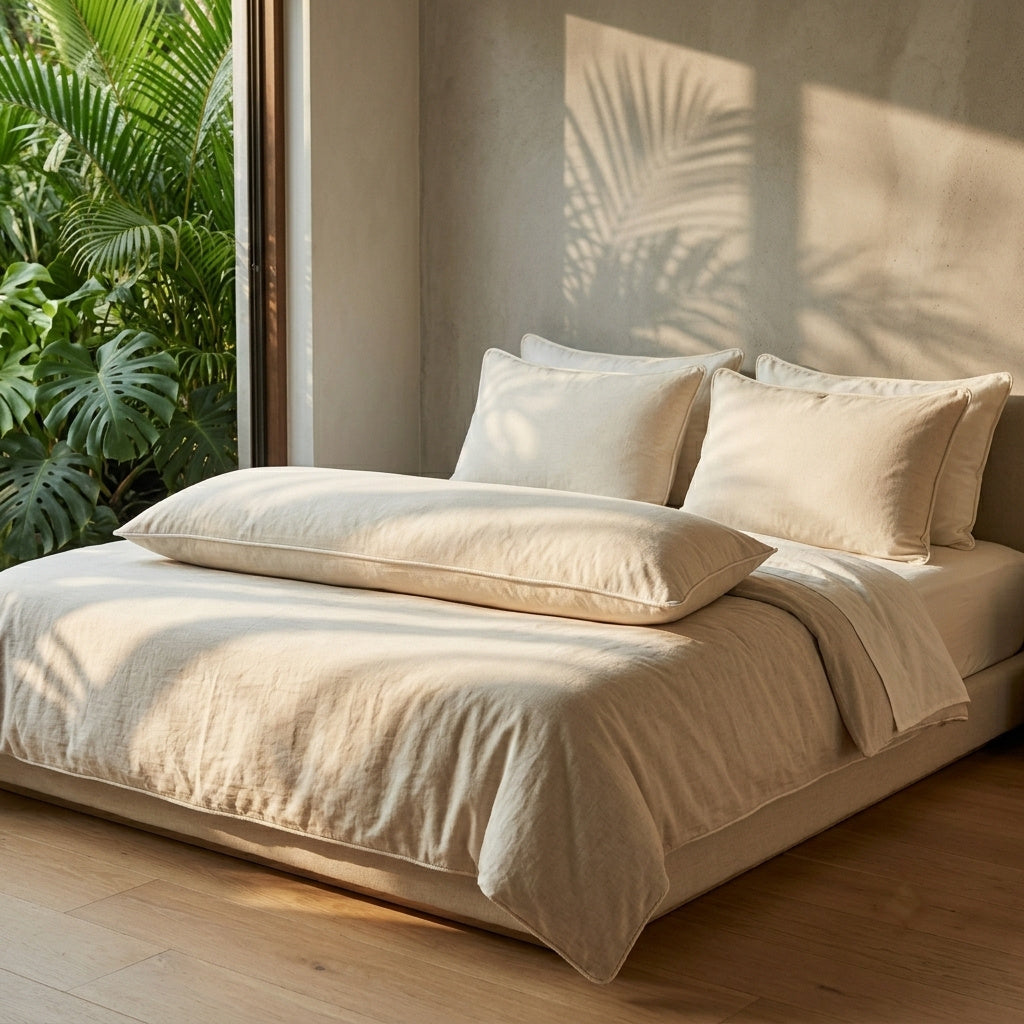
The way sleep was meant to feel.™
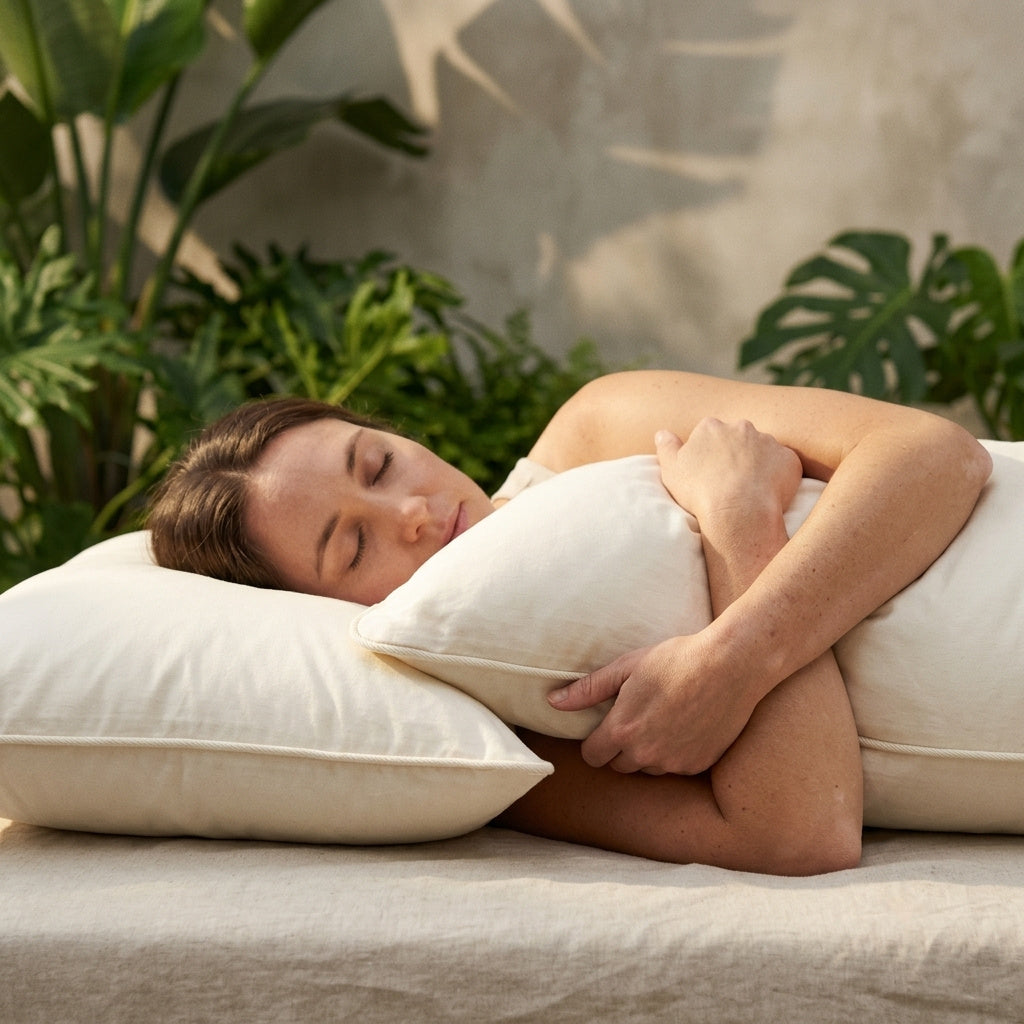
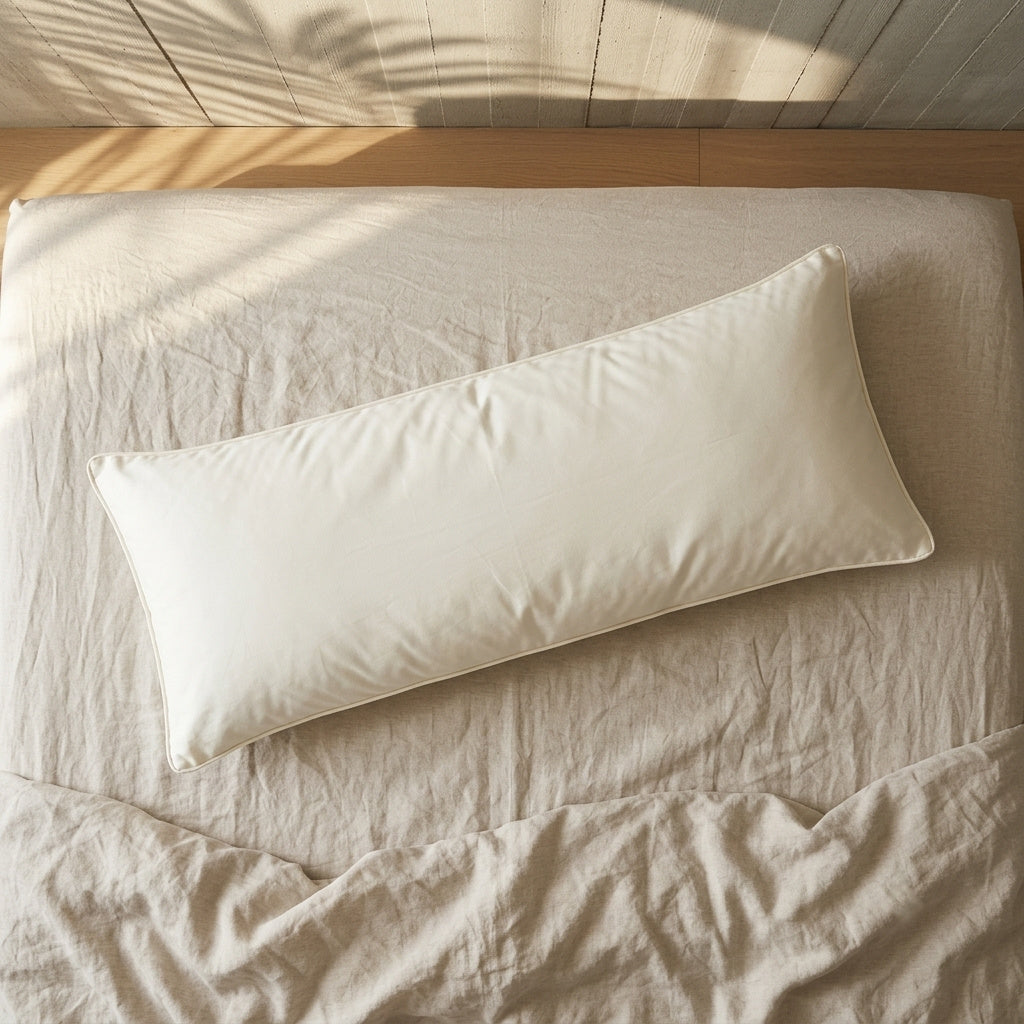
Something to hold onto all night: 54 inches of silky, wild harvested kapok that bends along your side, between your knees or into your arms, and stays where you put it.
Kapok is the fiber inside the seed pods of the ceiba tree. Each strand is hollow, mostly air, and wrapped in a natural waxy coat that sheds moisture, so the fill stays light, dry and breathable against you. It's naturally hypoallergenic, with no feathers, foam or polyester anywhere inside, just kapok in a GOTS certified organic cotton sateen shell.
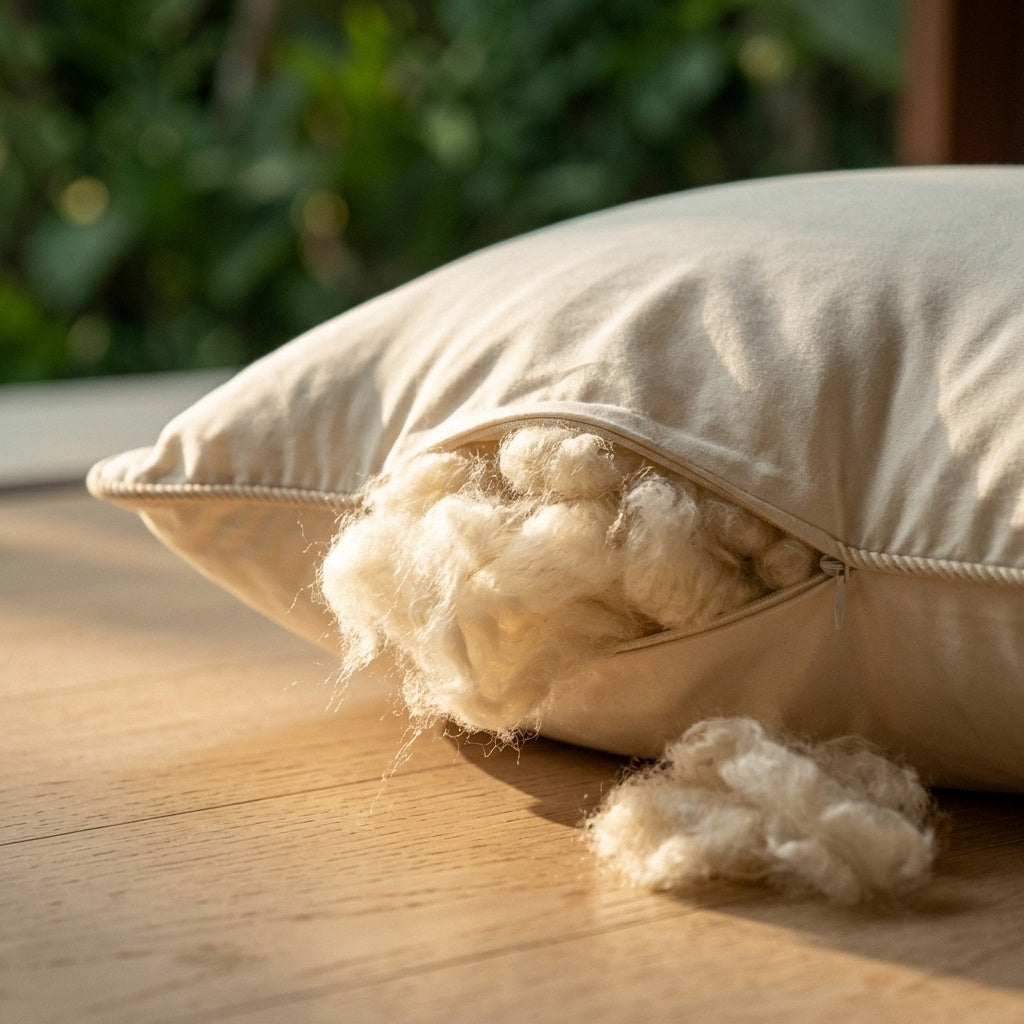
Unzip it to take fill out for a slimmer pillow, or push kapok toward the knee end for a fuller knee rest. Handcrafted in the USA, with 60 nights to decide.
A hidden zipper lets the cover slip off for machine washing. The matching cotton sateen cover is sold separately.
Kapok settles with nightly use. Each bag contains 3 lb of loose fill. Add small handfuls until the loft feels right, and save the remainder for later. Most people use a few handfuls at a time.
The fill is 100% wild harvested kapok, gathered from the seed pods of standing ceiba trees in Indonesia. The shell is 300 thread count GOTS certified organic cotton sateen, certified by Oregon Tilth, license GOTS-10229. The washable outer cover, sold separately, is the same GOTS certified fabric. Read what the certification covers.
The optional outer cover, sold separately, zips off for washing. Follow its care label. The included shell holds the kapok fill behind a hidden zipper. The kapok fill itself never goes in the wash. If the inner pillow needs freshening, spot clean it and set it in the sun for an afternoon. Fluff the pillow to redistribute the fill. If you prefer more loft, add a little MAREA Kapok Refill at a time. See the full care guide.
Pillows have a 60 day sleep trial with a free US return label and a full refund of the pillow price. Covers have separate unused-condition requirements and refill is final sale. Read the return terms.
What's inside
Most pillows are built from a long list of materials. This one is built from two, and you can open the zipper and see both for yourself.
01 · The fill
Gathered from the seed pods of wild ceiba trees rather than farmed. Silky to the touch and many times lighter than cotton, it shapes around your head and neck instead of pushing back.
02 · The shell
A smooth 300 thread count weave that feels cool and soft against your face, closed with a hidden zipper so you can take fill out or add refill kapok later. Certified by Oregon Tilth, license GOTS-10229.
Not inside
Certification
GOTS certified organic cotton sateen shell
The problem
You spend about a third of your life with your head on a pillow. Most people never think about what's inside it until they wake up stiff, flip it to the cool side for the fifth time, or notice it has gone flat again.
30.5%
of US adults sleep less than 7 hours a night.
18.1%
have trouble staying asleep most days or every day.
1 to 2 yrs
is how often experts say to replace a typical pillow. Polyester, as often as every 6 months.
A pillow can't fix everything on that list. But most pillows are built to go flat, hold heat, and end up in the trash. We built one you can set to your own body and keep for years.
Sources: CDC National Center for Health Statistics, Data Brief 559 (2024). Sleep Foundation, How Often Should You Replace Your Pillows?
Make it yours
The fill is loose, so the pillow goes where you need it. Push more kapok toward one end for a fuller knee rest, or take some out for a slimmer pillow to hug.
Run it along the front of your body, from under your chin to past your knees. Your top arm and top leg both have somewhere to rest, so you are not reaching for a second pillow at 2am.
Lie on your side and run it from your waist down, with your top knee resting on it. Your knees stay apart and your top leg is supported instead of dropping onto the bottom one.
Bring it up to your chest and wrap your top arm around it, with the lower end under your top knee. Your arm and shoulder rest on it instead of falling forward.
Shaping tip. Open the zipper and push kapok toward the knee end for a fuller knee rest. The full side sleeper setup
Why kapok
Your pillow is where dust mites and allergens collect, a few inches from your face for eight hours a night. Kapok handles that the way the plant made it: a hollow fiber wrapped in a natural waxy coat that sheds moisture instead of soaking it up.
Pure plant fiber. No feathers, no down and no dander, the usual allergens inside a traditional pillow.
Every kapok fiber carries a natural waxy coating that repels water, so humidity doesn't soak into the fill and sit there.
Dust mites and mold both depend on damp. A fill that stays dry gives them far less to work with, and the zip off cover washes away the rest.
Kapok is about 80 percent air by volume, so warmth moves through the fill instead of building up under your head.
No memory foam, latex or polyester fill, so there's no new foam smell to air out. Fluff it when it arrives and it's ready.
Kapok from the seed pods of the ceiba tree and GOTS certified organic cotton sateen around it. Nothing from an animal anywhere in the pillow.
Allergies vary from person to person, and a pillow isn't a medical treatment. Kapok, allergies and dust mites
Compare
Compared by fill, the part you actually sleep on.
| Feature | MAREA kapok | Memory foam | Polyester fill |
|---|---|---|---|
| Fill | 100% wild harvested kapok | Solid or shredded foam | Polyester fiberfill |
| Plant based | Yes | No, foam is made from petroleum | No, polyester is made from petroleum |
| Feathers or dander | NonePure plant fiber | None | None |
| Moisture | Natural waxy coating sheds it | Dense foam can hold heat close | Varies by fiber |
| Set your own height | YesThrough a hidden zipper | Only on shredded, zippered models | Check for an access zipper |
| Top it off later | YesWith a 3 lb refill bag | Varies by brand | Varies by brand |
| Size | Straight, 20 × 54 in | Varies by model | Varies by model |
| Certification | GOTS certified organic cotton sateen shellLicense GOTS-10229, Oregon Tilth | Varies by brand | Varies by brand |
| Sleep trial | 60 nightsFree US return label | Varies by brand | Varies by brand |
I spent five years sleeping in other people's beds, all over the world. The pillow decided whether I slept. I couldn't buy the one I wanted, so I made it.
Anthony, founder of MAREA Sleep
Complete it
Add a cover or refill to a pillow order and 15% comes off it at checkout. No code needed.

From $129
The same fill under your head. Standard, Queen and King.
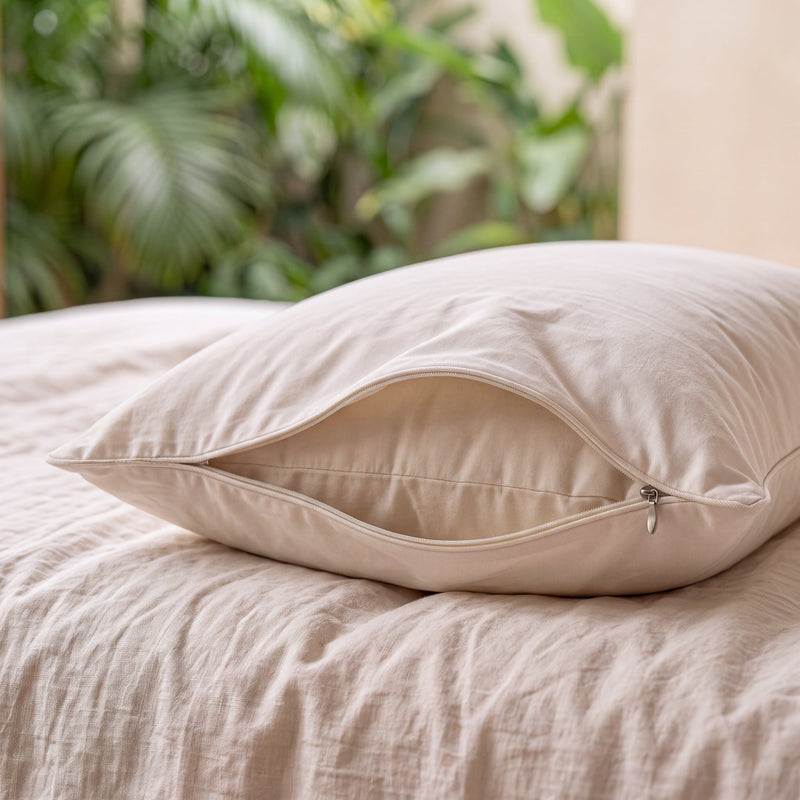
From $49
The washable layer. Organic cotton sateen, zips off for the machine.
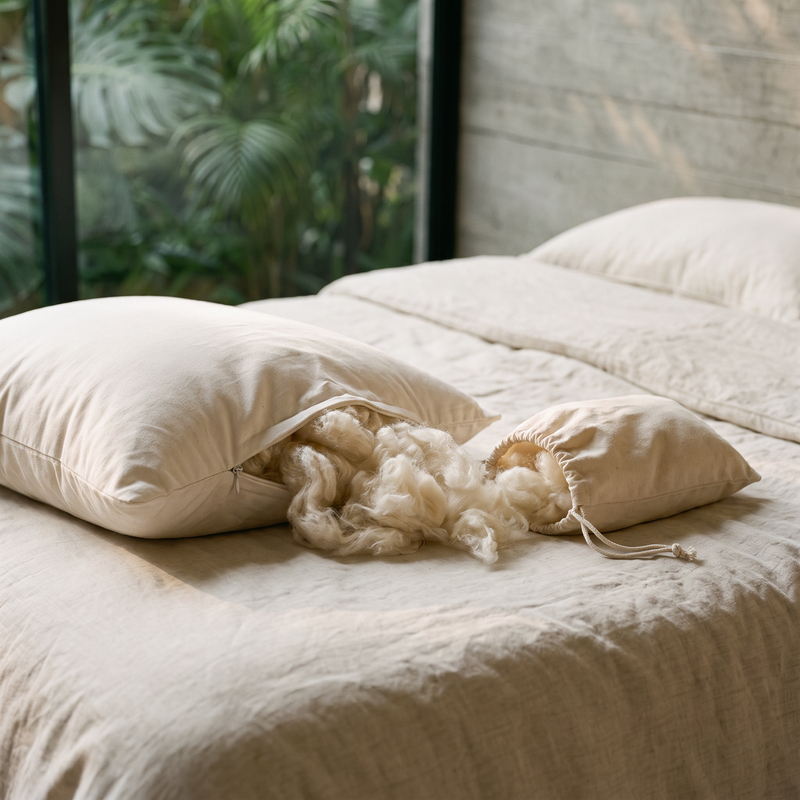
$45
3 lb of loose kapok for raising or restoring your loft.
Questions
Something not covered here? Ask me directly. Or read the full FAQ.
Kapok guides
54 inches long and 20 inches wide. For someone around average height, that runs from about the collarbone to past the knee.
A kapok pillow is filled with wild harvested kapok fiber, a silky plant fiber gathered from the seed pods of the kapok tree. Kapok fibers are hollow and mostly air (about 77 percent porosity by one published measurement), so the fill has a soft, lofty feel and is plant based. MAREA sews this fill into a GOTS certified organic cotton sateen shell with a hidden zipper; a matching removable, machine washable cover is sold separately. Not every pillow sold as kapok is all kapok; here is how pure fill compares with the blends, and here is what kapok actually is.
Our kapok is gathered from the seed pods of standing ceiba trees in Indonesia rather than grown as a farmed crop. The trees keep standing and produce again season after season. What wild harvested means.
Yes. The shell around every MAREA pillow is 300 thread count GOTS certified organic cotton sateen, the same fabric as our zip off cover. Certified by Oregon Tilth, license GOTS-10229. GOTS covers the organic fiber, how the fabric is processed and which chemicals are allowed at each step. The kapok inside is wild harvested. What GOTS covers.
Yes. The hidden zipper lets you take fill out for a slimmer pillow, add refill for a fuller one, or push kapok toward one end, like the knees. Our loft guide walks through finding your height.
Kapok is light enough to float, so a little technique helps. Work over your bed, pull the fill out in whole clumps rather than loose pinches, and hold the fabric taut away from the zipper as you close it so the teeth catch cloth instead of fiber. Keep what you removed in a sealed bag and add it back any night you want more height. About two minutes, start to finish.
Four sizes: Standard at 20 x 26 inches, Queen at 20 x 30 inches, King at 20 x 36 inches, and the Body Pillow at 20 x 54 inches.
Size sets the width, not the height. Most sleepers on a queen bed choose the Queen, and a king bed looks best with two Kings. Side sleepers who hug a pillow or want hip and shoulder alignment should consider the Body Pillow. Height comes from the fill, which you adjust. Side sleepers can also read why side sleeping needs a different loft.
Choose size by the length you prefer and your pillowcase fit. King is the longest size. Adjust the fill for your shoulder width and mattress, and if you want more height, add small handfuls of kapok from a refill bag until it fits you. See our loft guide.
Keep the filled pillow dry and spot clean the shell. The matching body pillow cover, sold separately, zips off and is machine washable. The full routine is in How to Wash a Kapok Pillow, and our care guide covers the rest.
Kapok is a plant fiber, so there are no feathers, down or dander in the fill. Each fiber has a natural waxy coating that sheds moisture, and dust mites and mold both depend on damp, so a dry fill gives them less to work with. Wash the zip off cover regularly for the rest of the routine. More on kapok and allergies.
Not really. Kapok is a very light fiber for its volume, so even a long pillow is easy to move around in bed.
At 20 inches wide it sits along your side rather than across the bed. If space is tight, take some fill out for a slimmer pillow.
Kapok is a light plant fiber fill, hollow and mostly air (about 77 percent porosity by one published measurement), and the Sleep Foundation describes memory foam as notorious for trapping heat. Why kapok sleeps cool.
Vegan, yes: the fill is 100% kapok plant fiber and the shell is GOTS certified organic cotton sateen, with no feathers, down or foam. The zip on cover is machine washable, so the layer closest to you stays fresh. More on kapok and allergies.
A long time, because you can top it off. Kapok settles with nightly use; fluff it to redistribute the fiber, and add refill kapok whenever you want more loft instead of replacing the pillow.
Every MAREA pillow is designed in Hawaii and handcrafted in the USA from wild harvested kapok fiber and GOTS certified organic cotton sateen.
Sleep on it for up to 60 nights from delivery. If it isn't right for you, or you'd like a different size, contact us. We'll send a free US return label and refund the full price of your pillow. Read the return terms.
Shipping to the 48 contiguous states and Washington, DC is free on orders of $80 or more. Orders below $80 ship for $8. Alaska, Hawaii and US territories are charged the carrier rate shown at checkout.
Yes. Add the matching organic sateen cover or a kapok refill to your pillow order and 15% comes off it automatically at checkout. Buying two or more pillows takes 15% off the pillows as well. No code needed.
