

I folded my pillow in half every night for about fifteen years and never once thought of it as a problem. That was just what you did. Fold it, punch it, jam a hand under it around 2am, wake up with it on the floor. I assumed everyone did this.
They don't. Back sleepers don't. Stomach sleepers really don't. It's a side sleeper thing, and once somebody explained why, I couldn't unsee it.
The gap
Lie on your back. The space between the back of your head and the mattress is tiny. An inch or two. On your stomach it's basically nothing.
Now roll onto your side. That space is suddenly as wide as your shoulder. Five inches, seven, somewhere in there depending on how broad you are and how much your mattress lets your shoulder sink.
So side sleepers open up the biggest gap of anyone, and it's the gap that varies most from person to person. A pillow made at one fixed height can't fill that for everybody. It fills it for the average of everybody, which is a person who doesn't exist.
That's it. That's the whole thing. Fifteen years of folding, explained.
It is also why hunting for the best pillow for side sleepers usually ends in disappointment. The answer is not a brand or a firmness. It is a height, and it is yours.
So how much loft do you need?
Enough that your head sits level. Not propped up, not sagging down. Level.
I know that's less satisfying than a number, but I'm not going to give you a number, because anyone who does is guessing. If you've got wide shoulders and a firm mattress you need considerably more than someone narrow on a soft one. Same person, different bed, different answer.
What actually works is looking at yourself. Lie down the way you really sleep, not the way you'd pose for a photo, and get someone to take a picture from the front. Prop your phone up if you're on your own.
Head tipping down toward the mattress? Not enough. Chin pushed up toward the ceiling? Too much. When the line from the back of your head through your neck looks straight, stop. That's yours.
It takes about ninety seconds and it beats every chart on the internet.
Why the pillow you own can't be fixed
When you buy a pillow labelled firm, or high loft, you're buying somebody's guess about your shoulders. Sometimes the guess lands. Often it doesn't, and there's nothing you can do, because the thing is sewn shut.
Hence the folding. And the stacking, and the punching, and the second pillow wedged underneath. Those are all workarounds for a product that won't budge, and none of them survive the night, because the pillow just goes back to being what it was built as.
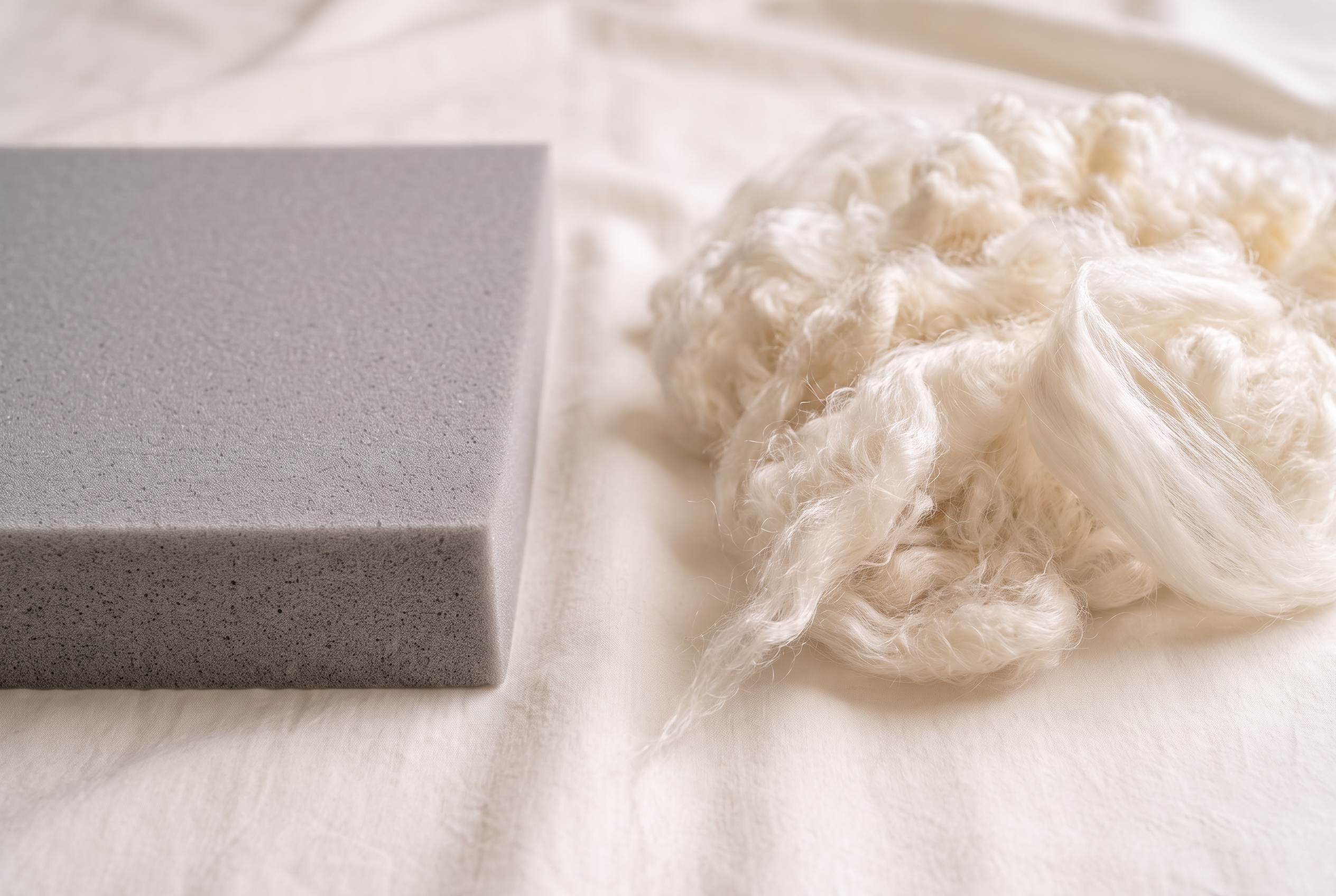
Shredded foam got halfway there. Those open up and you can pull stuff out, which was a genuinely good idea. The catch is what you're pulling out. Foam runs warm, it has that smell for the first few weeks, and it packs down over time in a way you can't undo. I've written up the full comparison between kapok and memory foam if you want the detail on that.
Dialling in a kapok pillow
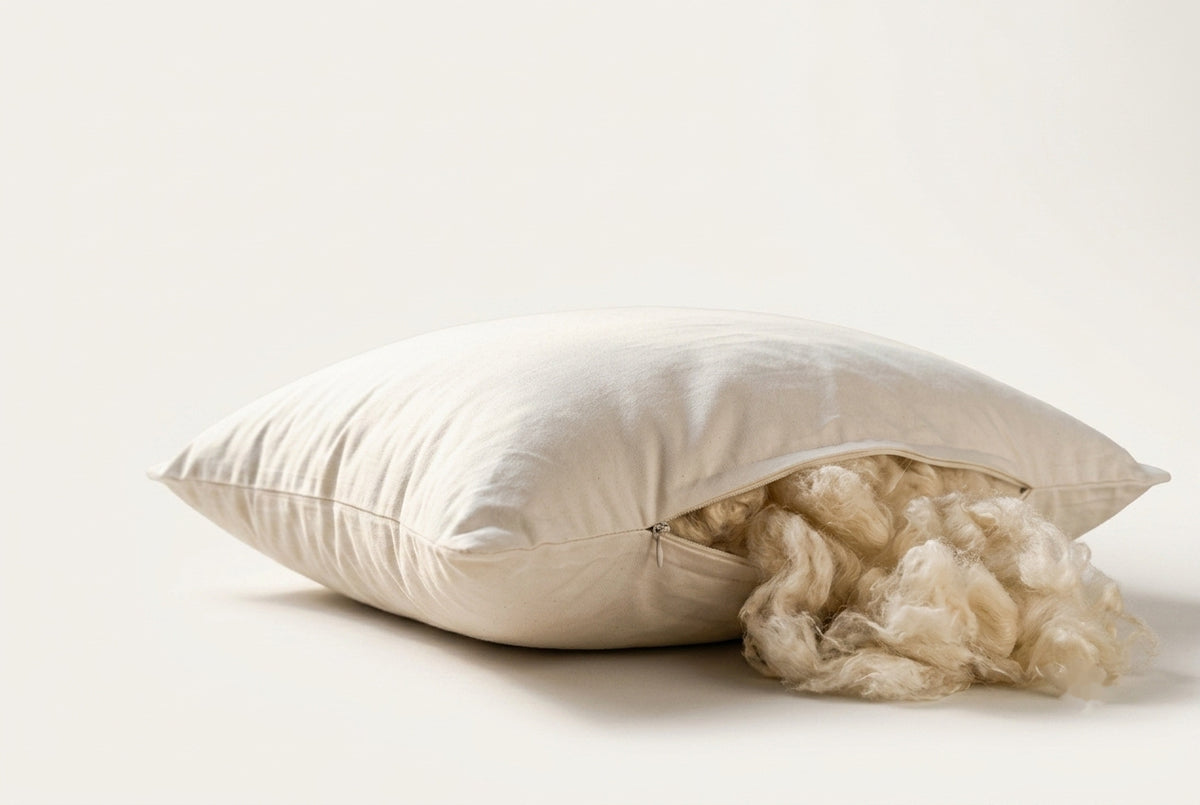
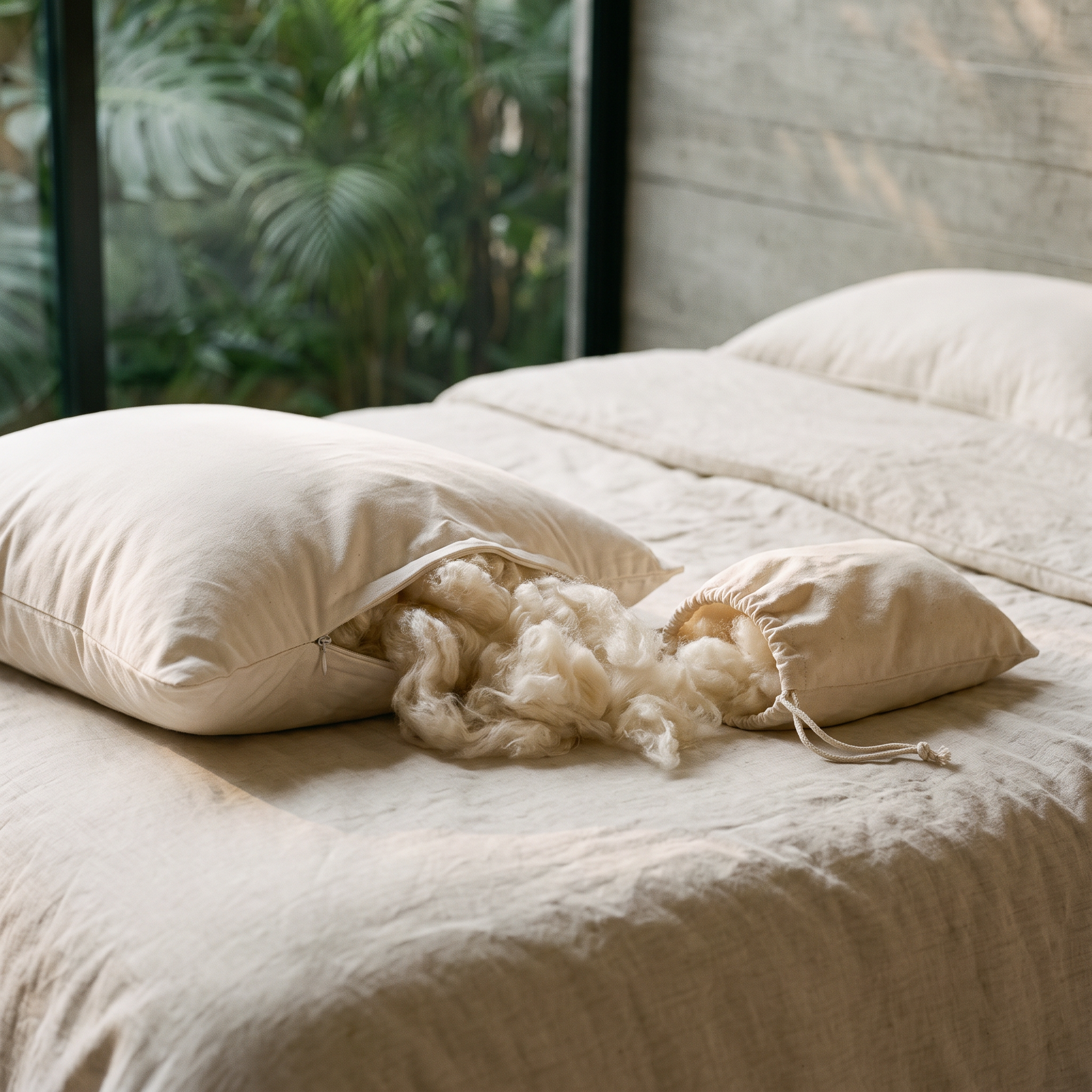
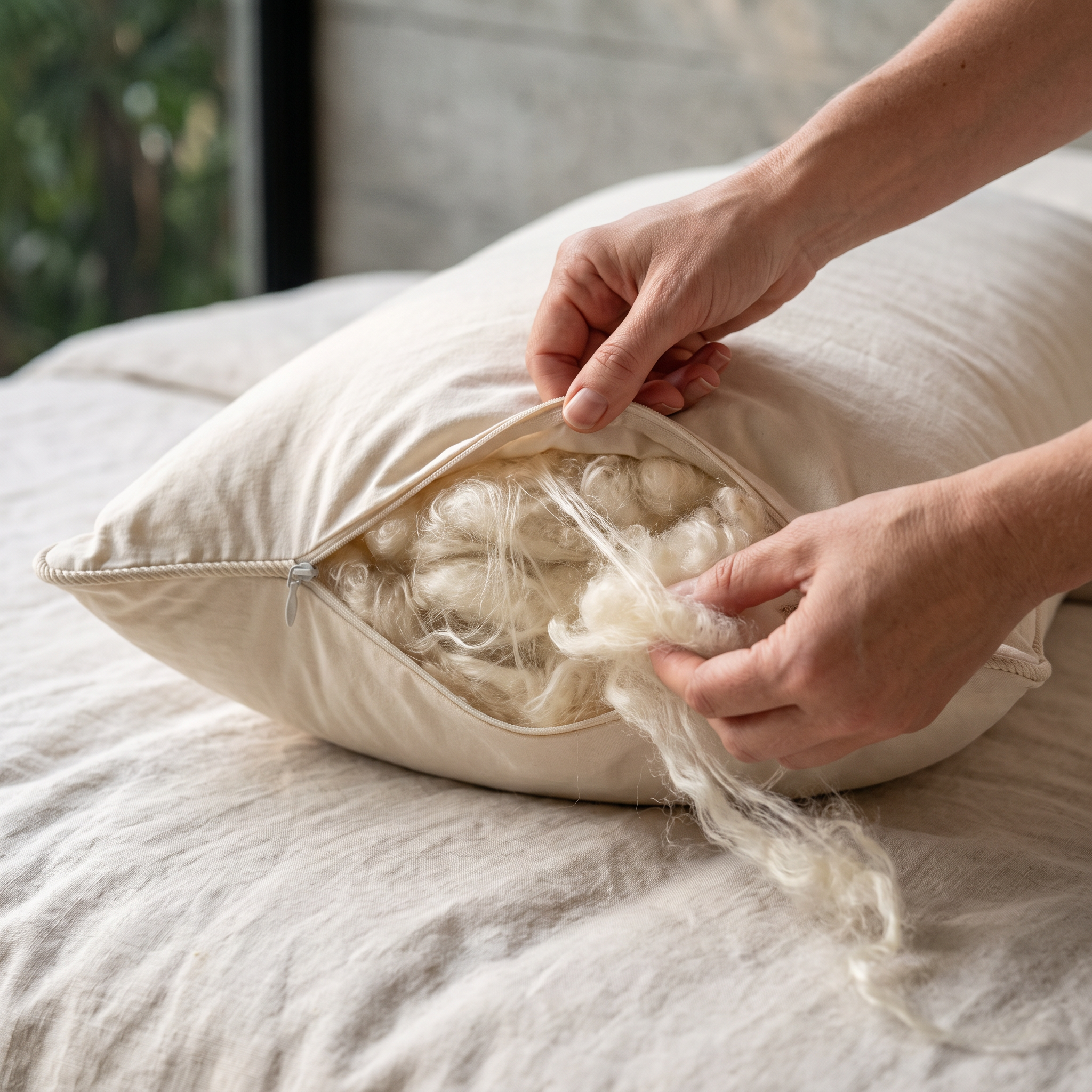
Ours opens at the short end, corner to corner, so you can take fill out or put it back whenever. Kapok is a silky fibre from the seed pods of the wild ceiba tree, and it comes out in soft handfuls instead of crumbs, so this is a lot less messy than it sounds. Still do it over a bed, though.
The method, and it matters that you go slowly:
- Sleep on it as it arrives. Two or three nights minimum. You need a baseline, and any new pillow settles a bit in the first week regardless.
- If your head's tipping up, unzip it and take out one handful. One. Not a fistful, not a scoop.
- Zip it, plump it back into shape, sleep on it another two nights.
- Repeat until your head sits level.
- Keep what you took out. Bag it, put it in the closet. New mattress, bad shoulder, whatever, you might want it back.
One handful sounds absurdly cautious and it isn't. Everyone overshoots. Taking loft out takes ten seconds and putting it back is easy, so it's worth erring on the side of not enough.
The gap further down
Sorting your head out is only half of side sleeping. There's a second gap and almost nobody talks about it.
Lie on your side and your top leg doesn't politely stay stacked on the bottom one. It slides forward and drops toward the mattress, and your hips turn with it. At the same time your bottom shoulder folds in under your own weight, so your top arm ends up with nowhere sensible to be. Two open spaces: one between the knees, one out in front of your chest.
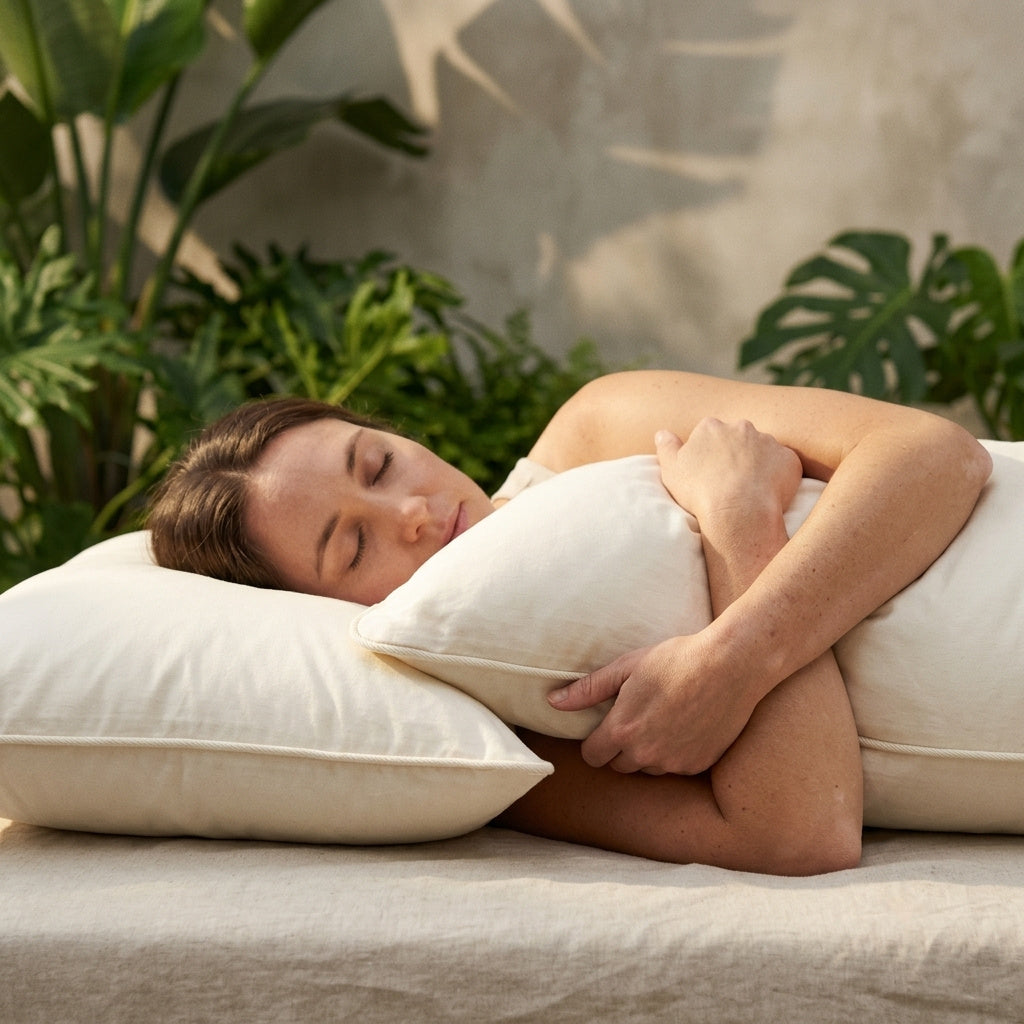
A body pillow fills both at once. That's all it does. It's not a comfort accessory, it's a spacer. Cultures across Asia worked that out centuries ago, which I traced in A Short History of the Body Pillow.
How I actually sleep
People ask, so: head on a regular MAREA pillow. The body pillow starts up under my chin, I hug it into my chest so my top arm has somewhere to land, and it runs down between my knees. One pillow doing both jobs. The step by step version, including how to set its loft, is in How to Sleep With a Body Pillow.
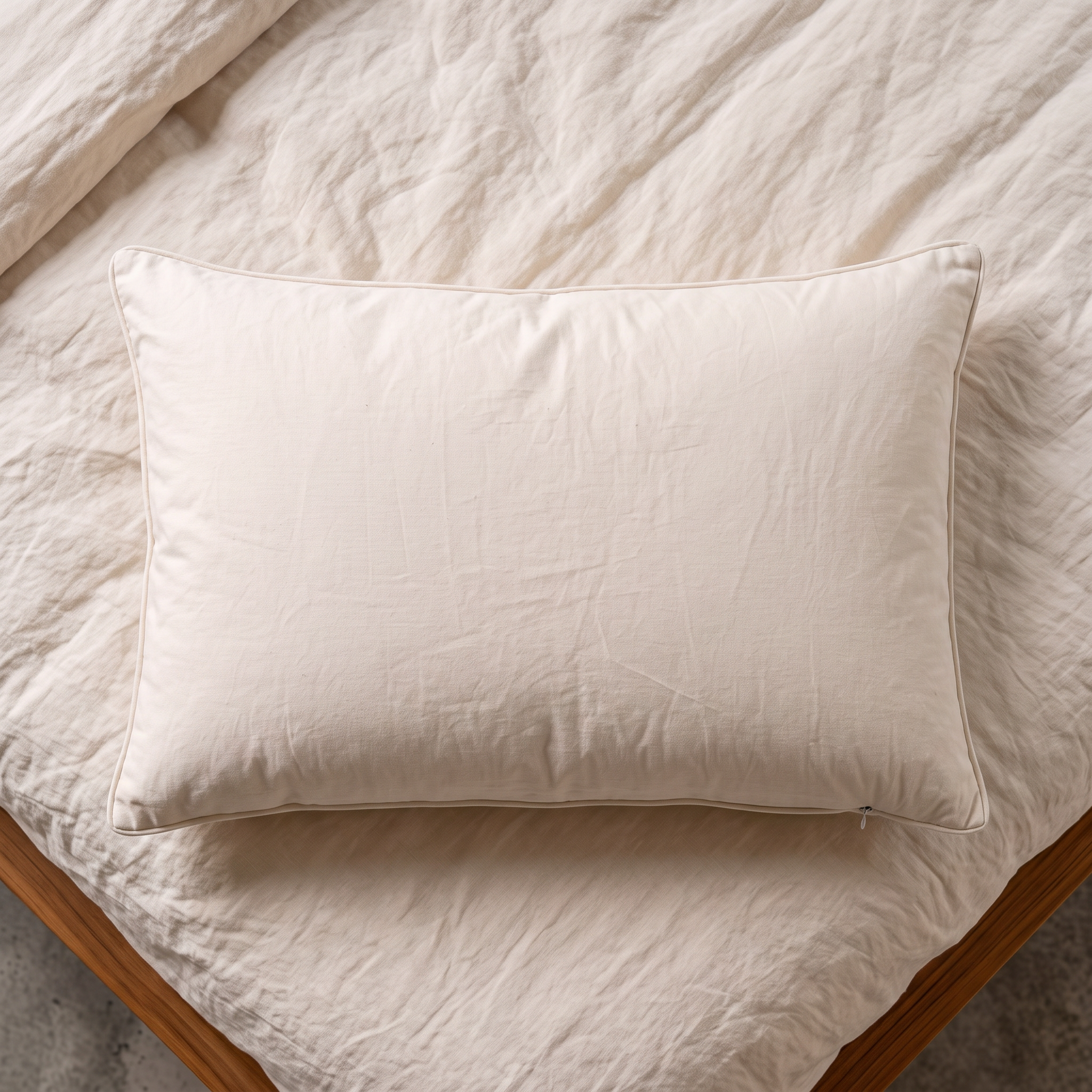
Ours is 20 by 54 inches, which is long enough to reach from your chin past your knees and short enough that it isn't taking over the bed. Once it's filled, the kapok rounds out the ends into a soft, full shape, like every hand stuffed pillow.
I'm on a king, so there's plenty of room, and it works great on a queen too. At 54 inches it covers chin to knee and still leaves space for whoever you share the bed with. If you're shopping around, I put the kapok body pillows side by side here.
What I'd look for
It has to open. If you can't change the fill, you're stuck with a stranger's guess about your shoulders, and you'll be back to folding within a month.
You want to be able to add fill, not just remove it. Loads of pillows let you take things out. Very few will sell you more of it when you've gone too far or the loft's settled.
Give it a proper window. Two nights tells you nothing. Two weeks tells you almost everything.
And know what's in it. You've got your face on the thing for roughly a third of your life. Being fussy about that seems reasonable to me. The longer version of this list is How to Choose a Kapok Pillow.
Questions I get asked
Firm or soft for side sleepers? Wrong question. Firmness and loft aren't the same thing. Height is what matters. A pillow can feel soft and still hold plenty of loft, which is more or less the point of kapok.
Is a kapok pillow good for side, back and stomach sleepers? Yes, because the loft is not fixed. Side sleepers leave it full or close to it. Back sleepers take a handful or two out. Stomach sleepers keep removing until it is nearly flat, which kapok does without going hard. Same pillow, three heights. More on the best pillow for back sleepers and pillows for stomach sleeping.
Which size? Queen suits most people. King if you shift around a lot and want somewhere to land. Standard if your bed's smaller or you like a pillow that stays put.
How long is the body pillow? 20 by 54 inches. Long enough to run from under your chin to below your knees, which is the whole job.
Body pillow and a normal pillow together? Yes. That's the setup. Regular pillow for your head, body pillow for everything under it.
What if I pull out too much? Put it back. That's the whole advantage. If you binned it or you want more loft than it shipped with, loose kapok comes in 3 pound bags.
How long till I know? Two weeks, give or take. The 100 day sleep trial is deliberately much longer than that, because you shouldn't have to decide under pressure.
Start here
If you've never had a pillow you could actually change, pick the size that fits your bed and plan on spending the first couple of weeks dialling it in. That's the fun part. A pillow that fits your shoulders isn't something you find on a shelf. You make it yours.
And you stop folding.
Anthony
Founder, MAREA Sleep
If you find the Sleep Journal useful, you can add MAREA as a preferred source on Google. This is an optional preference for your own Google experience.





Leave a comment
This site is protected by hCaptcha and the hCaptcha Privacy Policy and Terms of Service apply.