adjustable pillow

Kapok vs Memory Foam: What You're Actually Choosing Between

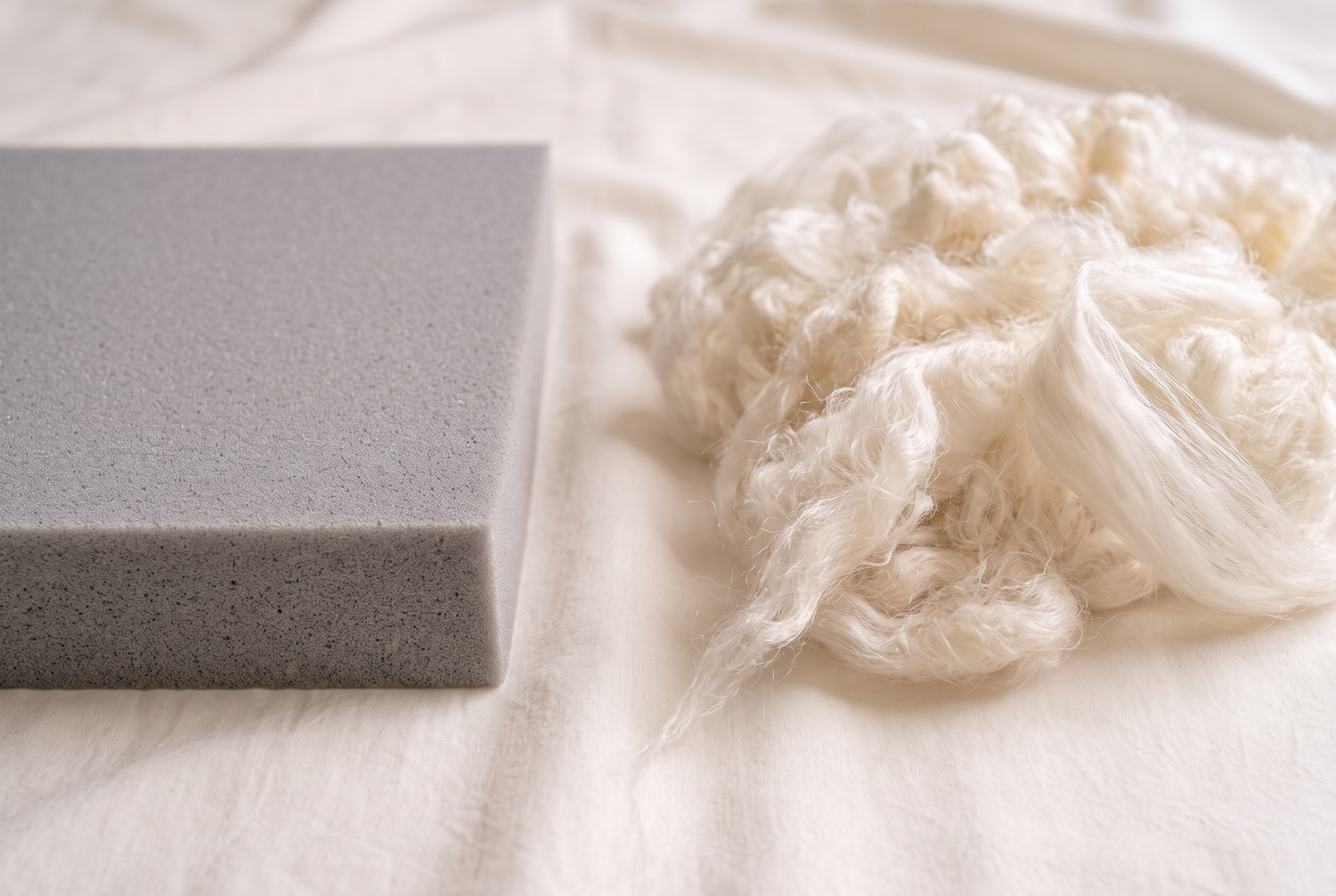
A grey block of memory foam beside a drift of silky ivory kapok fibre on undyed cotton, showing the difference between a solid synthetic foam and a loose plant fibre

Let me start with the thing a pillow company isn't supposed to say. Memory foam is good. It's popular for reasons that are real, not because everyone's been fooled. If you've got a foam pillow you love, I'm not here to tell you you're wrong.

But they're genuinely different materials that behave in genuinely different ways, and most comparisons you'll find online are written by whoever is selling one of them. So here's the honest version, including the parts where foam wins.

What's actually in each one

Memory foam is polyurethane. It gets made by reacting two things together, and it's worth knowing what they are.

The first is polyols, which are the bulk of the material and are usually petroleum derived. The second is diisocyanates, most commonly toluene diisocyanate or methylene diphenyl diisocyanate, TDI and MDI in the trade. Those two react together and that reaction is the foam. Alongside them go blowing agents to create the bubble structure, which in modern manufacturing is often just water, plus catalysts to control the reaction, and usually some form of flame retardant to meet flammability regulations.

That's a real manufacturing process and there's nothing shady about it. It's just chemistry, and it produces a material with properties you cannot get any other way. That slow sink under your head, where the foam softens with your body heat and slowly comes back when you move, is genuinely clever engineering.

Kapok has a shorter list. It's a fibre from the seed pods of the wild ceiba tree, which grows across Indonesia and other tropical regions. The pods split open on their own and drop, and the fibre gets collected by hand and cleaned. Nobody plants ceiba trees in rows. There's no farm, no harvest machinery, no crop, and no reaction step.

Under a microscope kapok fibres are hollow. That one detail explains most of how it behaves.

What is offgassing, actually?

Offgassing is the smell you get when you unbox a new foam pillow or mattress. It's volatile organic compounds, VOCs, evaporating out of the material into the air in your bedroom.

They're left over from manufacturing and they're an unavoidable part of making polyurethane foam. Even foams marketed as green have them. When researchers have actually measured what comes off new memory foam in a simulated bedroom, the compounds they picked up included things like acetone, toluene, chloromethane and 2-propanol.

The pattern is consistent. Emissions spike within about a day of unboxing, then fall away steadily over the following month. That's why the advice is always to unwrap it and air it out in a room you're not sleeping in.

Now the part I'm not going to spin. That same research modelled the airborne concentrations against established exposure benchmarks and found them below the line, and concluded that normal use was unlikely to pose a health risk. Certifications like CertiPUR-US, GREENGUARD and OEKO-TEX exist specifically to test foam for emissions, and they are legitimate standards, not marketing badges.

So I'm not going to tell you your foam pillow is poisoning you. Plenty of people online will. They're overstating it.

What I will say is that some people are noticeably sensitive to VOCs and report eye, nose and throat irritation while a new foam product is airing out. And that below a safety threshold is not the same thing as absent. If you'd rather have nothing evaporating off the thing your face is on, that's a preference, not paranoia, and you're allowed to have it.

Kapok has no offgassing phase because there's nothing to offgas. It's a plant fibre that got picked and cleaned. It arrives smelling faintly of nothing.

The whole ingredient list

Here's the comparison I'd actually make, and it's not about danger. It's about how long each list is.

A memory foam pillow: polyols, diisocyanates, blowing agents, catalysts, flame retardants, and whatever the cover is made from.

Ours: kapok, and organic cotton.

That's it. That's the whole thing. You don't have to believe anything about toxicity to find one of those lists easier to think about than the other.

Does memory foam sleep hot?

A solid block of foam holds heat. That isn't controversial and the foam industry doesn't really argue it. It's why you can buy gel infused foam, and cooling covers, and phase change fabric. Those products exist because there's a problem worth solving.

The reason is structural. Foam is a closed mass. Air doesn't move through it much, so the warmth your head puts in stays roughly where you put it. And because memory foam softens as it warms, it moulds tighter to you as the night goes on, which reduces airflow further. The thing that makes it feel supportive is the same thing that makes it feel warm.

Kapok is the opposite structure. Loose hollow fibres with air between them and air inside them. It doesn't trap heat the same way because there's nowhere for it to sit.

If you're not a warm sleeper, none of this may matter to you. If you are, you already know exactly what I'm describing.

Which one can you actually adjust?

Here's where foam gets full credit, because this is the comparison everybody gets wrong.

Shredded memory foam pillows are adjustable. You unzip them, you pull foam out, you put it back. Some of the best selling ones are made in the USA and come with a hundred night trial, which is longer than ours. If somebody tells you foam can't be adjusted, they haven't looked.

Solid one piece memory foam is the one you can't adjust. That's the contoured slab shape, and if the height is wrong for your shoulders you're stuck with it. So the real split isn't foam against kapok, it's adjustable against fixed, and both materials come in both forms.

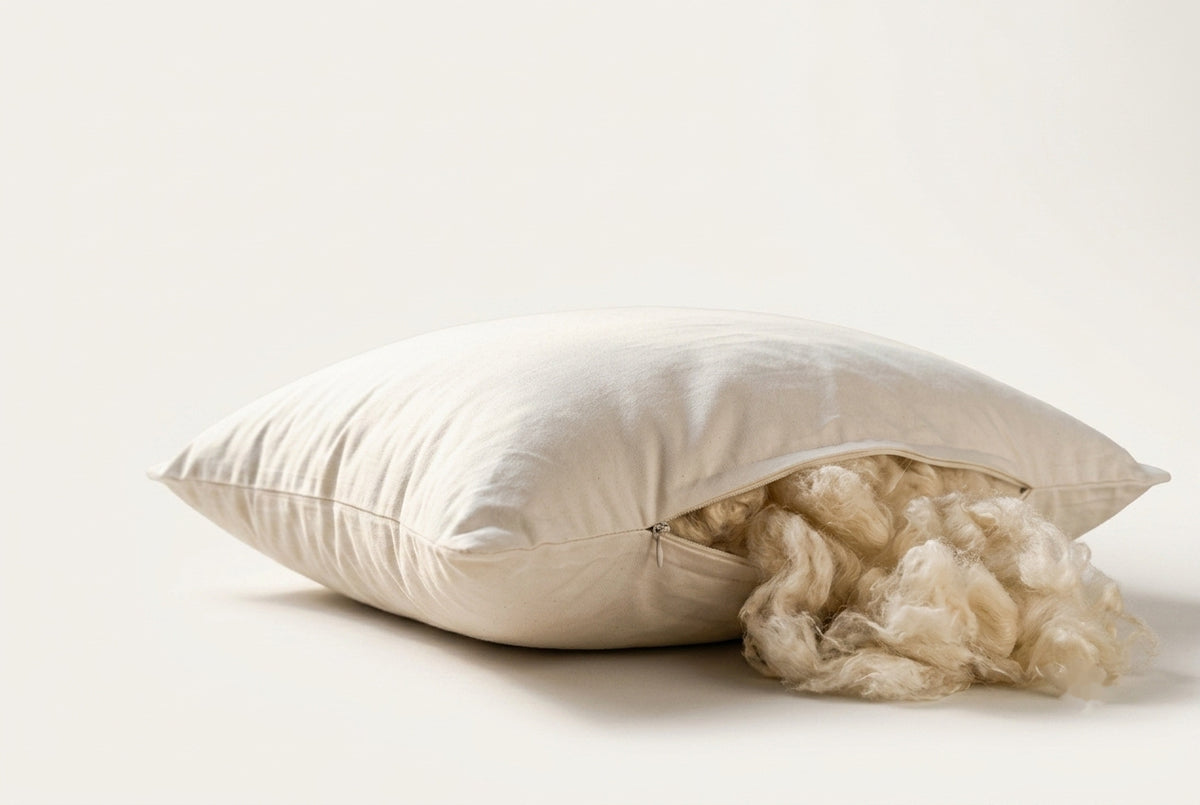
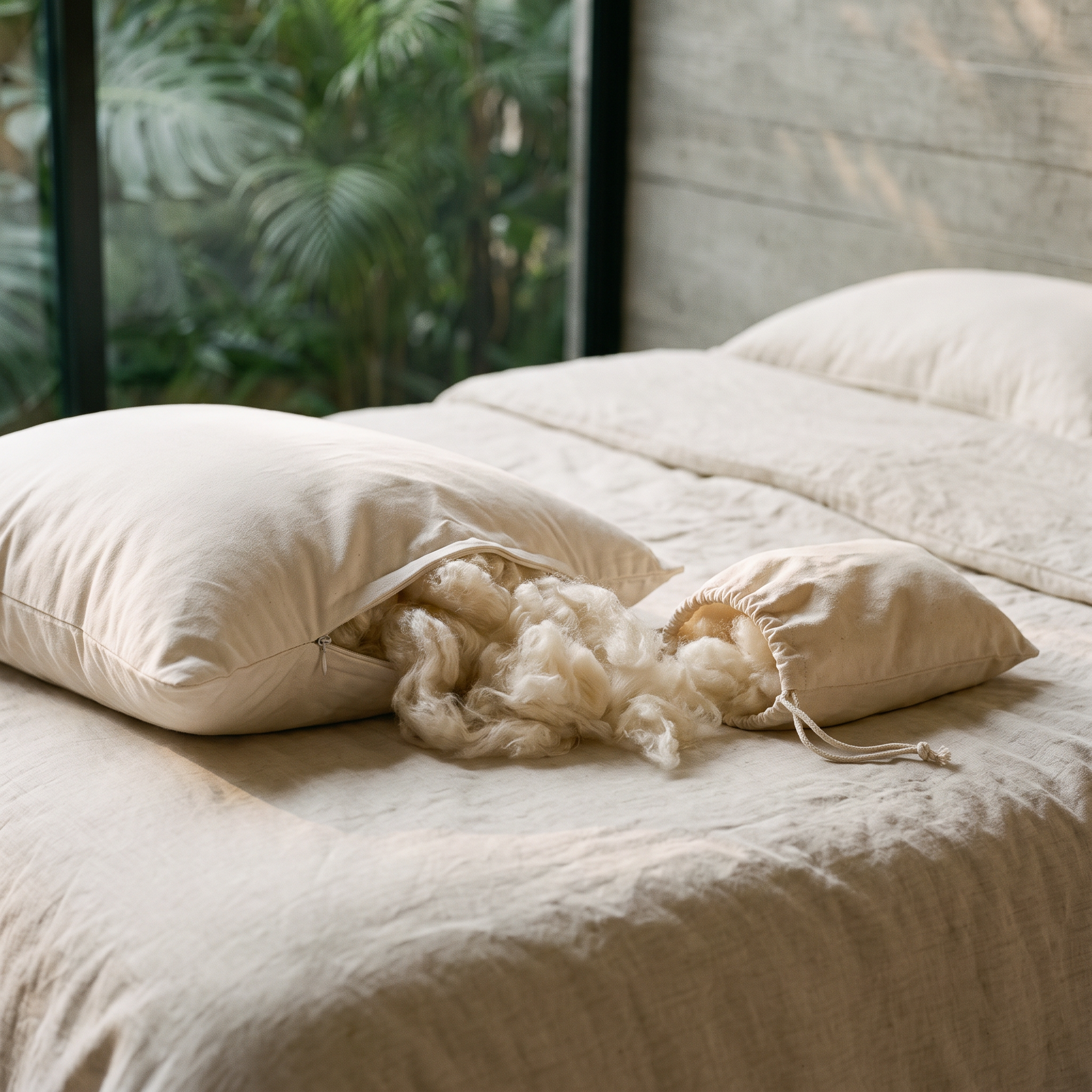
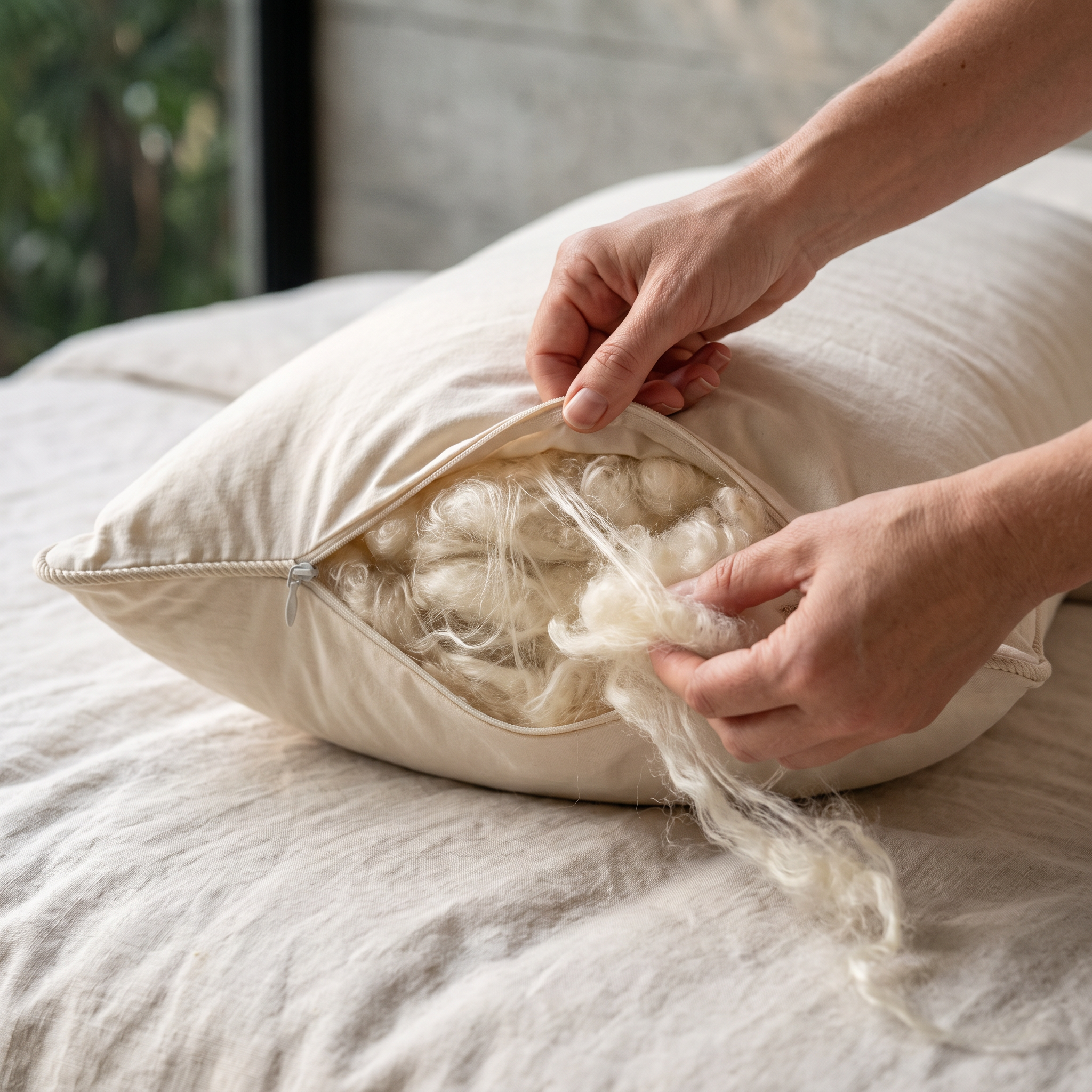
Ours opens at the short end, corner to corner, and the fill comes out in soft handfuls. Shredded foam comes out in crumbs. Practically speaking the handfuls are easier to control and much easier to put back, but I'd rather be accurate than dramatic about it. Both open.

What happens after two years

This is where the materials really separate.

Foam breaks down. Not dramatically, just gradually. The cell structure compresses under years of weight and heat and doesn't spring all the way back. Your pillow gets a little flatter and a little denser every year, and there is no way to reverse it. When it's done, it's done, and it goes in the bin.

Kapok settles too. I want to be straight about that, because anybody who tells you a natural fibre stays exactly as it was is selling you something. It compresses and the loft drops off over time.

The difference is what you can do about it. You unzip the pillow, add more kapok, and you're back where you started. We sell it loose in 3, 5 and 10 pound bags for exactly this. Same pillow, refilled, for years.

That's the actual argument for kapok, and it isn't really about comfort. It's that one of these is a consumable and one of these is repairable.

Can you wash them?

Neither, properly. This trips people up so it's worth saying plainly.

Memory foam should not go in a washing machine. The agitation tears the cell structure apart and it never dries properly in the middle.

Kapok fill shouldn't be machine washed either. It clumps and loses its loft.

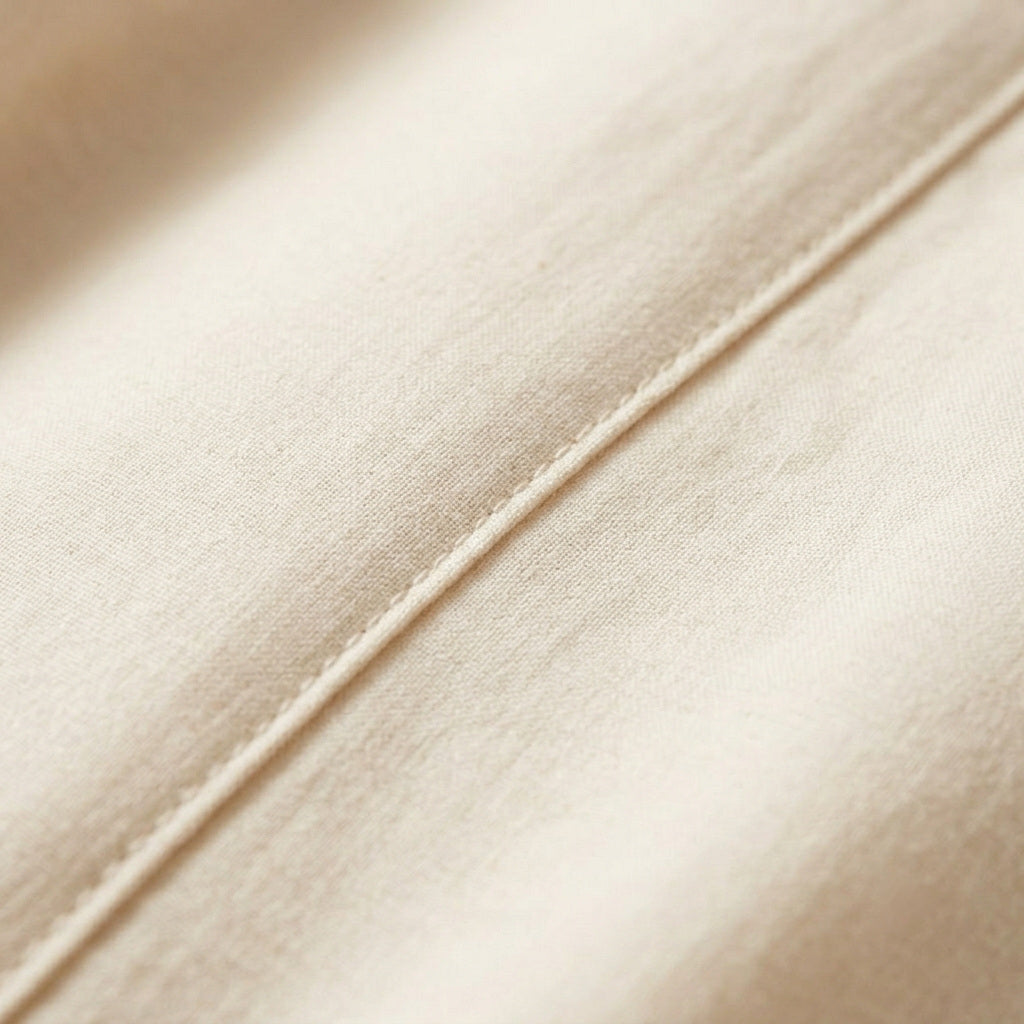
Which is why the cover matters more than people think. Ours zips off completely and machine washes cold, and it's GOTS certified organic cotton sateen. The certification covers the cotton, because cotton is a farmed crop with a supply chain you can audit. It doesn't cover the kapok, because wild trees dropping seed pods in a rainforest aren't a farm and there's nothing to certify.

So which should you buy?

Get memory foam if you want that specific slow moulding sink around your head. Nothing else feels like it. Kapok doesn't feel like it and never will. If that sensation is what you're after, buy foam and enjoy it.

Get kapok if you run warm, you'd rather skip the airing out period entirely, you care what the material is and where it came from, or you like the idea of topping a pillow back up instead of replacing it every couple of years.

And if you're on a solid contoured foam slab that's the wrong height for your shoulders, honestly, either adjustable option beats what you've got. That's the bigger upgrade.

Questions I get asked

Is kapok firmer or softer than memory foam? Different, not firmer or softer. Foam sinks slowly and holds the shape of your head. Kapok gives immediately and springs back. Both can be set high or low, it's the feel getting there that differs.

How long does memory foam offgas for? The smell is strongest in the first day or so and fades over roughly a month, though most of it goes in the first week. Airing it out in a spare room speeds it up.

Is memory foam bad for you? Not a claim I'm going to make. The emissions research found levels below exposure benchmarks, and certified foam is genuinely tested. What I can tell you is what's in ours and where it came from, and let you weigh it yourself.

Is kapok a good down alternative? It's the closest plant fibre to down I've come across. Light, silky, lofty, and no animals involved. That's most of why we use it.

Does kapok go flat? It settles, yes. Then you top it up through the zipper and it doesn't stay flat. That's the difference between settling and wearing out.

I'm a side sleeper, does that change the answer? It changes what height you need more than what material. I've written that one up separately, because side sleeping opens a bigger gap than any other position and that's the thing most pillows get wrong.

How do I know which suits me? Sleep on it for two weeks. Not two nights. Our 60 day sleep trial exists because that's how long these decisions actually take.

Anthony
Founder, MAREA Sleep

Reading next

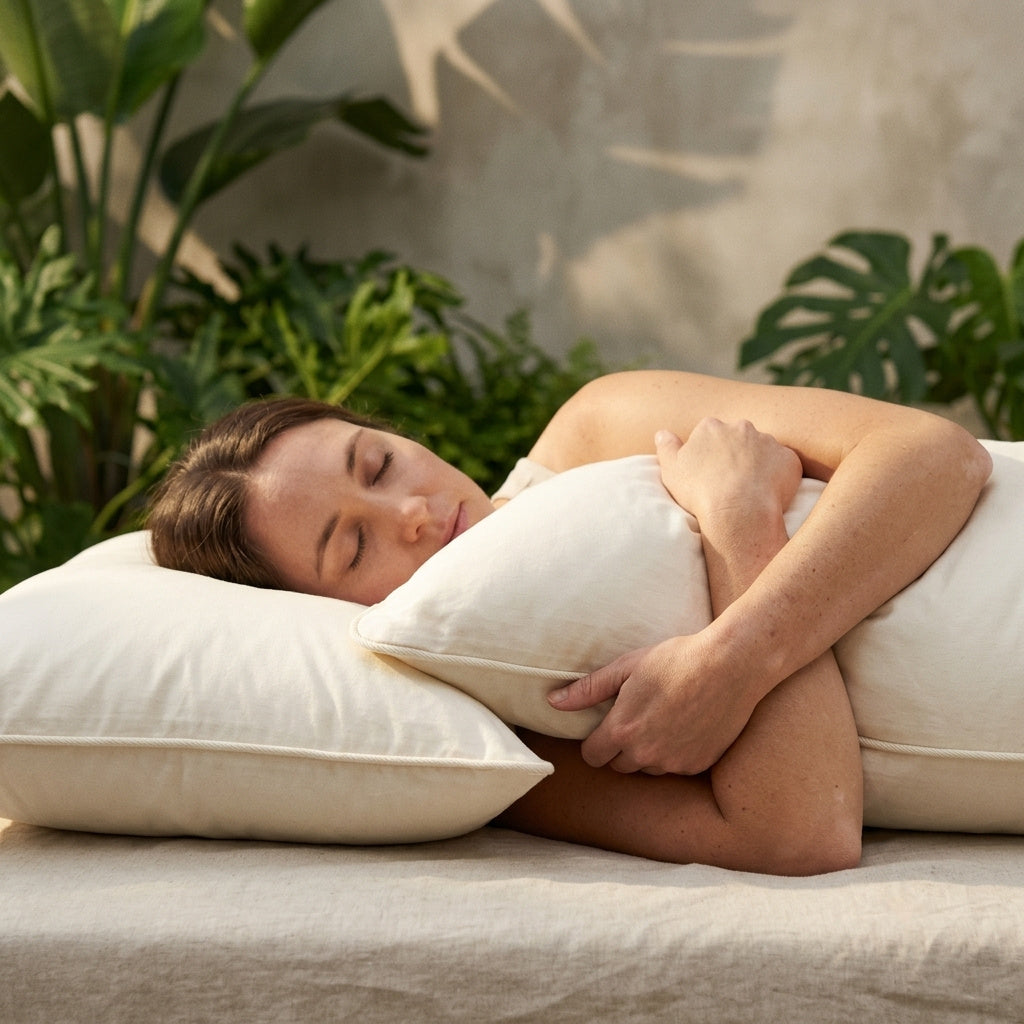
Side sleeper with the MAREA kapok body pillow running from under her chin down between her knees, head resting on a MAREA kapok pillow

Leave a comment

This site is protected by hCaptcha and the hCaptcha Privacy Policy and Terms of Service apply.