
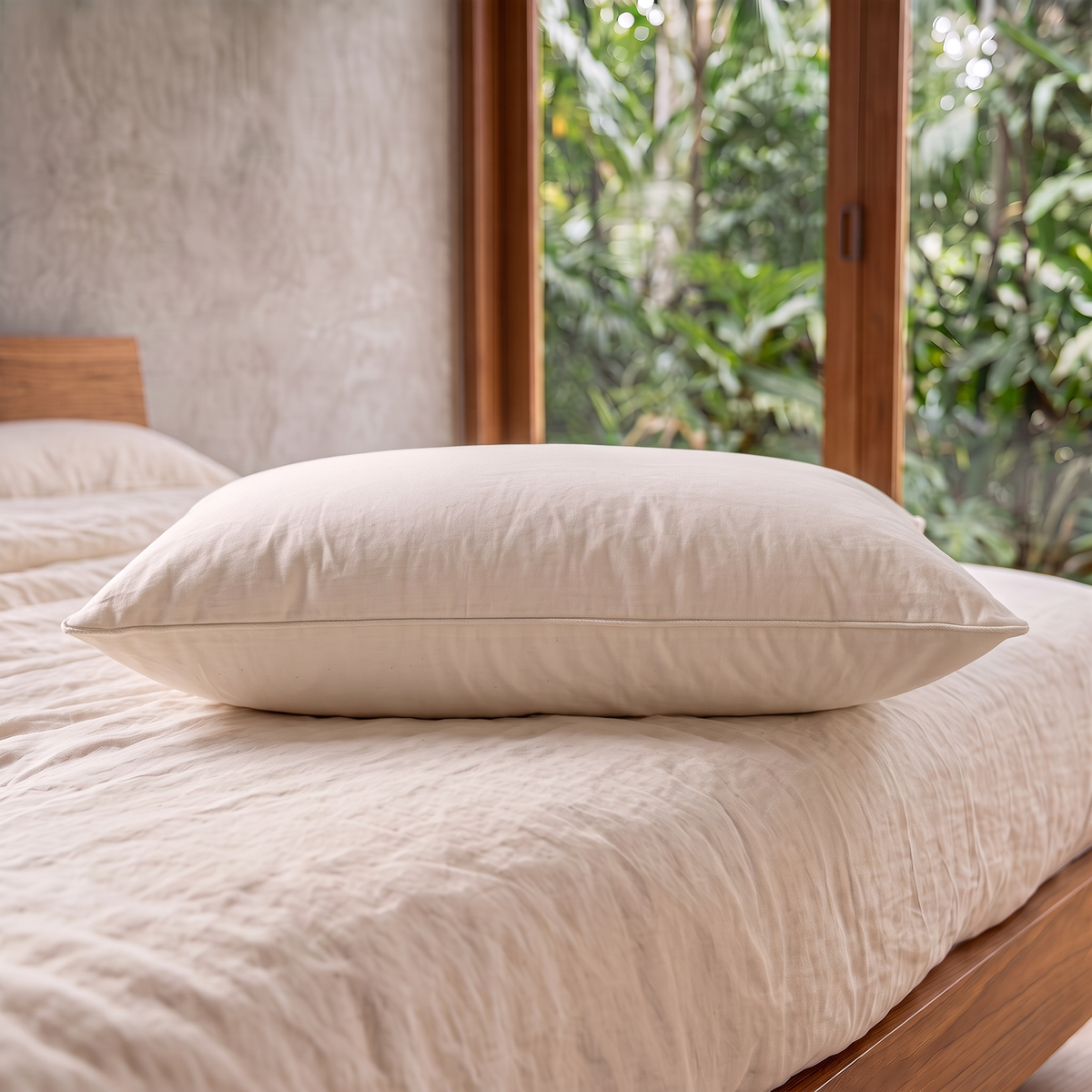
Loft is the height your head rests at when you're lying on a pillow. Not how thick it looks on the shelf, and not how firm it feels in your hands, but how high it holds your head once your weight is on it. It's the single thing that decides whether a pillow works for you, and it's the thing almost nobody explains before you buy one.
So here's how it works, by sleep position, and how to find your own number without trusting anyone's chart. Including mine.
What loft is for
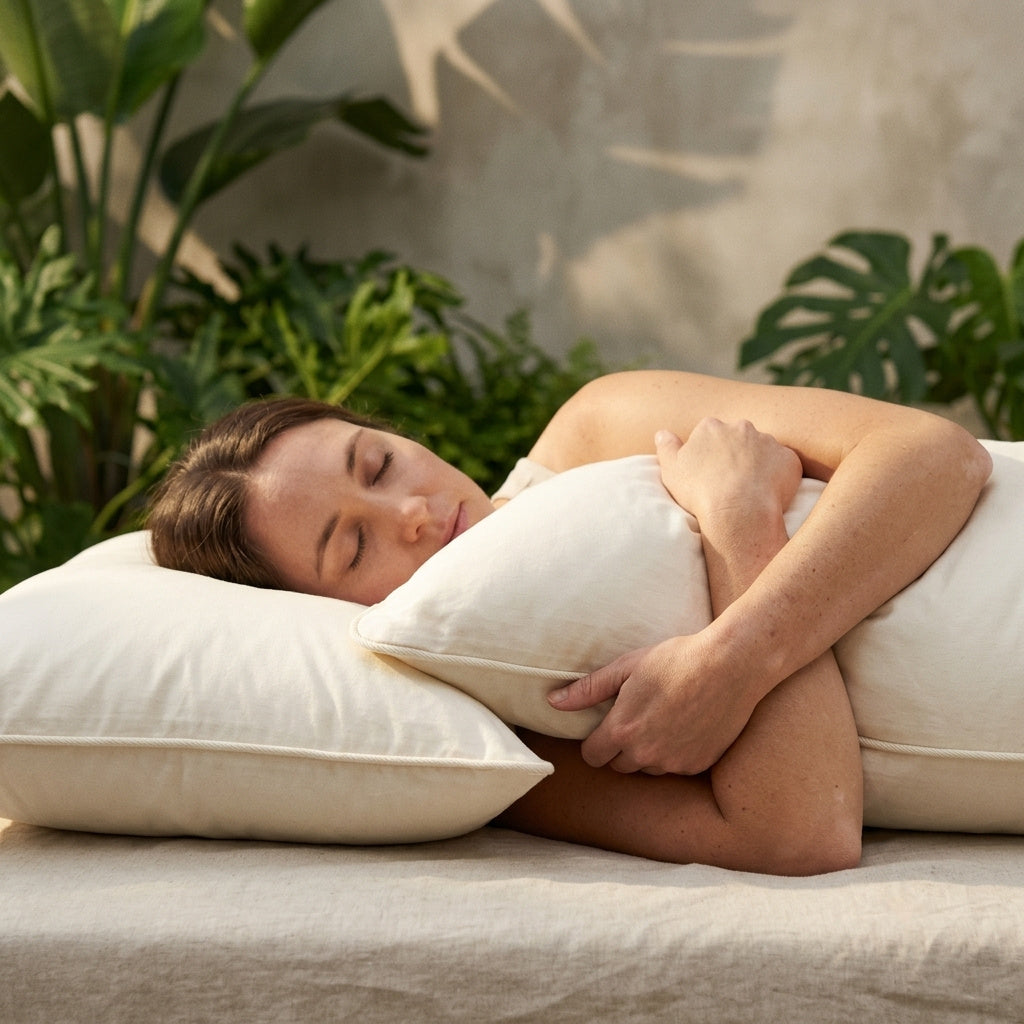
Lie down and your spine wants to stay in a straight line from your tailbone through the back of your skull. The pillow's only job is to fill the gap between the mattress and your head so that line stays straight. The Cleveland Clinic puts it the same way: the pillow should keep your neck parallel to the mattress, and a firmer mattress needs a thicker pillow than a soft one. Too little loft and your head drops toward the mattress. Too much and it's pushed up and away. Either way your neck spends eight hours bent, and you find out in the morning.
The size of that gap depends on three things: which way you're facing, how wide your shoulders are, and how far your mattress lets you sink. Change any one and the right loft changes with it. That's why the same pillow can be perfect on one bed and wrong on the next.
Side sleepers
The biggest gap of any position, and the one that varies most from person to person. On your side, the distance from the mattress to your ear is the width of your shoulder, minus however much your shoulder sinks into the bed. Broad shoulders on a firm mattress can need a lot of pillow. Narrow shoulders on a soft one, much less.
Side sleepers are the people who fold their pillows in half, stack two, or shove a hand underneath at 2 a.m. Those are all workarounds for a pillow that's too low. I've written the side sleeper piece separately, because there's a second gap further down the body that a body pillow handles, and it deserves its own space.
Back sleepers
A medium gap. On your back, the pillow needs to support the natural curve of your neck without tipping your chin toward your chest. Most back sleepers land somewhere in the middle of the range, and the common mistake is going too high, because a tall pillow feels luxurious in the store and then pushes your head forward all night.
A useful check: lie on your back and notice whether you can feel a gap under your neck. If you can, there's not enough support in the lower part of the pillow. A pillow you can shape, where you can push a bit more fill toward the edge under your neck, solves this better than a taller one does. The back sleeper guide goes deeper on fill type and the setup.
Stomach sleepers
The smallest gap, close to none. On your stomach your head is already turned to the side and close to the mattress, and any real loft cranks your neck upward. Stomach sleepers usually do best on the thinnest pillow they can find, or on a pillow they can empty most of the way down.
If you sleep on your stomach and wake up with a stiff neck, the pillow is almost certainly too high, not too low. That's the opposite of what most people assume. The stomach sleeper guide covers how to take a kapok pillow almost flat.
Why I won't give you a number
You'll see charts online: side sleepers need this many inches, back sleepers need that many. I'm not going to add to them, because they're guesses dressed up as measurements. A five inch pillow on a soft mattress and a five inch pillow on a firm one put your head at different heights. Your shoulders aren't the chart's shoulders. The number that matters is yours, and you can find it in about ninety seconds.
The ninety second test
- Lie down the way you actually sleep. Not posed, not tidy. The real position.
- Have someone take a photo from the side of the bed, level with your head. Prop your phone up and use the timer if you're alone.
- Look at the line from the back of your head down through your neck to your shoulders. It should look straight, as if your spine just kept going.
- Head tipping down toward the mattress? Not enough loft. Chin pushed up, or head bent away from the bed? Too much.
- Adjust, and shoot it again.
That's the whole method. It beats every chart because it's measuring you, on your mattress, in your position.
Why adjustable pillows exist
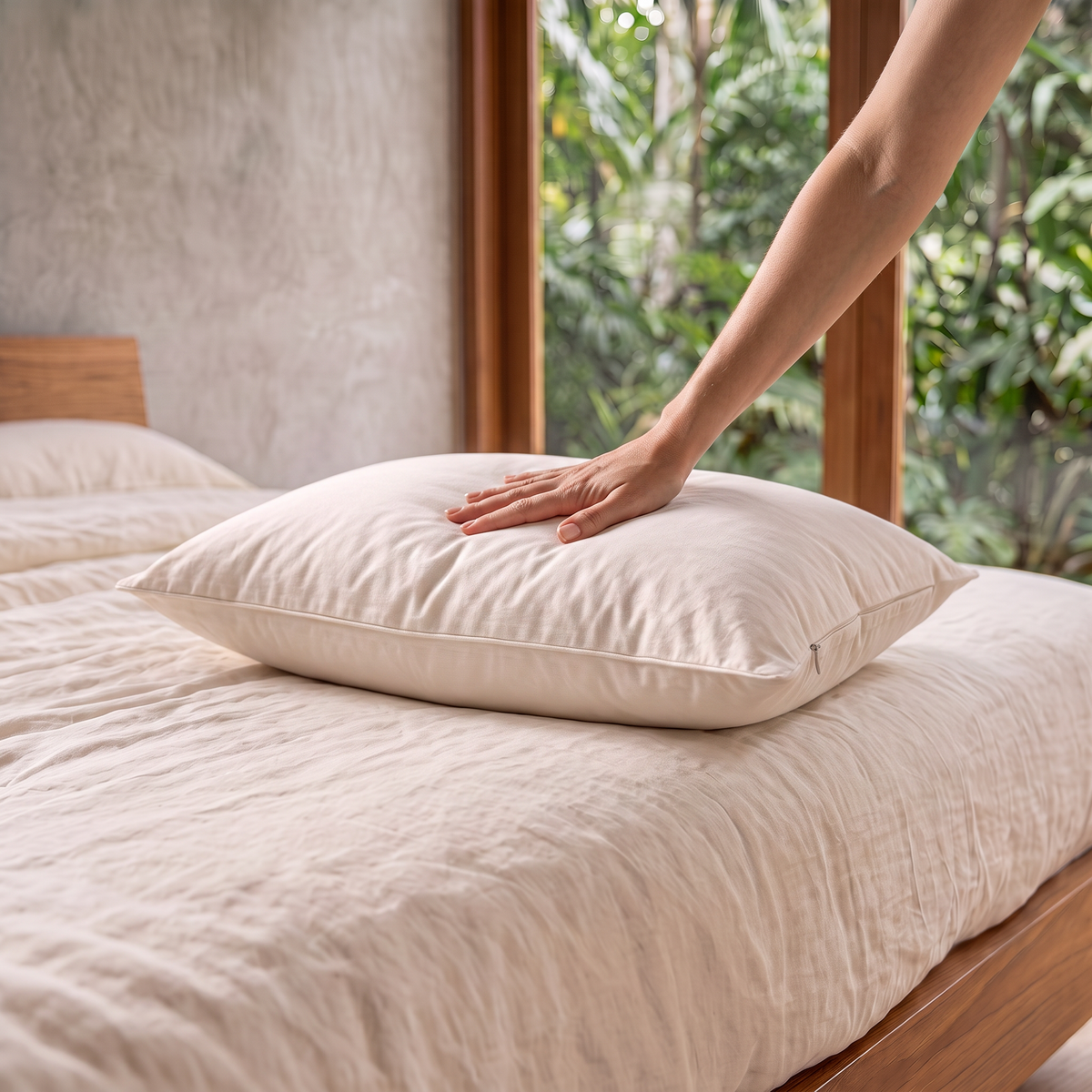
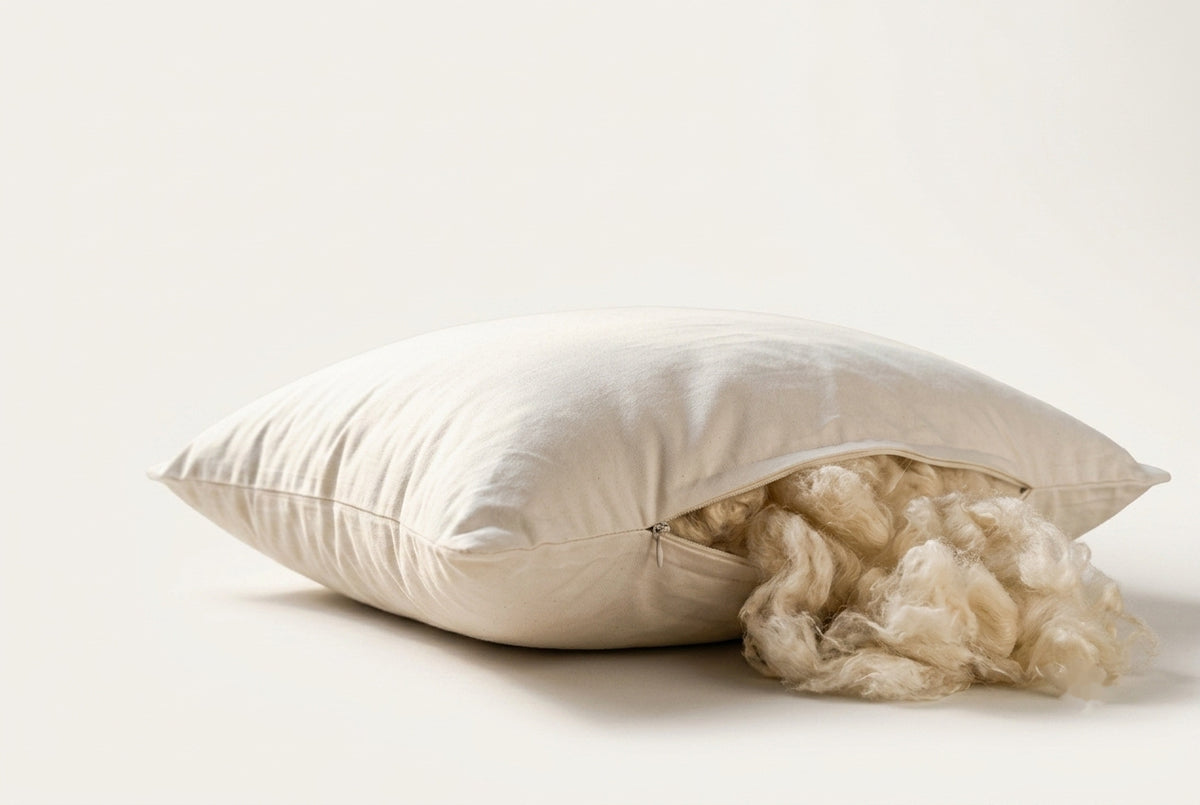
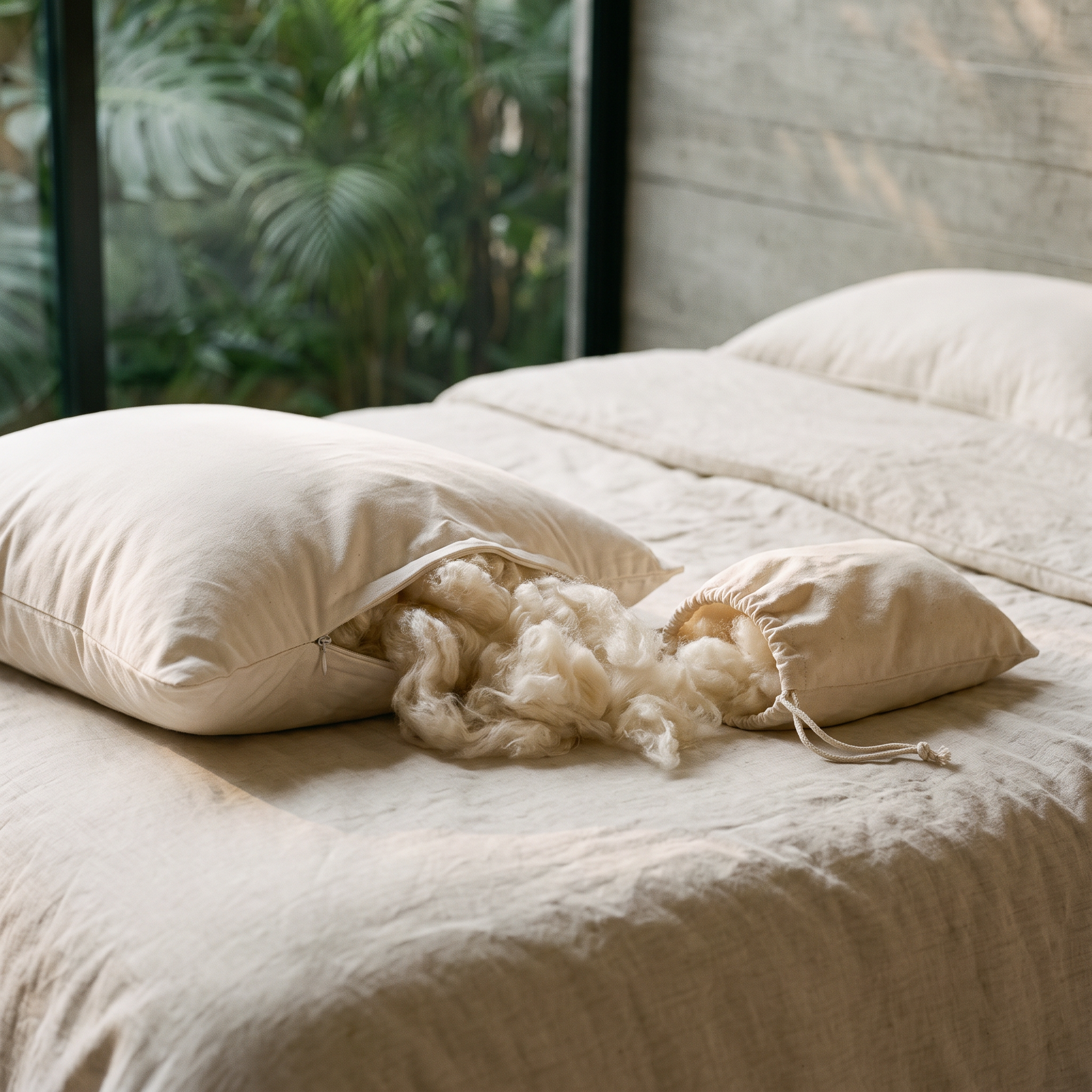
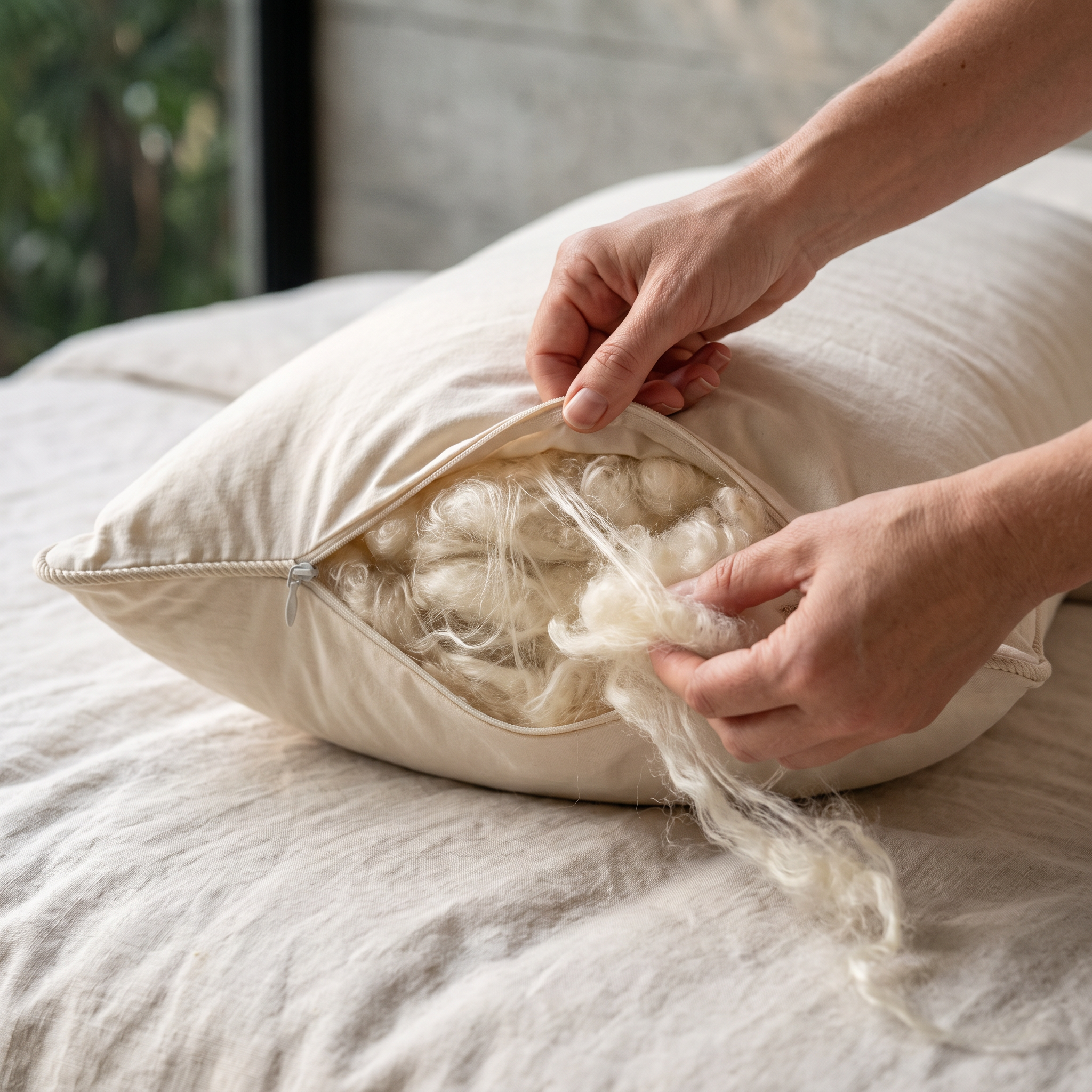
Everything above points at the same problem: the right loft is personal, and a sewn shut pillow is somebody else's guess about it. An adjustable pillow ships with more fill than most people need and opens so you can take some out, sleep on it, and take out more or put some back. Ours opens at the short end and the fill comes out in soft handfuls. Go one handful at a time, sleep two nights between changes, and stop when the photo looks straight. Here's the longer version of how that works.
Keep what you take out. A new mattress, a shoulder injury, or a partner who steals the good pillow will change your loft, and you'll want it back. If you binned it, loose kapok comes in 3 pound bags, and here is how to refill.
Loft versus firmness
These get confused constantly. Firmness is how much resistance the pillow gives when you press into it. Loft is how high it holds your head. A pillow can be soft and still hold plenty of loft, which is roughly the point of kapok: it gives under pressure and springs back, so it feels soft, but the loft you set stays where you set it. A firm pillow with the wrong loft is still the wrong pillow.
Questions I get asked
What loft is best for side sleepers? The highest of any position, and the most variable. Use the photo test. If you're folding your pillow, it's too low.
What loft is best for back sleepers? Medium. The usual mistake is too high. Check for a gap under your neck.
What loft is best for stomach sleepers? Low, sometimes very low. A stiff neck in the morning usually means the pillow is too tall.
Does mattress firmness change my loft? Yes, a lot. A softer mattress lets your shoulder sink, which closes the gap and calls for less pillow. Same person, different bed, different answer.
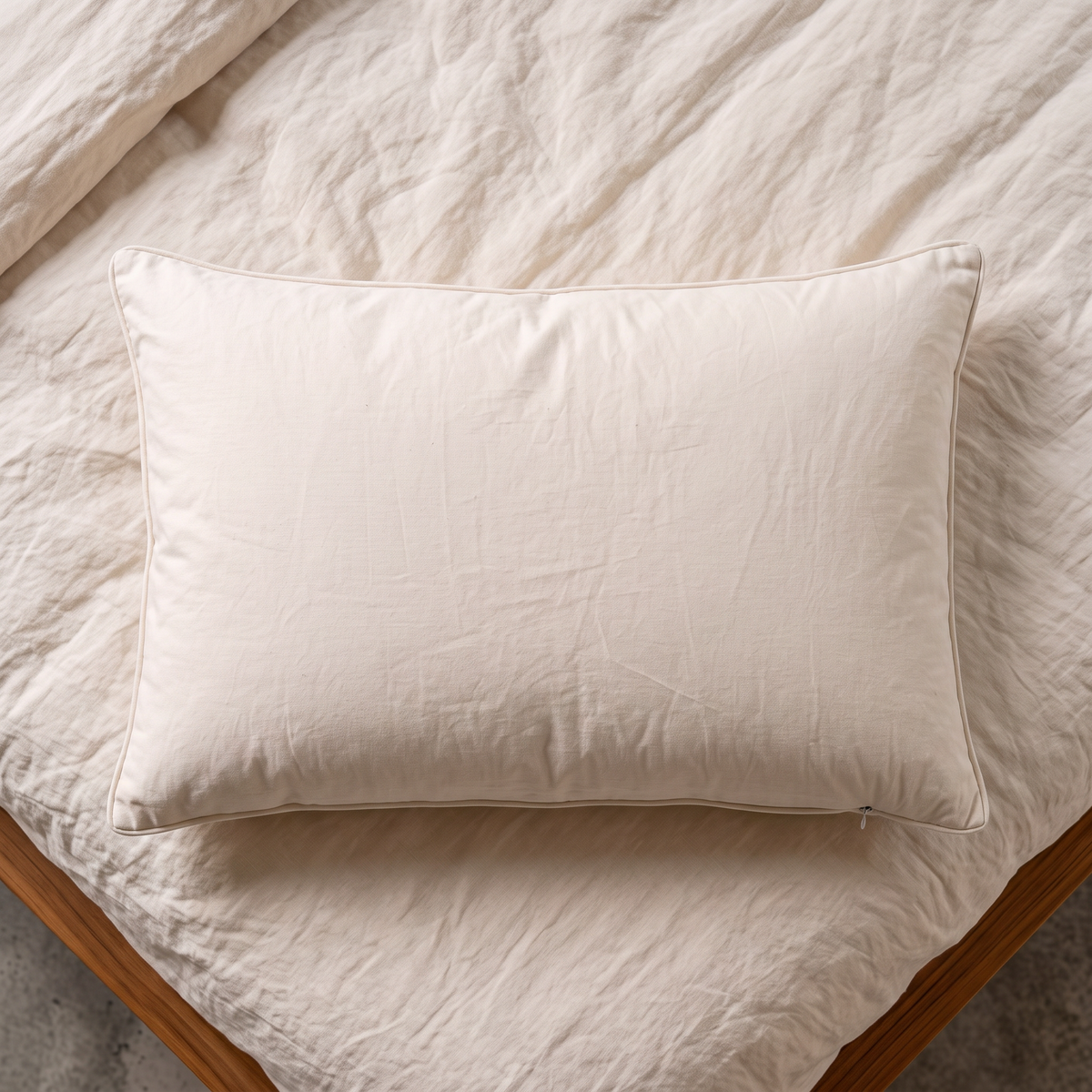
Which MAREA size should I get? Size is about your bed and how much you move, not loft. Queen suits most people; King if you shift around; Standard for a smaller bed. Every size opens, so you set the loft yourself. The three sizes are side by side in the pillow collection. Comparing brands? Start with our guide to choosing a kapok pillow.
How long until I know it's right? Two weeks of small adjustments. The 100 day sleep trial is deliberately longer than that.
Do kapok pillows sleep hot? Less than you'd expect from a pillow that feels this soft, but the room, the cover and how much fill you leave in matter more than the fiber. I answered it properly, from a bedroom with no air conditioning, in Do Kapok Pillows Sleep Hot?
Anthony
Founder, MAREA Sleep
If you find the Sleep Journal useful, you can add MAREA as a preferred source on Google. This is an optional preference for your own Google experience.





Leave a comment
This site is protected by hCaptcha and the hCaptcha Privacy Policy and Terms of Service apply.