
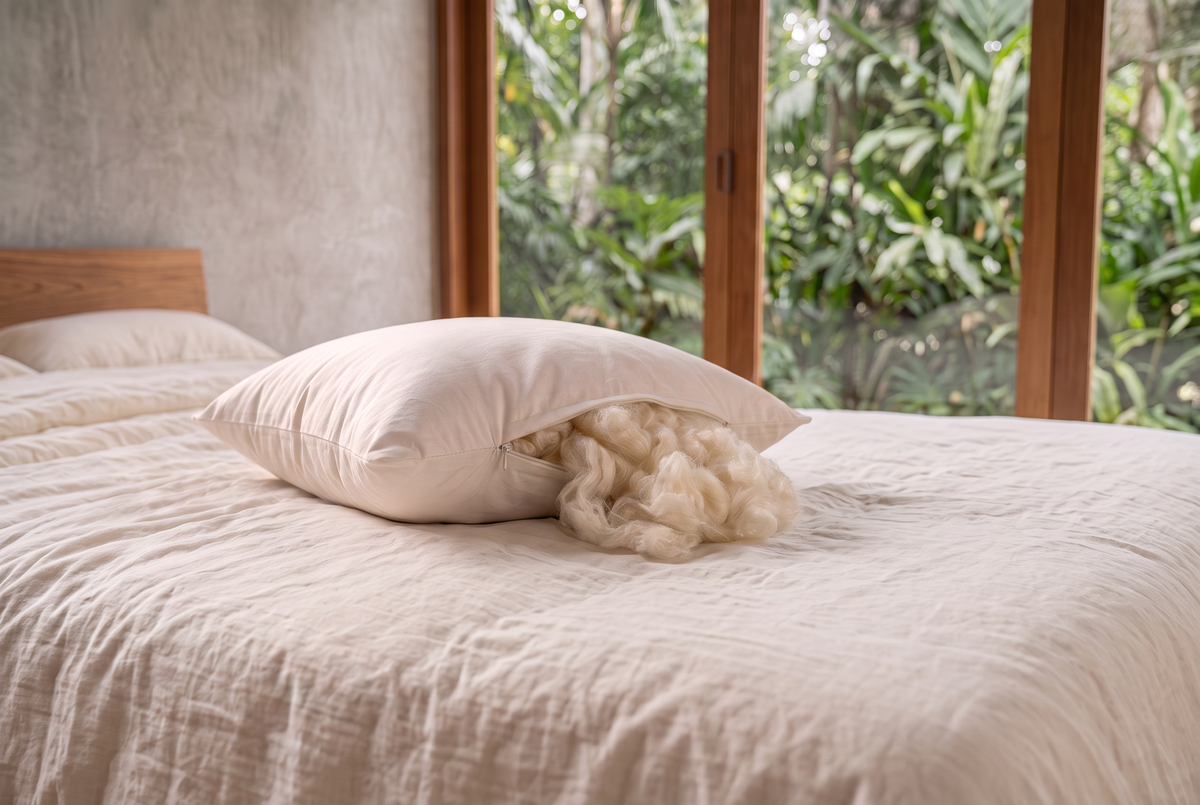
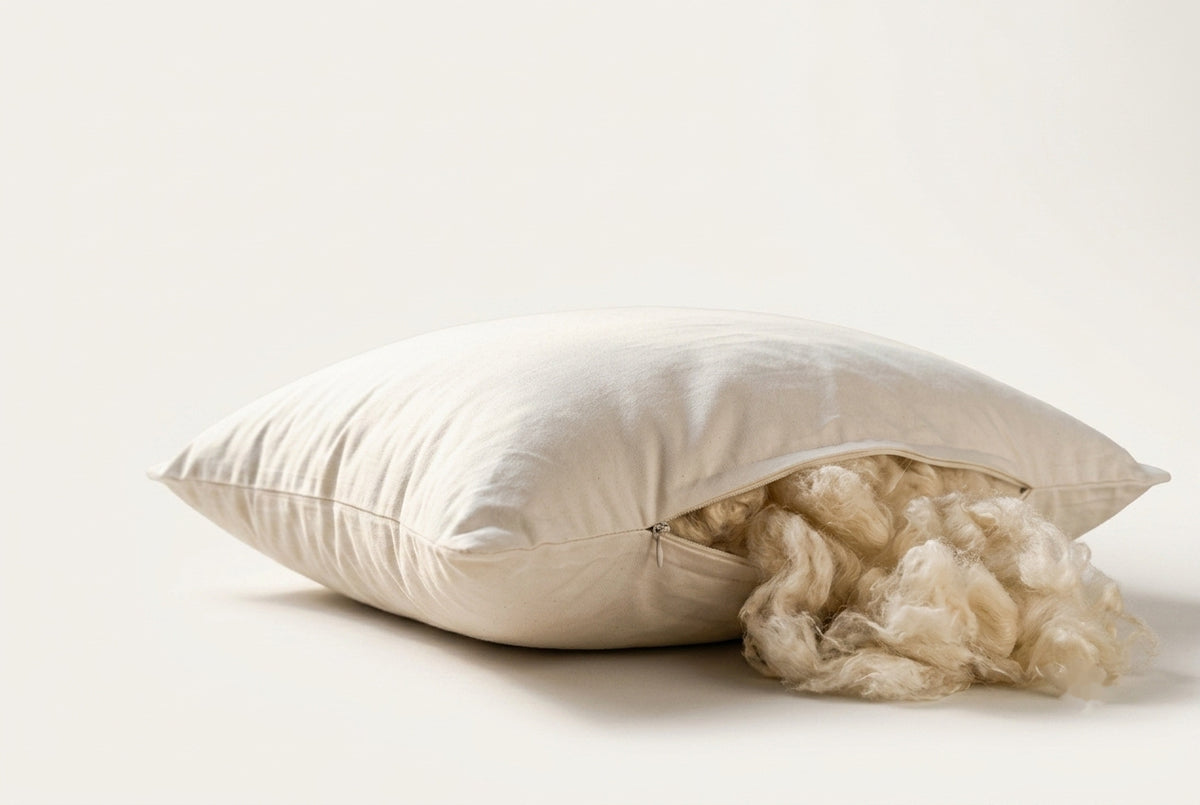
An adjustable pillow without foam lets you change its height while choosing a different fill material. MAREA uses 100% wild harvested kapok, with a zipper that lets you add or remove fiber. Shop the adjustable kapok pillow in Standard, Queen or King, or keep reading to see how to choose your loft.
Why fixed loft fails most people
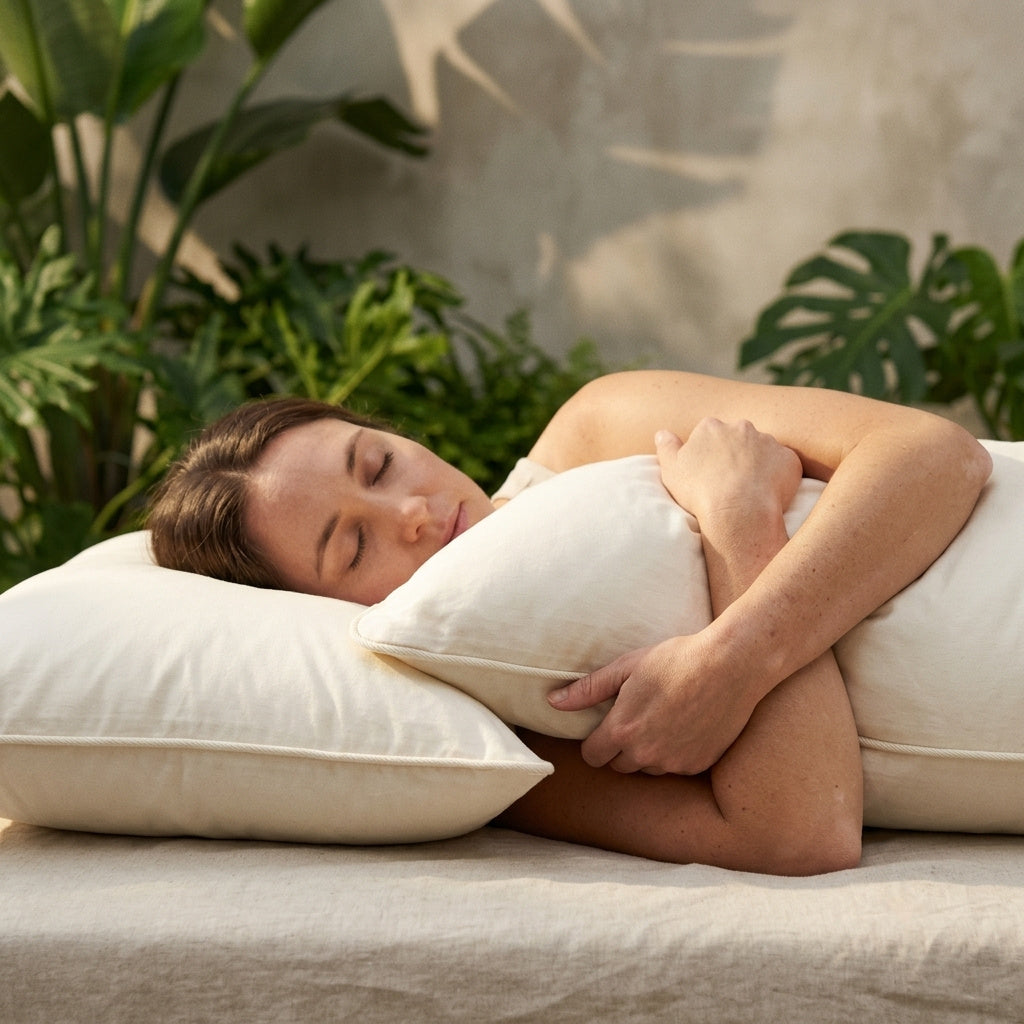
Loft is the height your head rests at, and the right loft depends on stuff no manufacturer can know: your shoulder width, how firm your mattress is, whether you sleep on your side, your back, or facedown, and whether that changes at 3 a.m. A broad shouldered side sleeper on a firm mattress might need five inches. A stomach sleeper might need two. One fixed pillow can't be both. That's why the average closet has a graveyard of almost right pillows in it.
What adjustable actually means
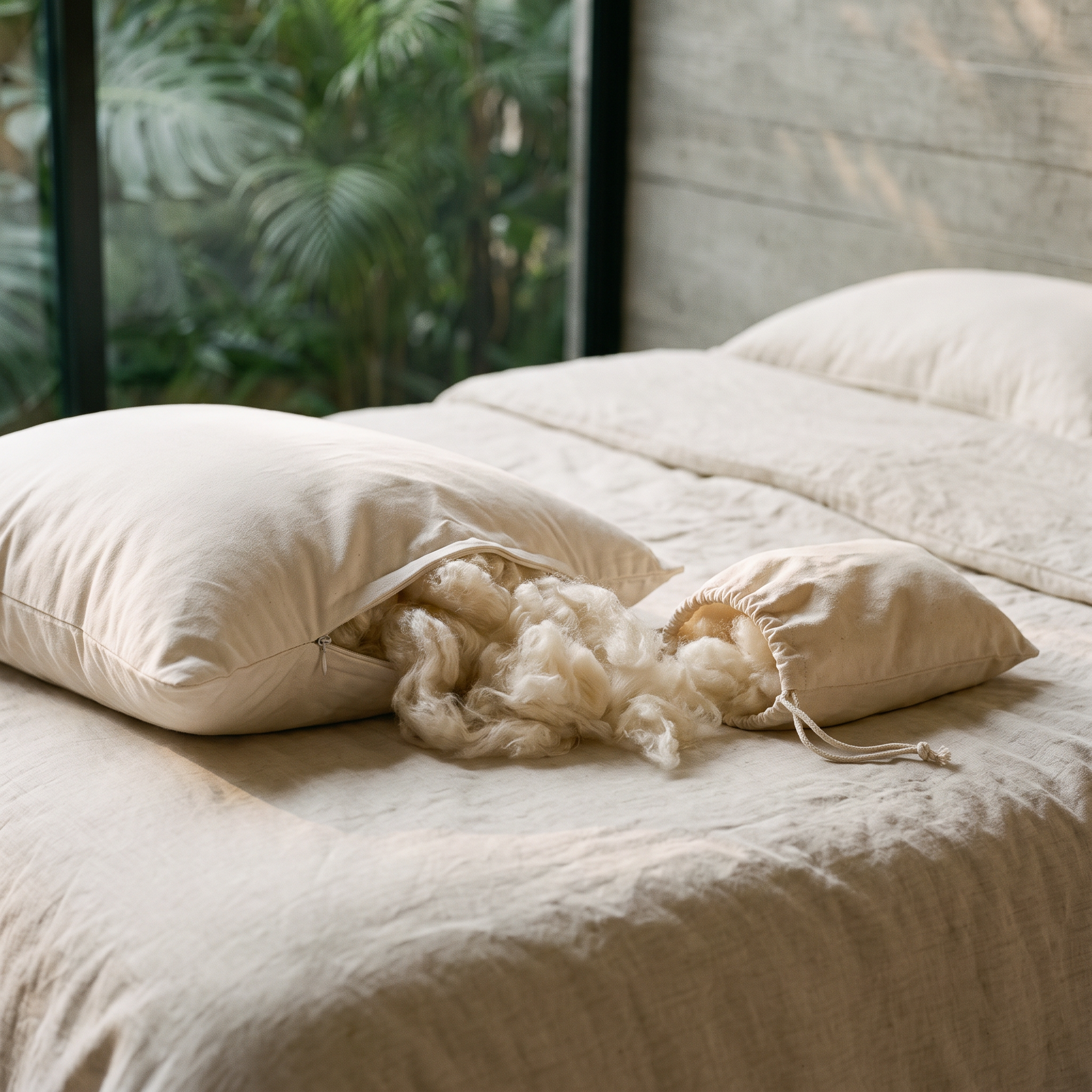
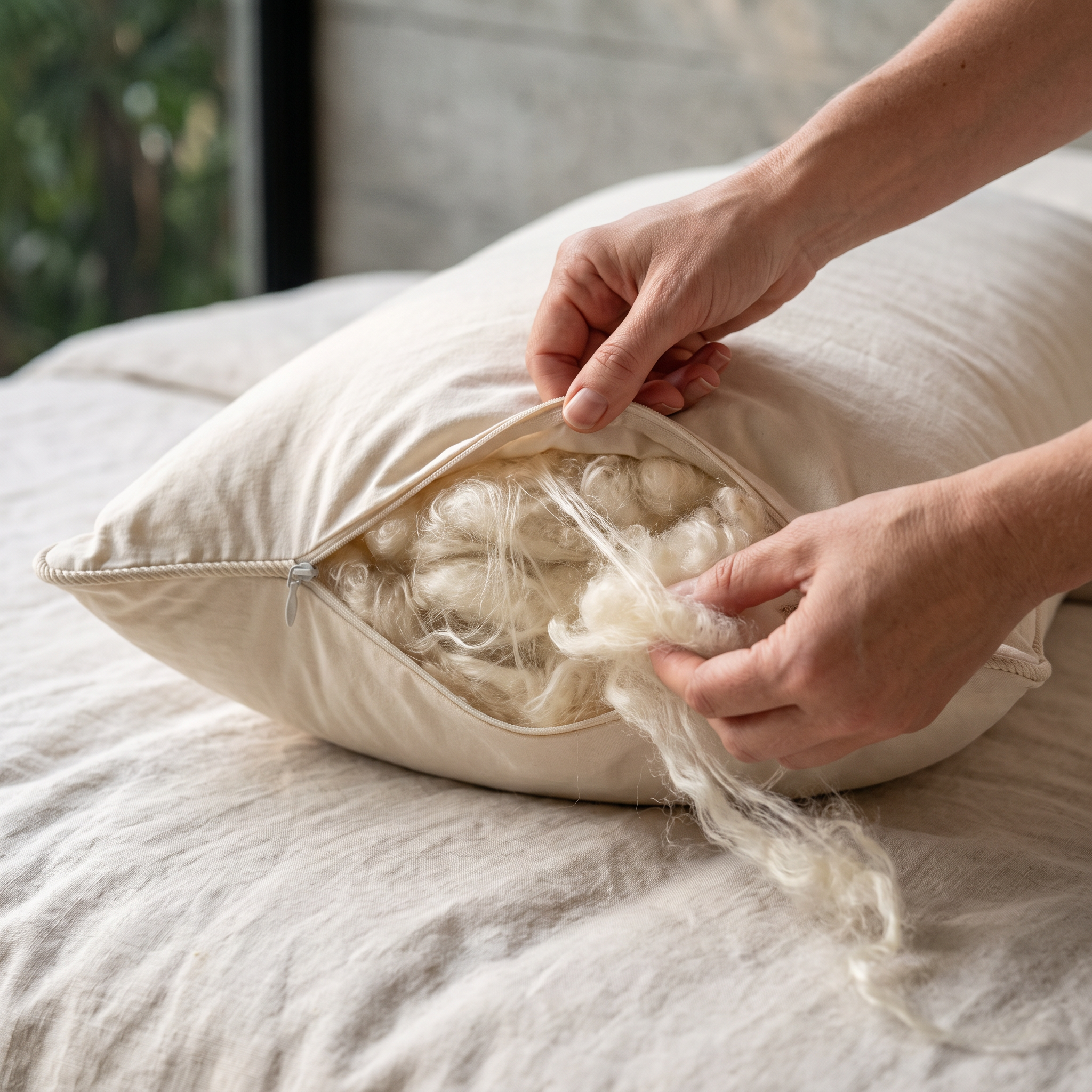
An adjustable pillow has a zipper that gives you access to the fill. You can take some out, sleep on it, and adjust again over several nights to find a height that feels comfortable. The removed fill goes in a bag in the closet, and when the pillow softens after years of use, you put some back in.
The next question is what is inside the zipper: the fill changes how the pillow feels and how you care for it.
The fill is the whole product
Adjustable pillows come with several types of fill, including shredded foam, latex and natural fibers. If you prefer a pillow without foam, check the complete fill description: some products marketed as kapok pillows contain a blend.
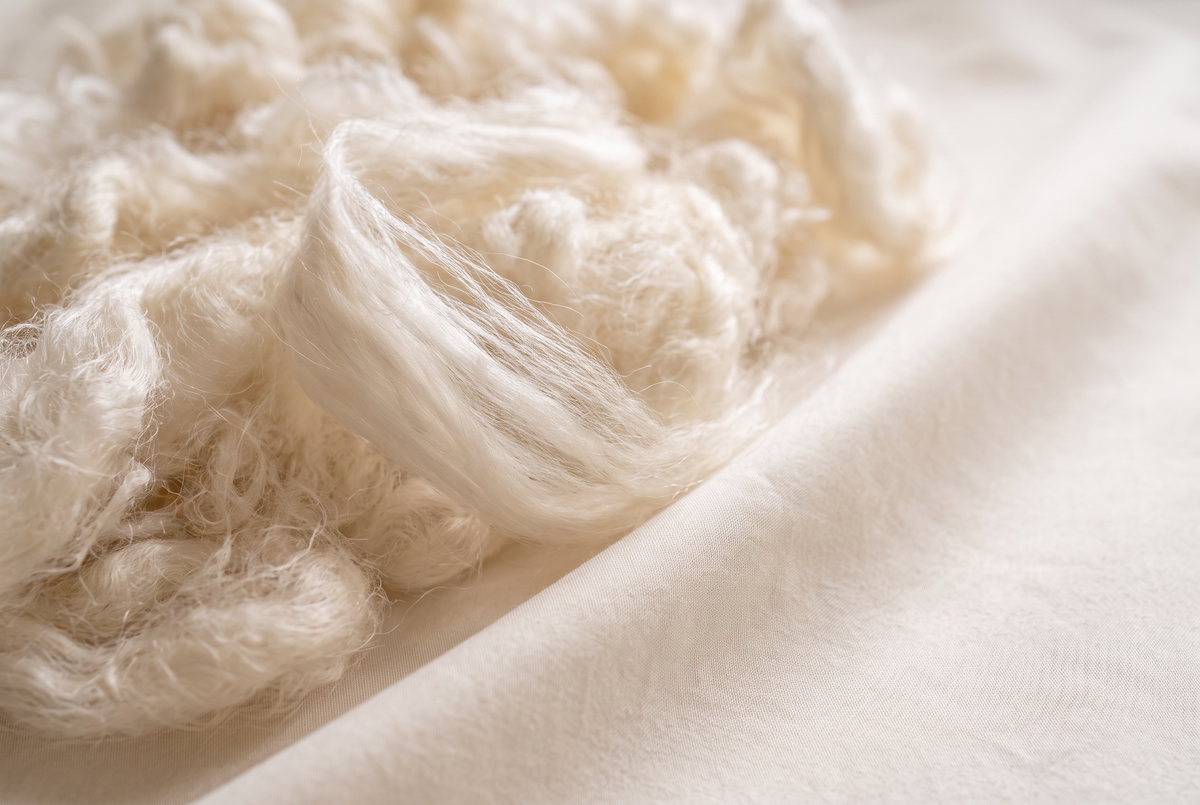
We fill ours with wild harvested kapok instead. Kapok is a hollow plant fiber from rainforest trees, with a light, silky feel. Adjusting it feels like handling raw silk. When the loft settles, a bag of fresh kapok brings it back. If kapok is new to you, here's the full story on the fiber. If you are weighing it against feathers, here is how kapok compares with down.
How to dial in your loft
If the pillow feels too high, pull fill out a handful at a time over three or four nights. Side sleepers usually settle highest, back sleepers in the middle, stomach sleepers lowest. The signal you're looking for is nothing: no craned neck in the morning, no folding the pillow in half, no stacking a second one underneath. When you stop noticing your pillow, it's right.
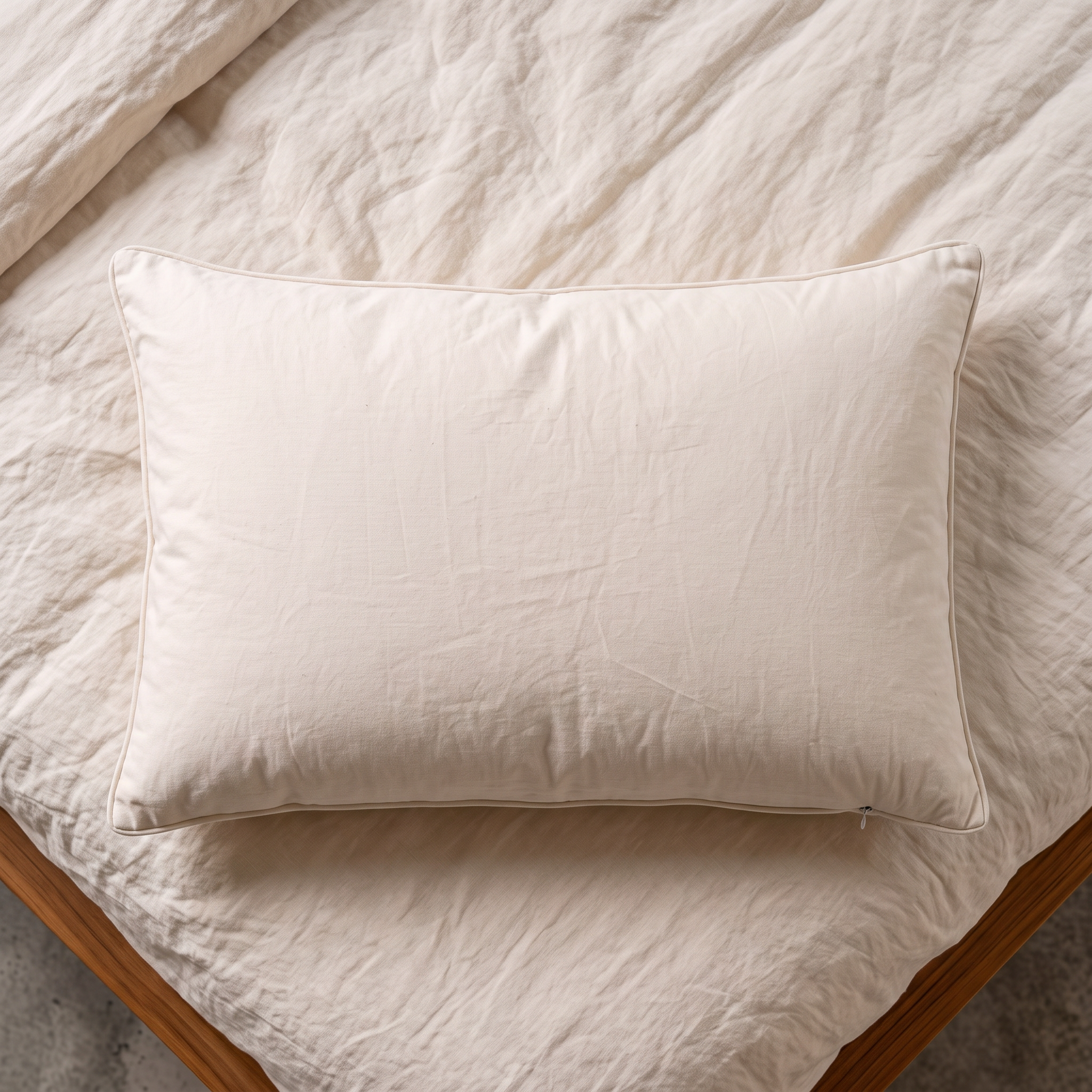
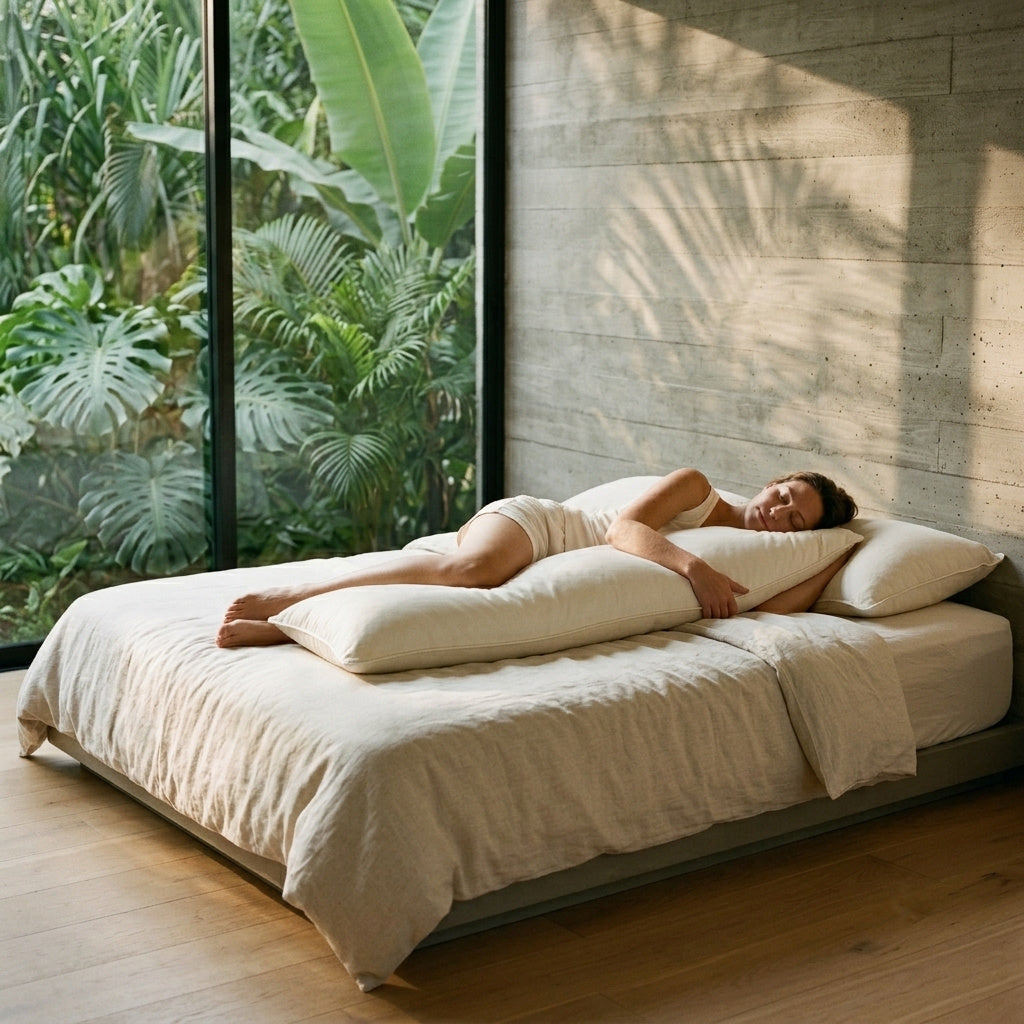
The MAREA pillow comes in standard, queen, and king, each with a 300 thread count GOTS certified organic cotton sateen shell and a hidden zipper. The washable outer cover is sold separately. Side sleepers who want full length support should look at the body pillow. Either way, you finish tuning it yourself, which is the only way a pillow was ever going to fit you.
Keep reading
Curious what kapok actually is? Start with the fiber. Or read the story behind MAREA.
If you find the Sleep Journal useful, you can add MAREA as a preferred source on Google. This is an optional preference for your own Google experience.




Leave a comment
This site is protected by hCaptcha and the hCaptcha Privacy Policy and Terms of Service apply.