
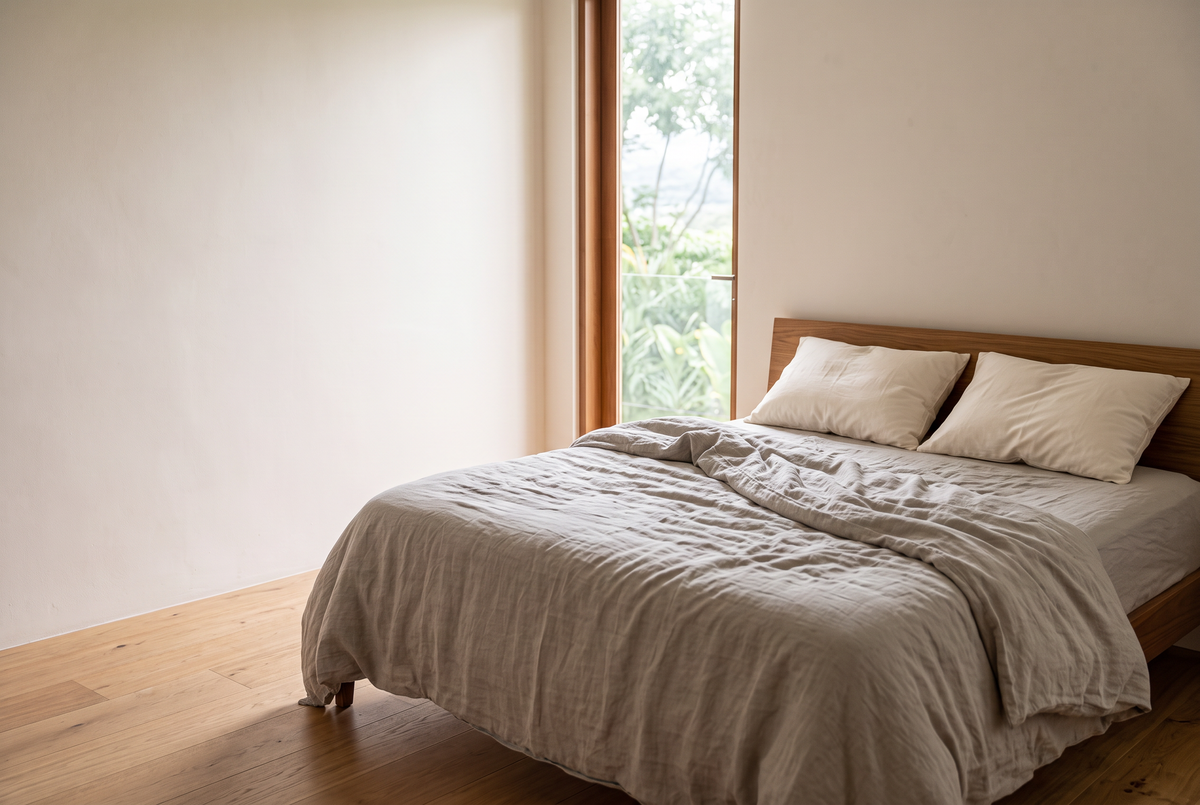
I've fallen asleep in a lot of places. Hostel bunks on three continents, the deck of a dive boat, airport floors, and over the last five years hundreds of beds across Europe, Australia, Southeast Asia, Central America and South America. I grew up playing every sport my parents would drive me to, and these days it's surfing, freediving, jiu jitsu, and finding the next boat to get on. Somewhere in all that I became the kind of person who reads labels and asks why.
It started in a hotel in Bali
When you sleep somewhere new every few nights, you notice what actually changes the night. It isn't the view. It's the pillow under your head and the sheets on the bed. One of those beds was in a small boutique hotel in Bali, Indonesia, and the pillow on it was unlike anything I'd slept on. Soft, but it held its shape. Light. I slept like a rock and woke up wondering what was inside it. Kapok, they told me, and pointed me to a little home goods shop on the island.
At the shop they explained that kapok comes from the seed pods of a tree the islanders hold sacred, and that families there have filled their pillows and mattresses with it for generations. I stood there thinking, how have I never heard of this?
Then I flew home and, for the first time, actually read the tag on my own pillow. Half polyester, the rest conventional cotton. I'd already been replacing things around my home with materials I could name, cookware first, then water filters, then sheets, and here was the one thing I pressed my face into every night. After Bali it felt crazy to keep doing it.
The side sleeper thing
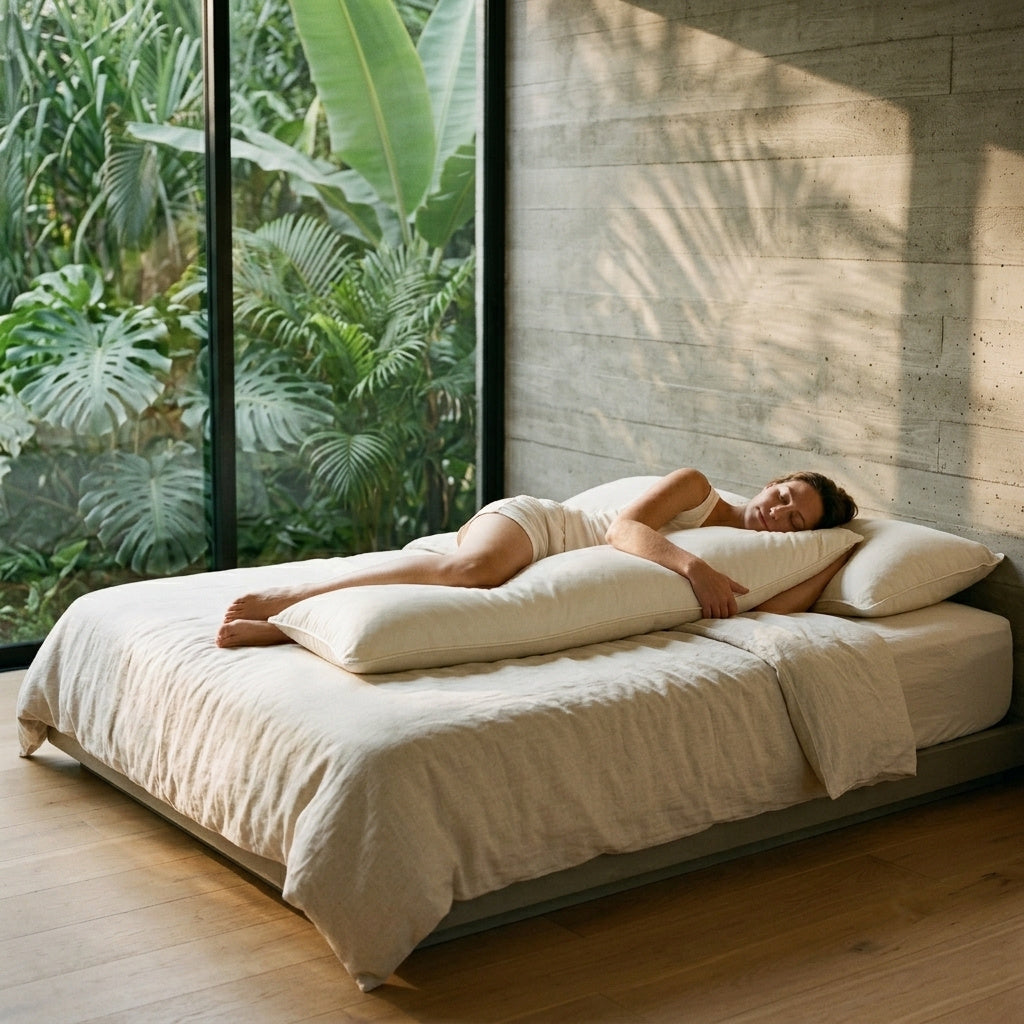
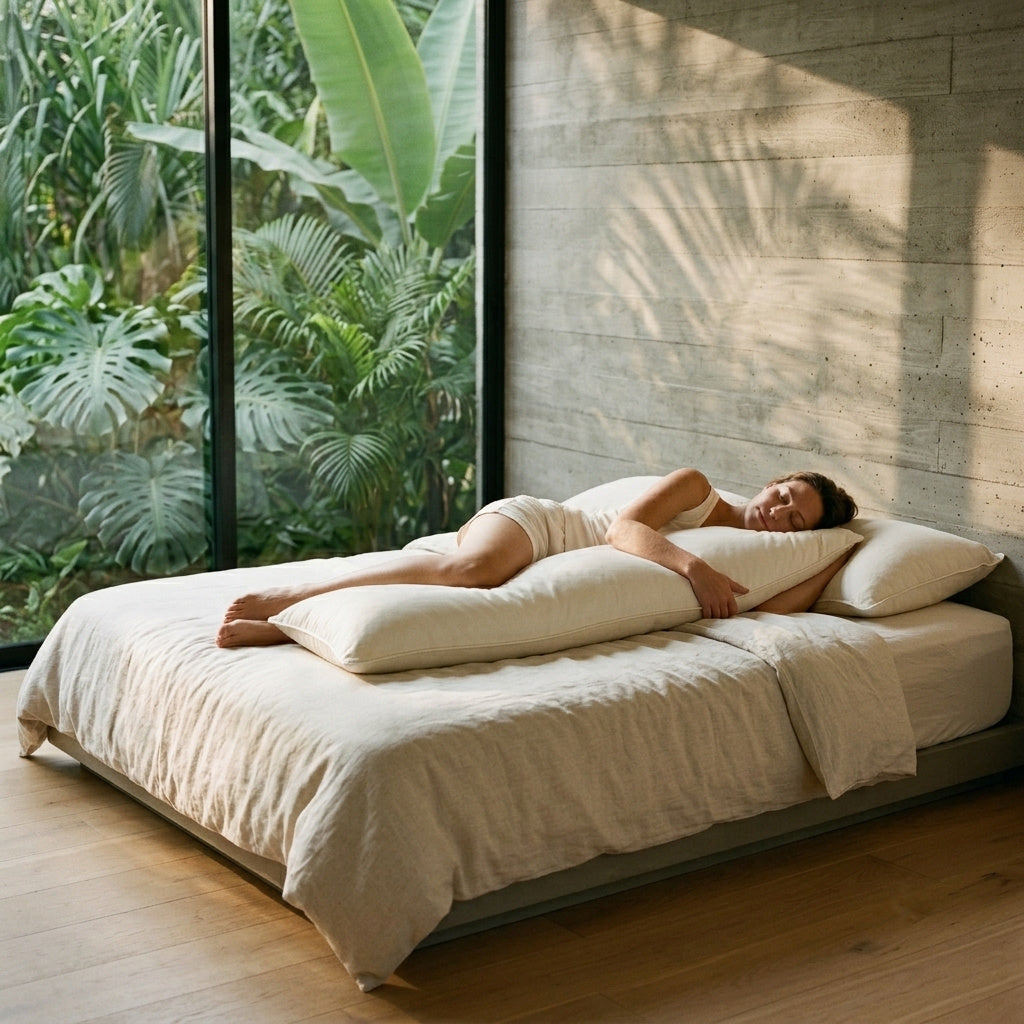
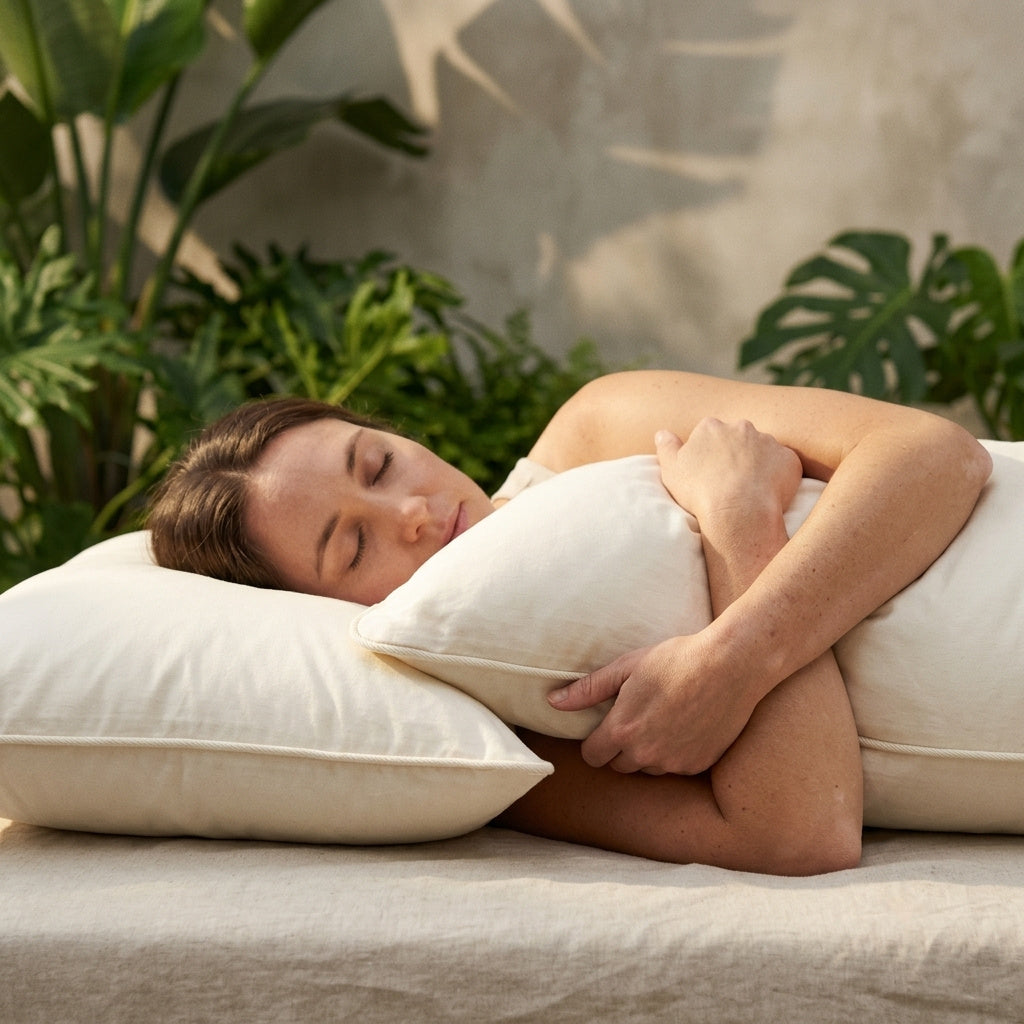
Here's the part that turned a good night in a hotel into a company. I'm a side sleeper, and at some point I worked out what the setup was missing. Lie on your side and your top leg slides forward and drops, so your hips turn with it, and your bottom shoulder folds in under your own weight. That leaves two open gaps, one between the knees and one in front of your chest. A pillow between your knees and one hugged against your chest fills both. Hips stay stacked, the shoulder isn't folded under you. Try it tonight with whatever pillows you own and you'll see what I mean.
The problem was the pillows themselves. Everything clean was a fixed slab that fit some imaginary average person. Everything adjustable was shredded foam. Recovery is where the gains are, any athlete learns that eventually, and jiu jitsu will teach it to you fast if you're slow to get it. So it made no sense that the eight hours doing my heaviest recovery work happened on the cheapest, most synthetic object I owned.
I've since written the whole thing up properly in the side sleeper piece, including how I set the bed up now.
Bringing kapok home
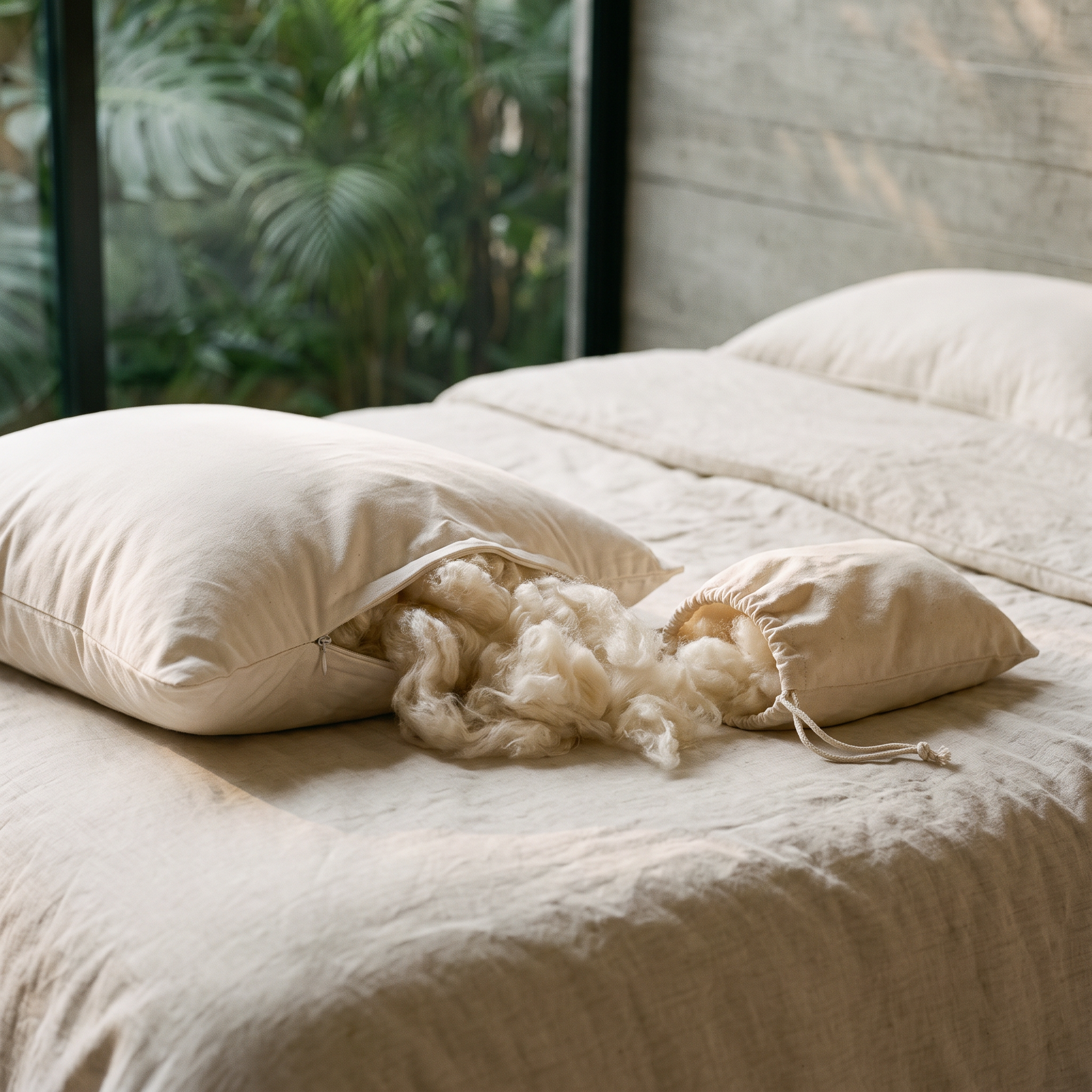
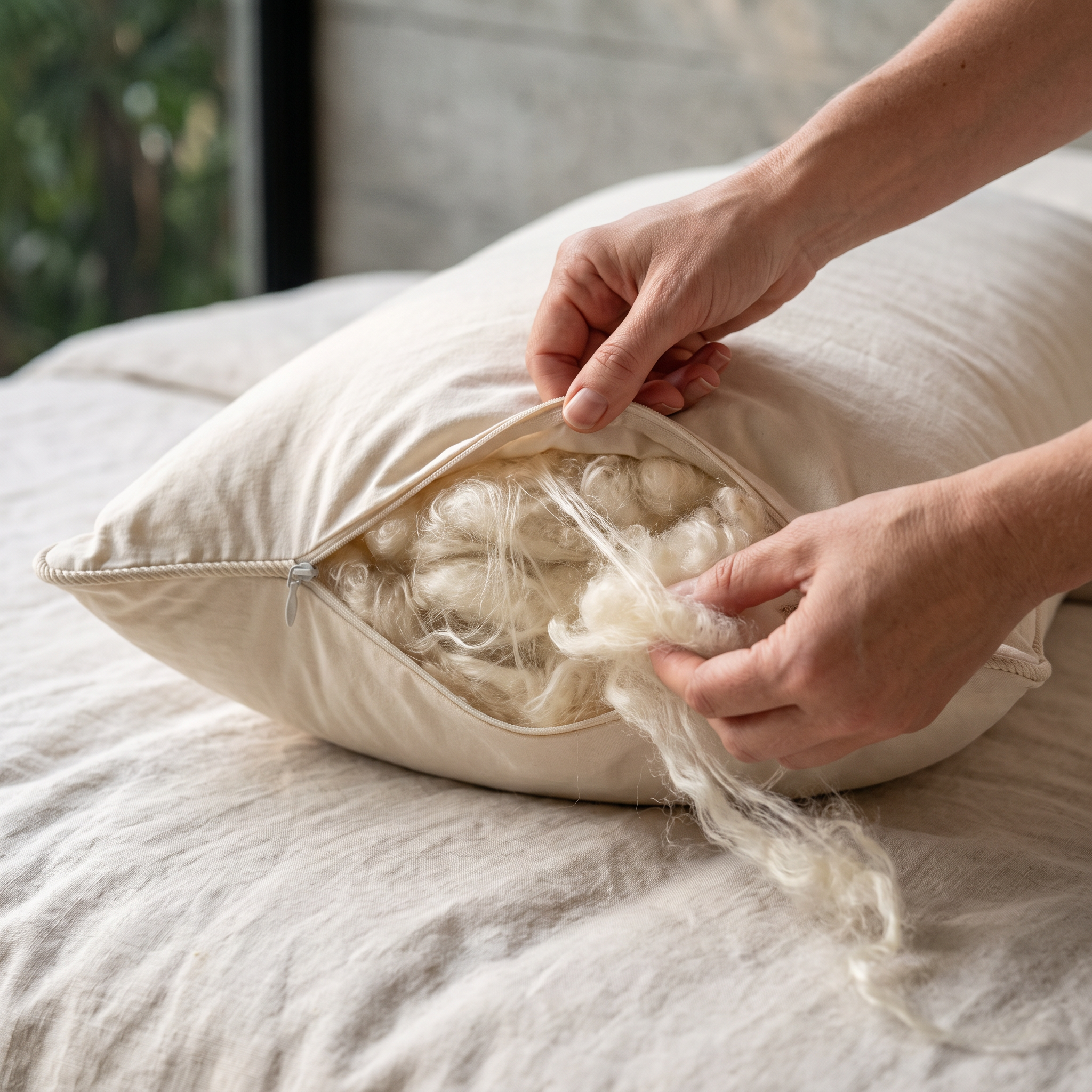
Back in the States I went looking for a kapok pillow I could buy, and found almost nothing made the way I wanted: pure kapok, organic cotton around it, and a zipper so I could set the loft myself. I wrote more about the fiber here.
That first night in Bali, I got why a handful of small workshops quietly kept this material alive for a century while everyone else moved to foam.
What MAREA is
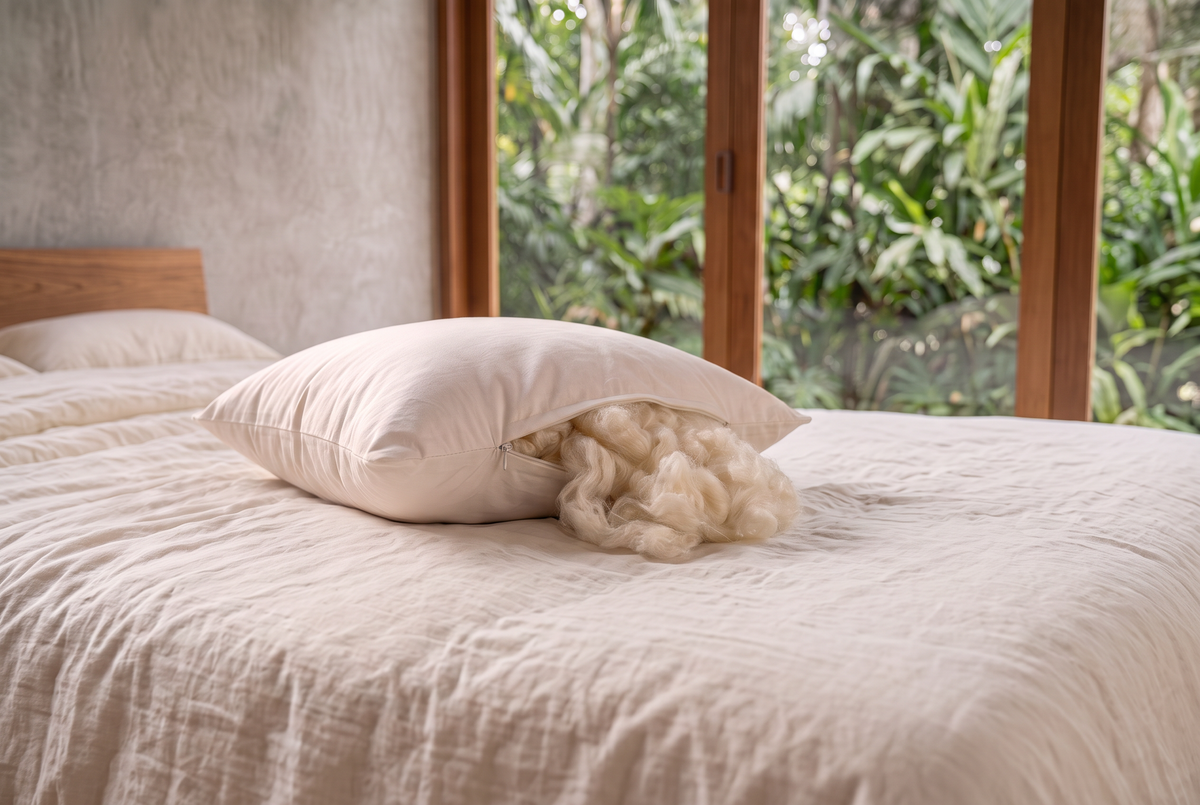
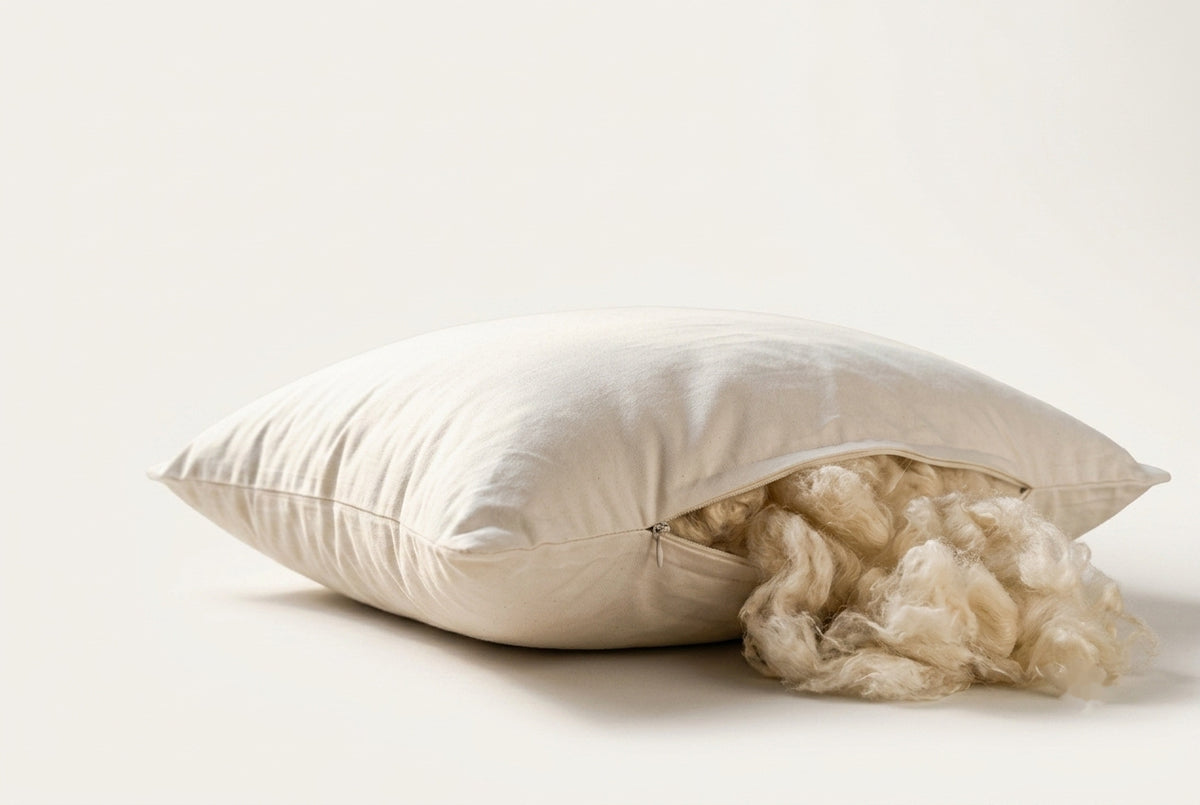
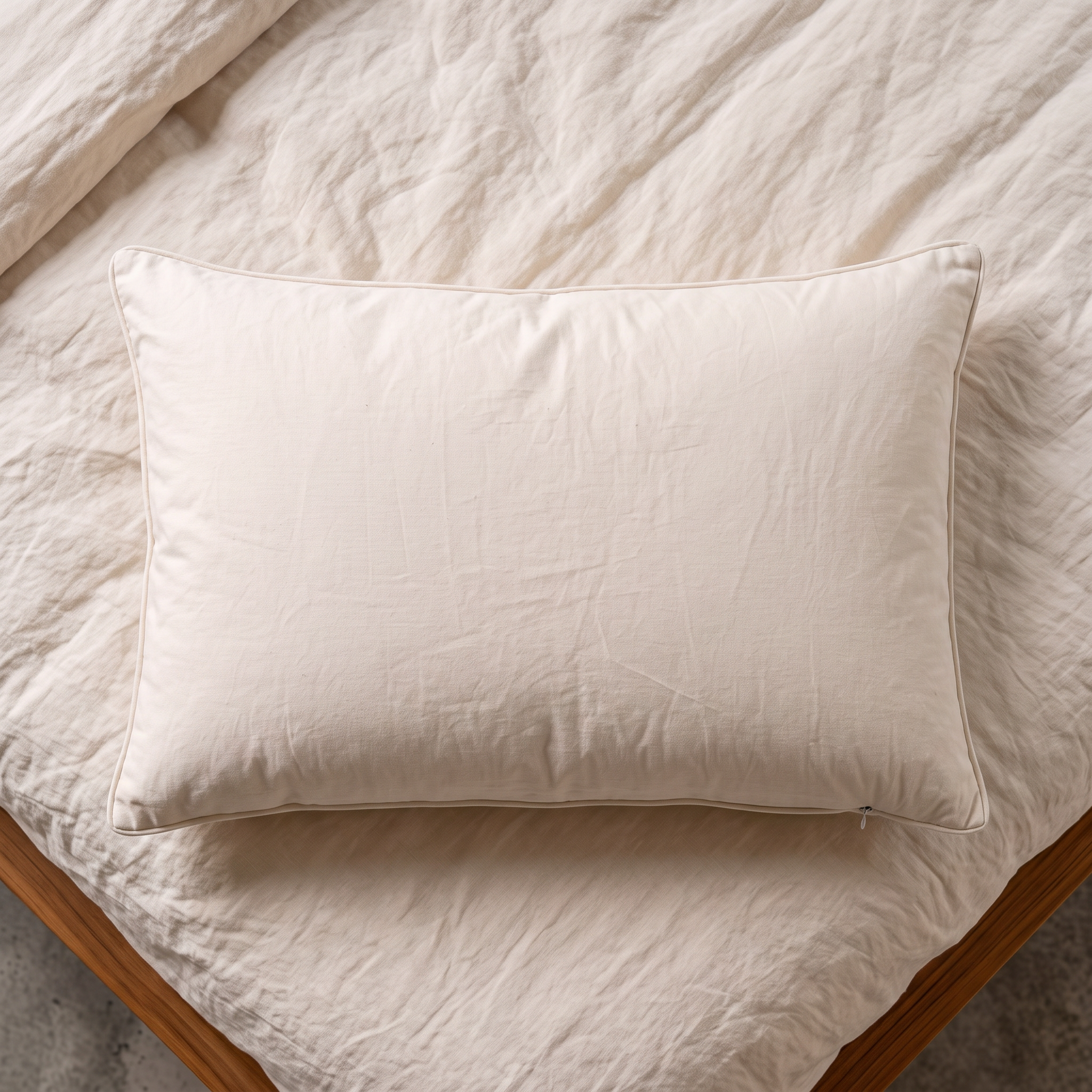
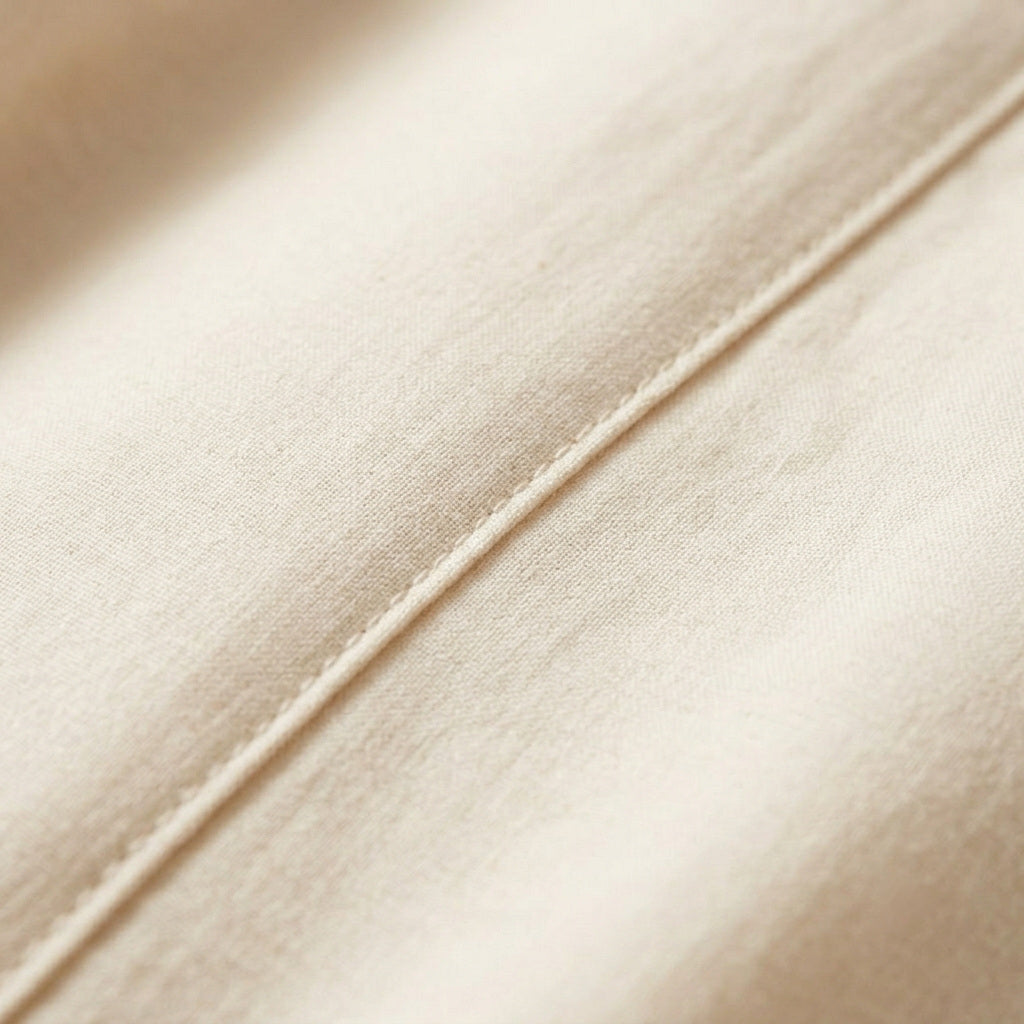
MAREA is the pillow I couldn't buy. Wild harvested kapok fill, an organic cotton sateen shell, a hidden zipper so you set your own loft, and loose kapok refill so the pillow you tune becomes the pillow you keep. Designed in Hawaii and handcrafted in the USA in small batches. If you want to see how the adjustable part works, that one's here, and if you're weighing it against what you've already got, here's how kapok compares to memory foam.
If you take sleep as seriously as training, you're who I made this for. Start here.
The way sleep was meant to feel.
Anthony
Founder, MAREA Sleep. More at about the author.
If you find the Sleep Journal useful, you can add MAREA as a preferred source on Google. This is an optional preference for your own Google experience.



Leave a comment
This site is protected by hCaptcha and the hCaptcha Privacy Policy and Terms of Service apply.