
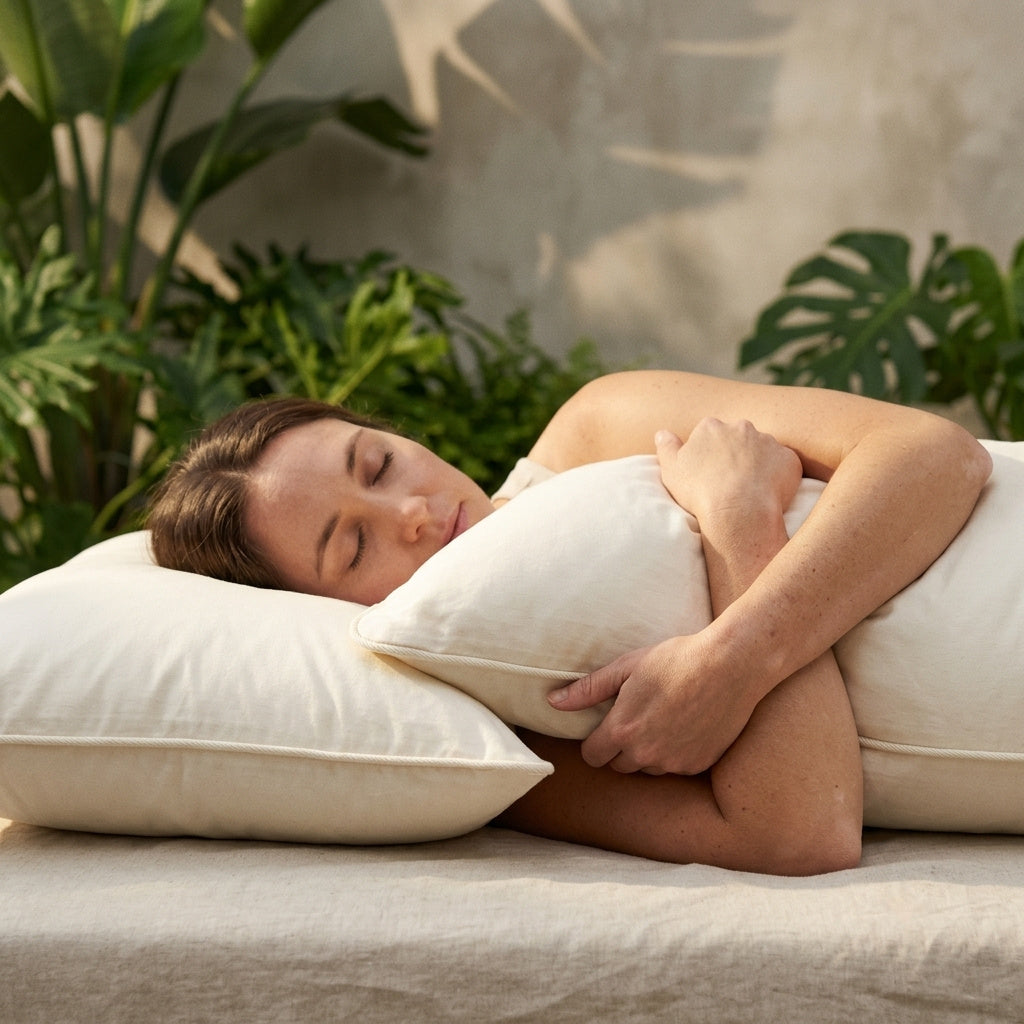
The body pillow feels like a modern invention, something that arrived with king size beds and pregnancy pillows. It isn't. People have been sleeping with a long pillow held against the body for at least seven hundred years, and the earliest versions weren't soft at all.
The bamboo wife
Start in East Asia. In China, Korea, Japan and Vietnam there's an old object called, in each language, the bamboo wife: a hollow cylinder woven from thin strips of bamboo, roughly the length of a person, that you hold in your arms and drape a leg over on a hot night. The Korean version, the jukbuin, shows up in records from the thirteenth century, and in Japan it's the chikufujin. The point wasn't softness. It was air. Wrapping yourself around an open bamboo frame kept your limbs apart and let a breeze move between them, which in a humid summer before electric fans was the difference between sleeping and not. Tradition in some places says a wife would make one for her husband before a long journey so he wouldn't be lonely, which is where the name comes from.
That's the first thing worth noticing about body pillows. Long before anyone thought about knees or shoulders, the reason to sleep holding something long was comfort in the plainest sense: a place for your arms, a way to hold a position, and a cooler night.
The bolster you hug
Move south and the cylinder gets soft. Across Southeast Asia the hugging bolster is a standard piece of bedding with a name in every language: guling in Indonesia, bantal peluk in Malaysia, gối ôm in Vietnam, mon khang in Thailand, and in the Philippines the affectionate "hotdog pillow." Most of those names translate as hug pillow or roll pillow, which tells you exactly how they're used. Children grow up with one and many adults never stop.
Here's the part that matters to me. The traditional stuffing for those bolsters in Java and Thailand was kapok, the same wild rainforest fiber inside every MAREA pillow. So the ancestor of the body pillow wasn't just a long cushion. It was a long kapok cushion, made where the kapok tree grows and used in a climate where a fiber that breathes is not a luxury. When Dutch colonists in the East Indies adopted the bolster, the story goes, English picked up the odd name "Dutch wife" for it, a term that later drifted to cover all sorts of things and is best left in the nineteenth century.
Japan's hug pillow
In Japan the long soft pillow became the dakimakura, literally "hug pillow." Through the late 1990s and 2000s it collided with anime fandom and became the printed character pillow the internet knows, which is a shame for the object's reputation, because the plain dakimakura is an ordinary comfort object that a lot of Japanese people sleep with the same way Indonesians sleep with a guling.
The American body pillow
In the United States the body pillow arrived as a bedding size rather than a tradition. The standard is 20 by 54 inches, long enough to run from your chin to below your knees, and for decades it's been sold mostly as a polyester or memory foam product, often curved and marketed to pregnant sleepers. The shape is the same idea the bamboo wife started with. The materials mostly aren't. A foam body pillow is heavy, holds heat along the entire length of your body, and can't be adjusted at all, which are three of the worst qualities you can give an object you're going to hold all night.
Why it works for side sleepers
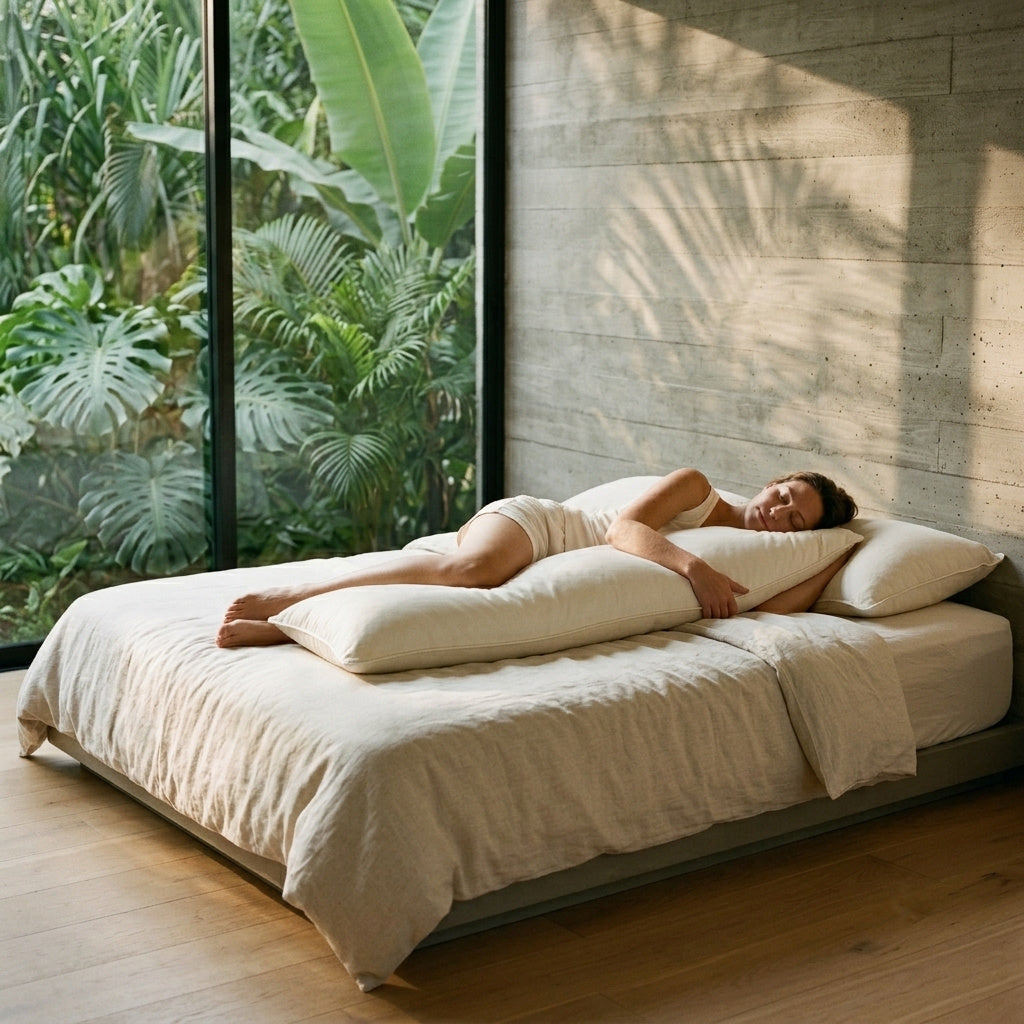
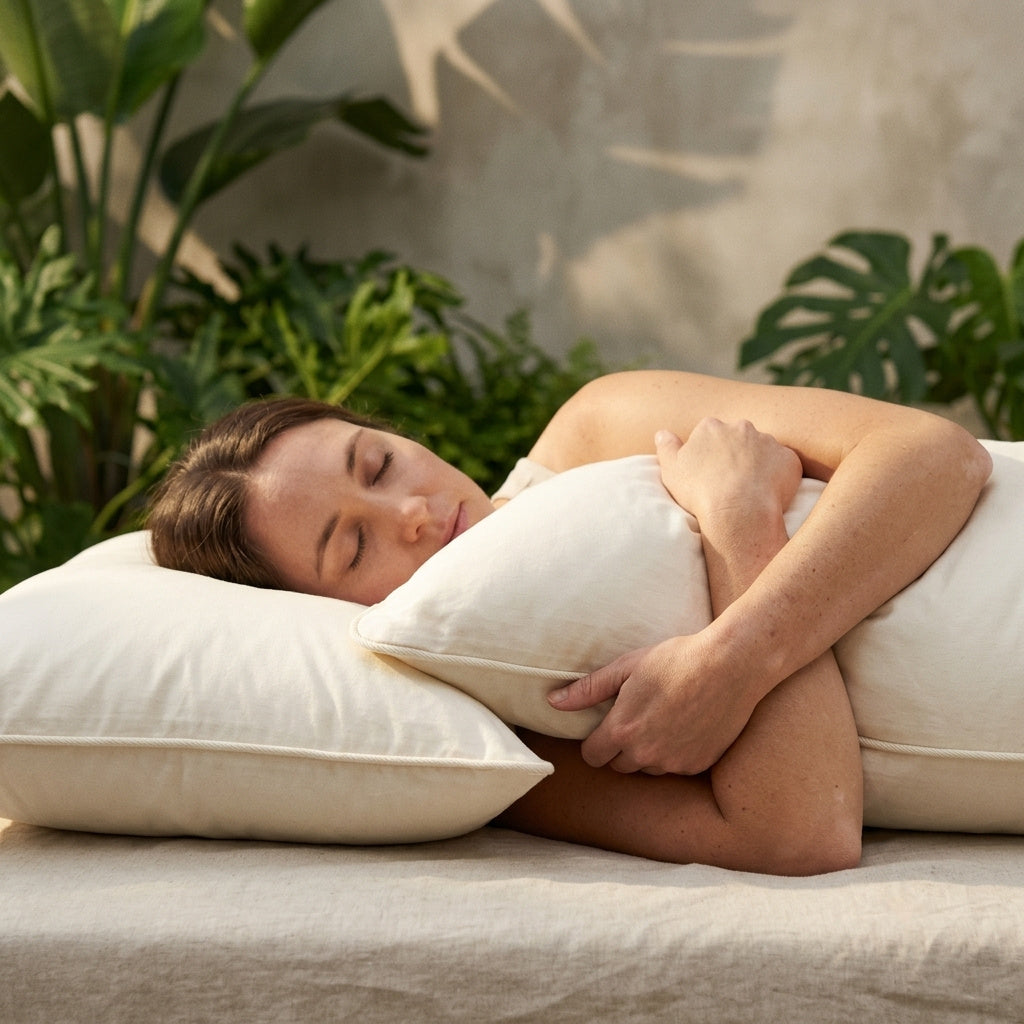
Strip away the history and a body pillow does three simple things for someone who sleeps on their side. It gives your top arm somewhere to rest instead of collapsing across your chest. It sits between your knees so the top leg isn't sliding forward and pulling you toward your stomach. And it gives you something to hold, which is why nearly every culture that invented one named it after hugging. I sleep with one every night, and I wrote about how the whole setup fits together in the side sleeper post.
What we did with it
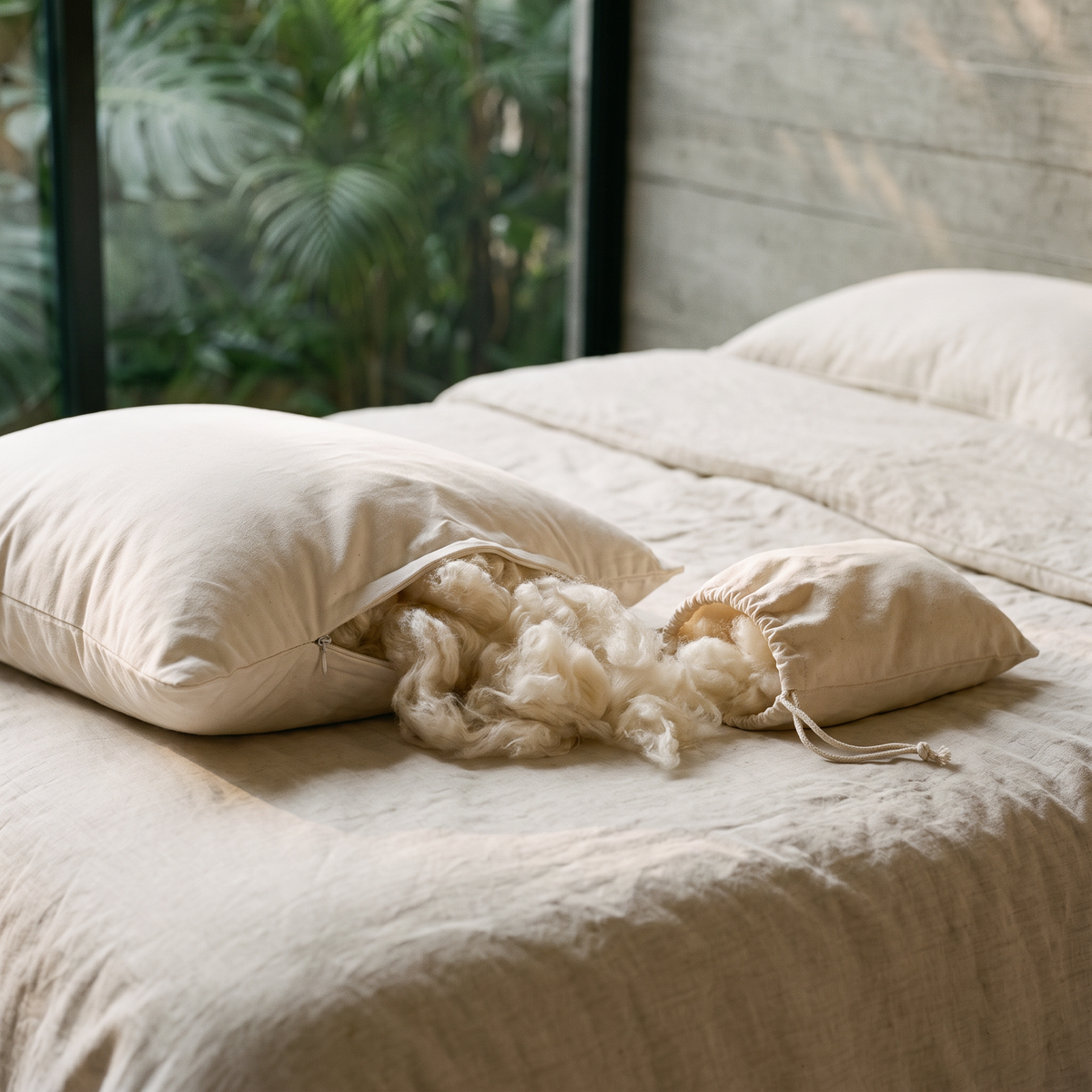
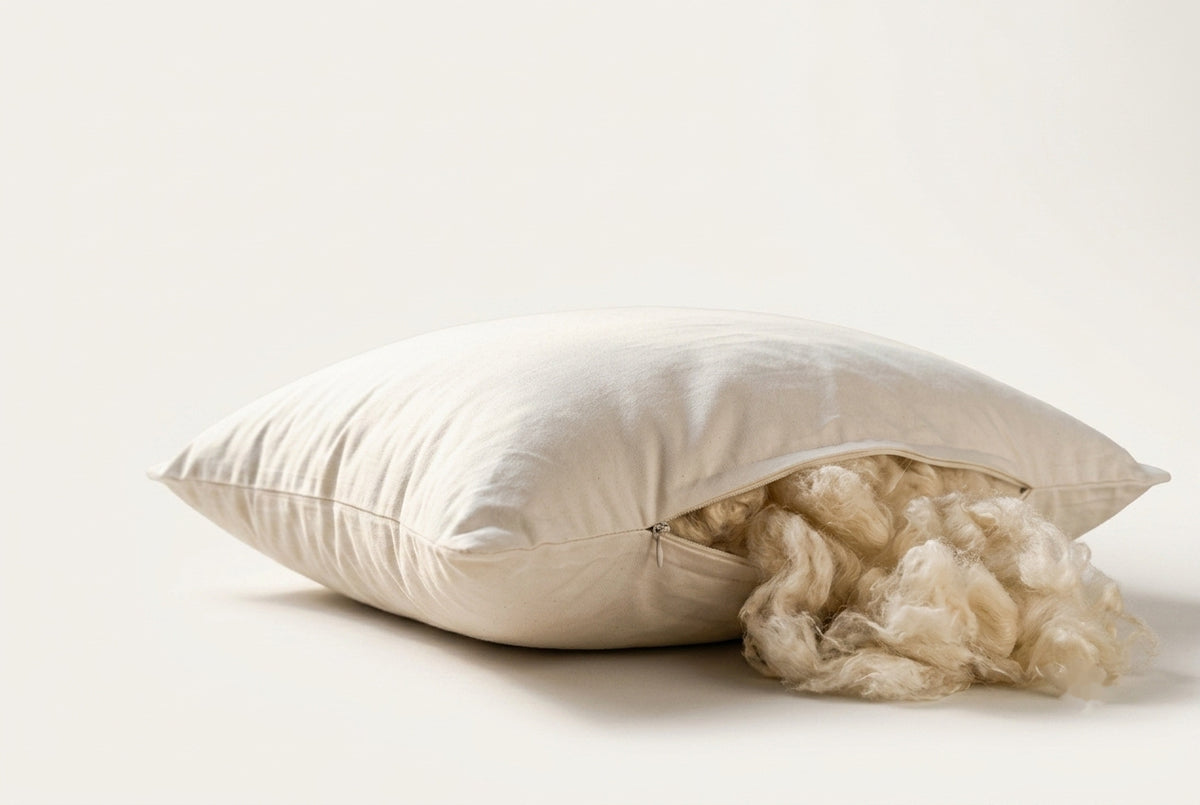
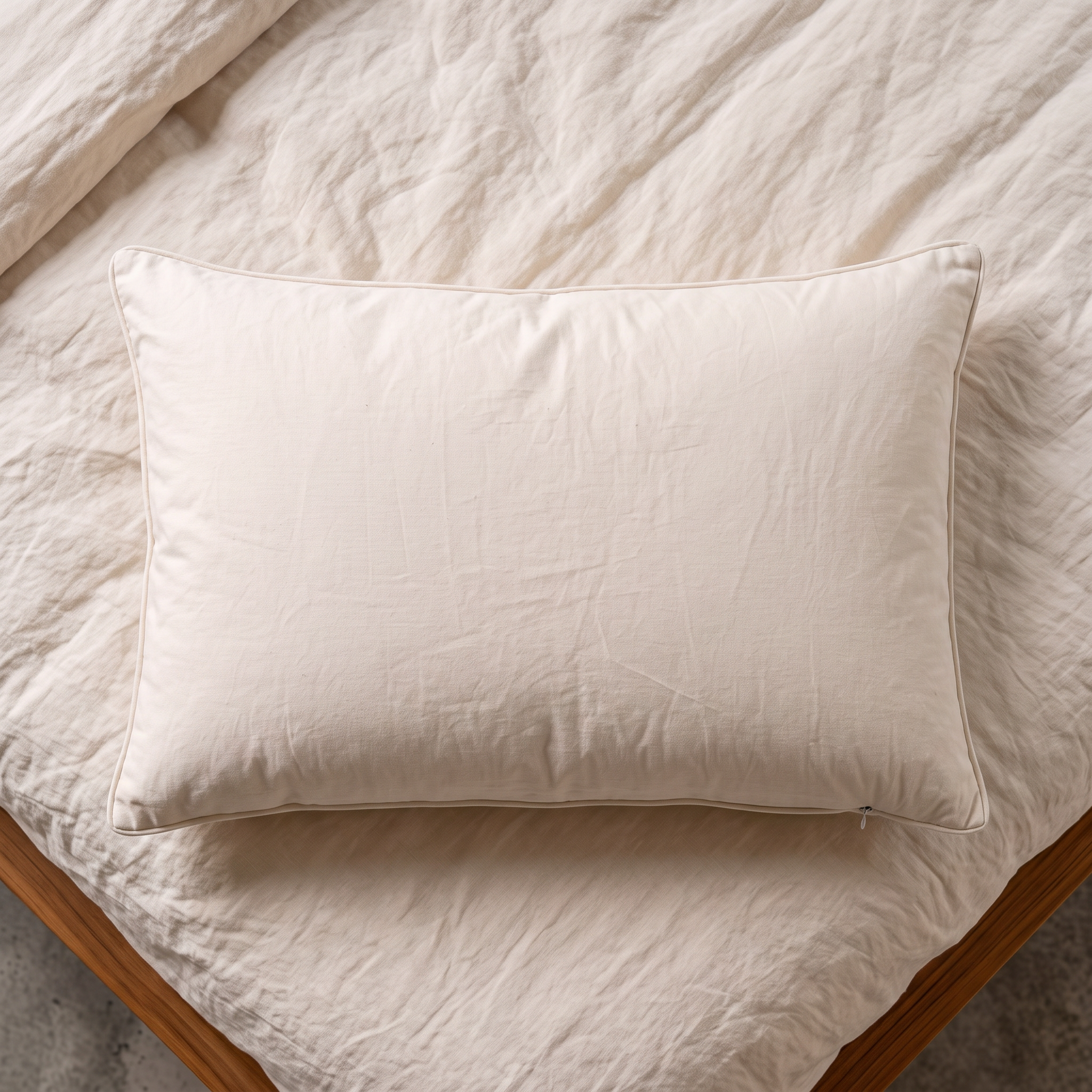
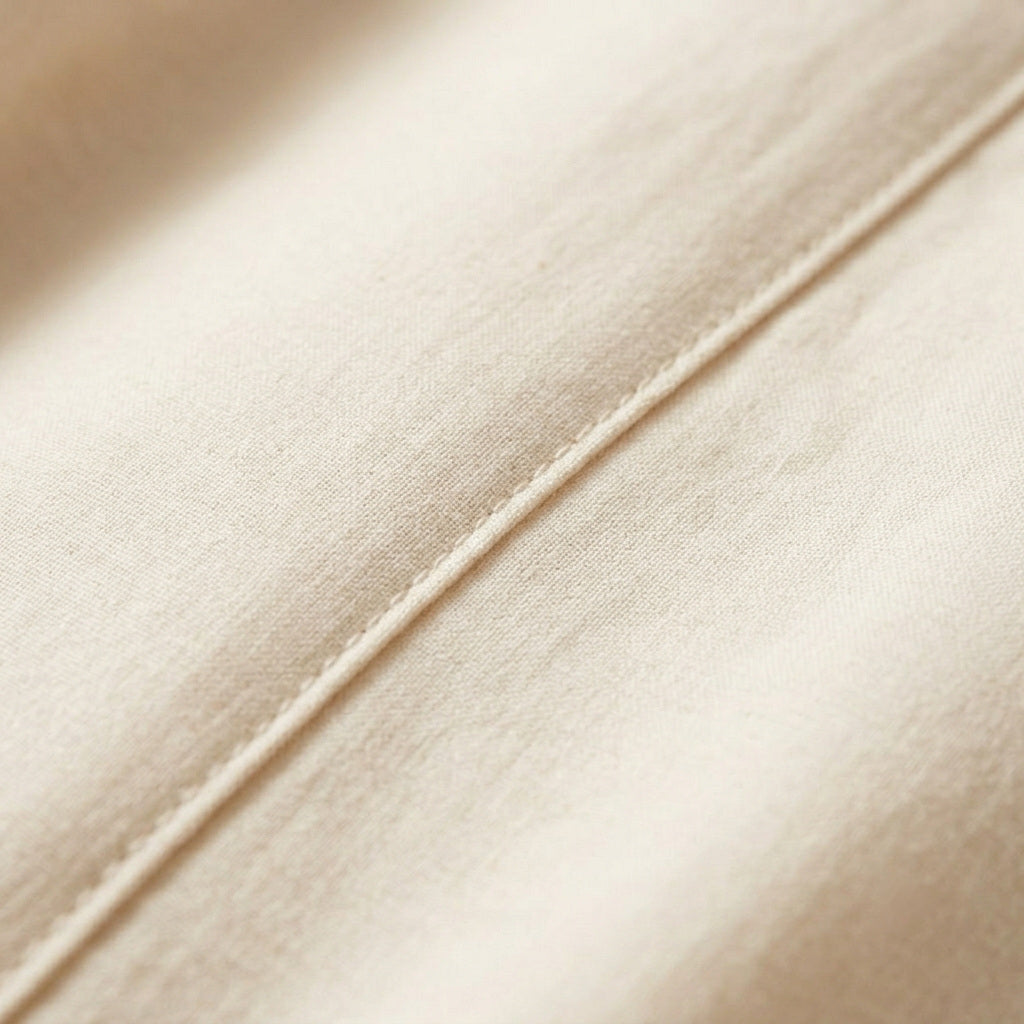
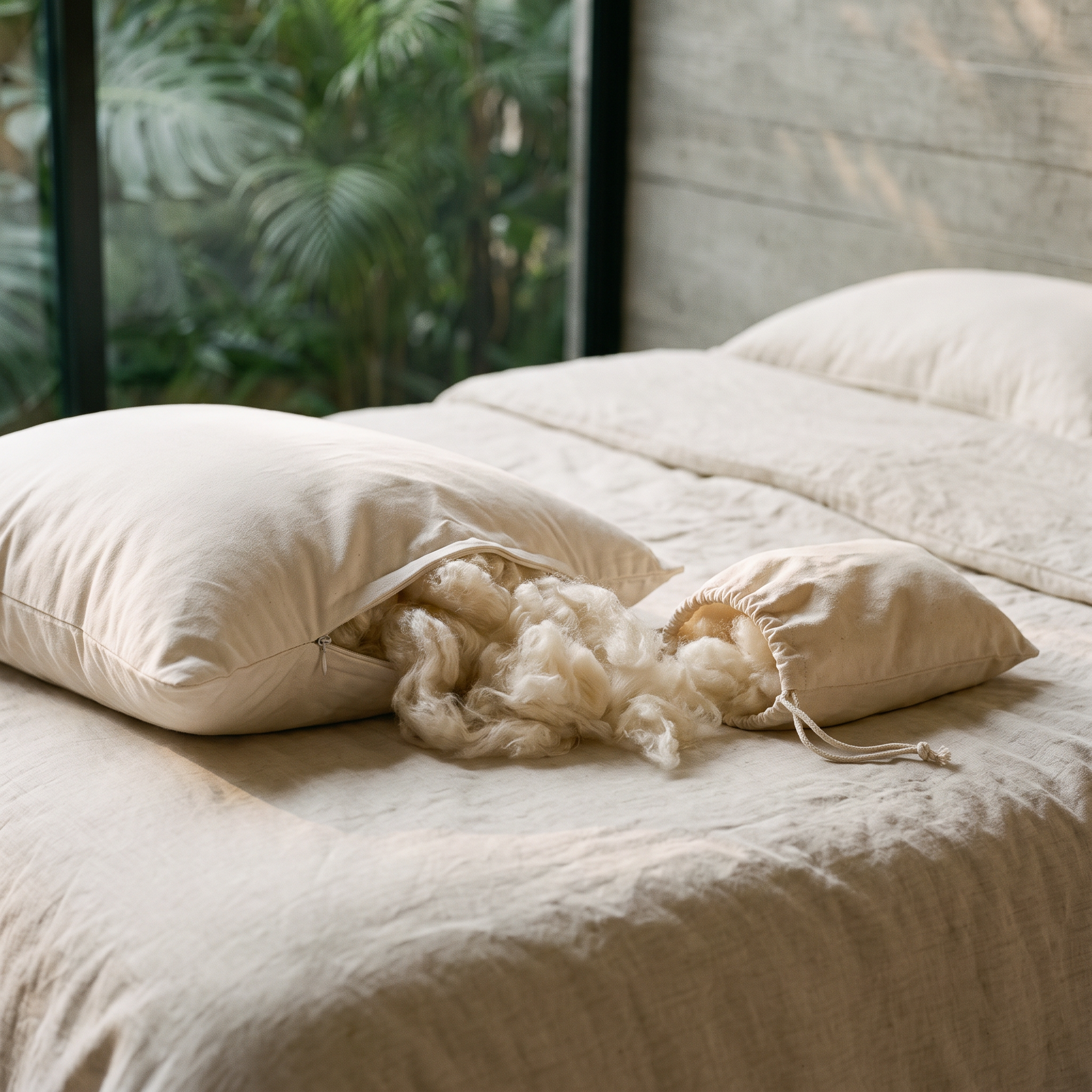
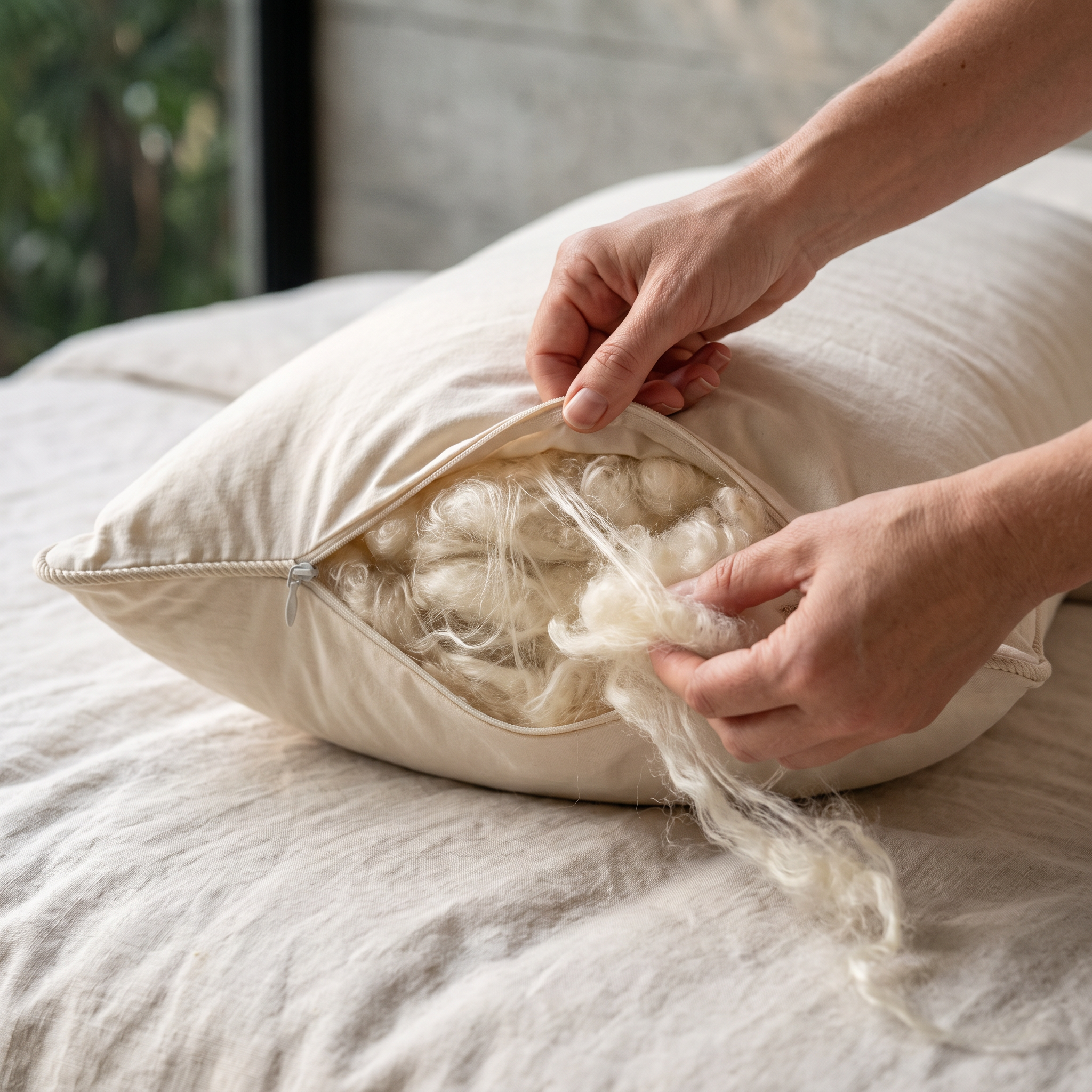
Our Wild Harvested Kapok Body Pillow is the old idea made properly. It's the American 20 by 54 inch size, filled with 100% kapok and nothing else, wrapped in a GOTS certified organic cotton sateen shell with a hidden zipper so you can take fill out or add it from a refill bag. It's light enough to move in your sleep, it breathes the way the guling did, and it's handcrafted in the USA. Seven hundred years of people sleeping with a long pillow in their arms, and the best version is still the simplest one. See how it compares with the other kapok body pillows.
Anthony
Founder, MAREA Sleep
If you find the Sleep Journal useful, you can add MAREA as a preferred source on Google. This is an optional preference for your own Google experience.




Leave a comment
This site is protected by hCaptcha and the hCaptcha Privacy Policy and Terms of Service apply.