
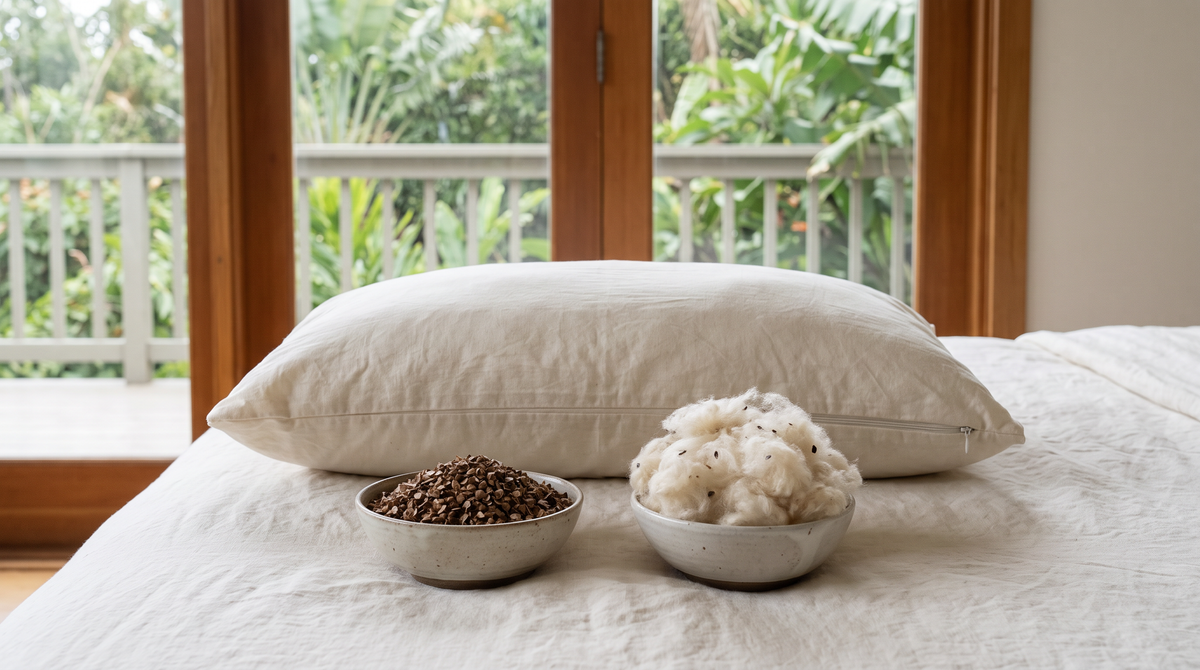
Kapok and buckwheat are the two most popular plant based pillow fills, and both let you adjust the height through a zipper. The difference is the feel. Buckwheat hulls are small hard shells that pack into a firm, heavy shape that rustles when you move. Kapok is a silky fiber that's mostly air, so it's soft, light and silent, and it molds around your head instead of holding it in place.
Content reviewed October 17, 2026.
If you're reading this you've probably already ruled out foam and down, which puts you in a small club. Most people never think about what's inside a pillow. The ones who do usually end up choosing between these two, so here's what you're actually choosing between.
What's inside each one
Buckwheat hulls are the outer shells of the buckwheat seed, the part left over after milling. They're hard, hollow and about the size of a sunflower seed husk. Pour enough of them into a cotton case and you get a pillow that behaves a little like a beanbag: push it into a shape and it stays there.
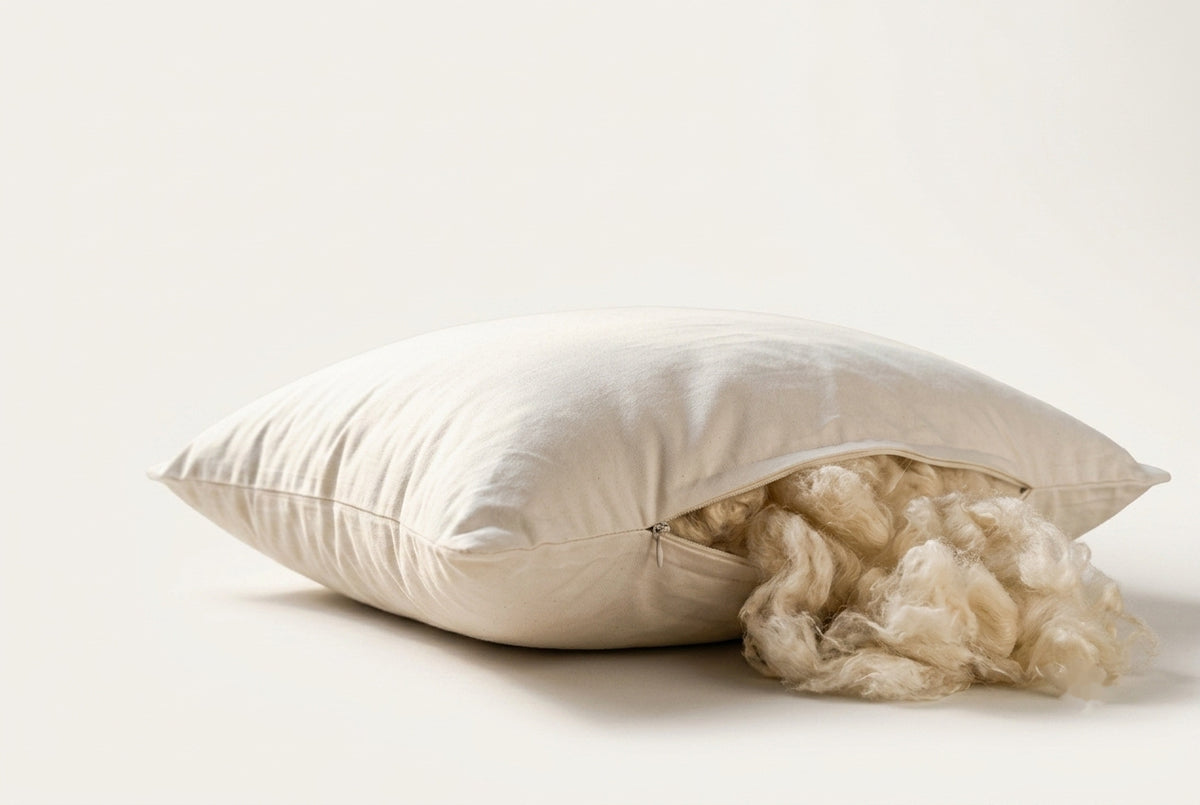
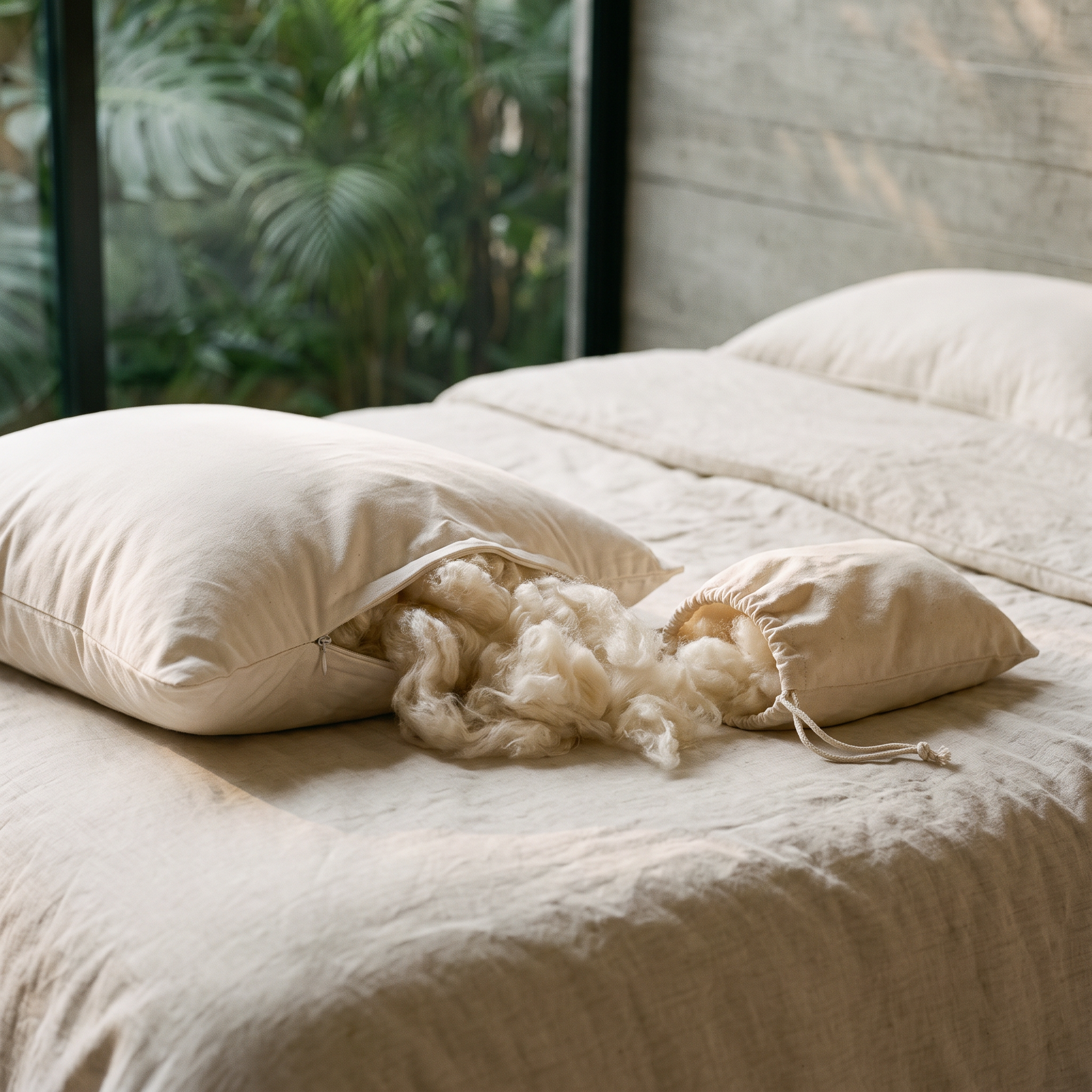
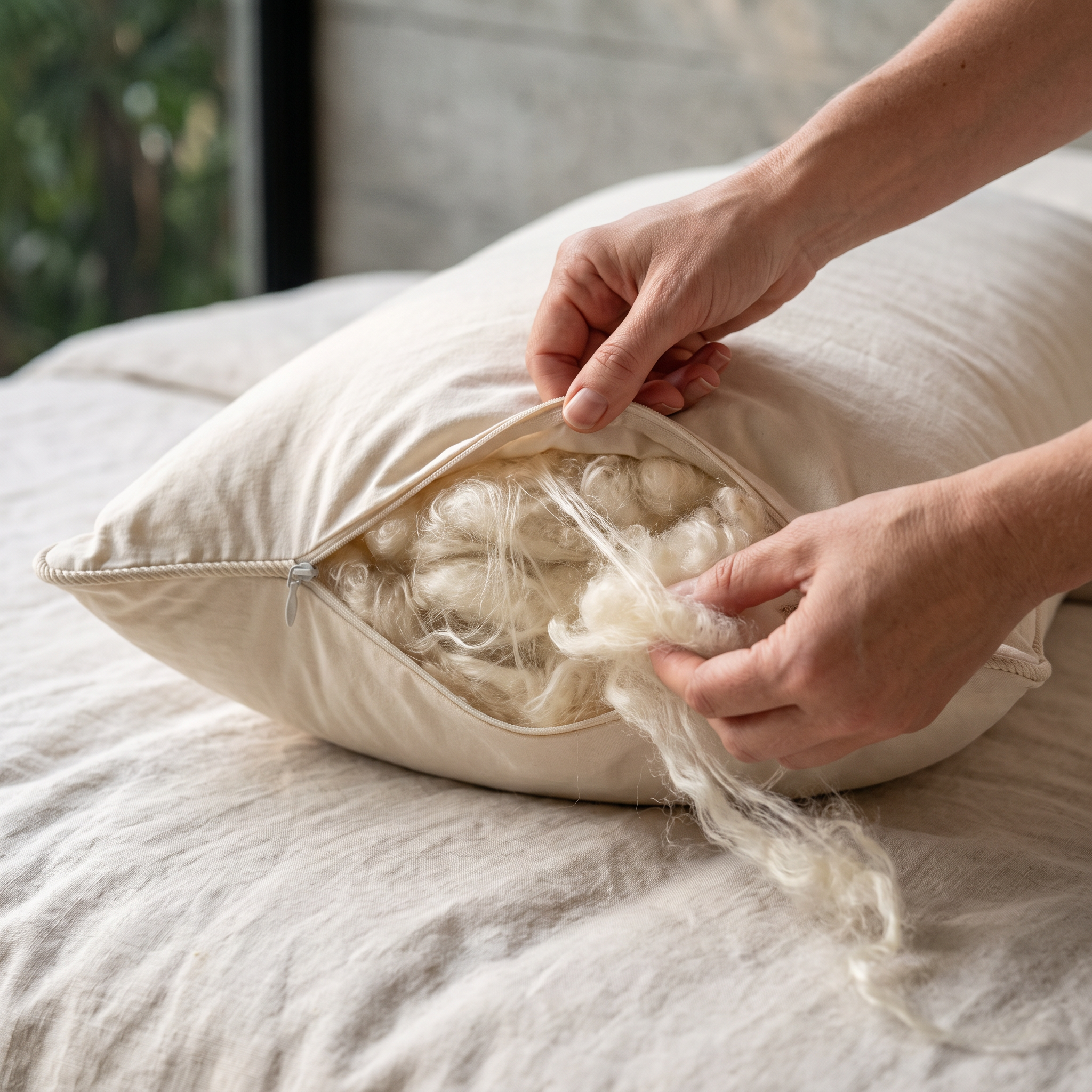
Kapok comes from the seed pods of the ceiba tree. When the pods split, the fiber inside is already soft and fluffy, so there's no spinning or chemical processing needed to turn it into fill. Each fiber is a hollow tube, and roughly 80 percent of it is air. Ours is wild harvested in Indonesian rainforests and sealed inside a GOTS certified organic cotton sateen shell.

How they feel under your head
This is the whole decision, really. Buckwheat feels firm and grainy. Your head sinks in a little, the hulls shift out of the way, and then they lock up and hold. People who love it call it supportive. People who don't call it sleeping on a bag of gravel. Both are fair.
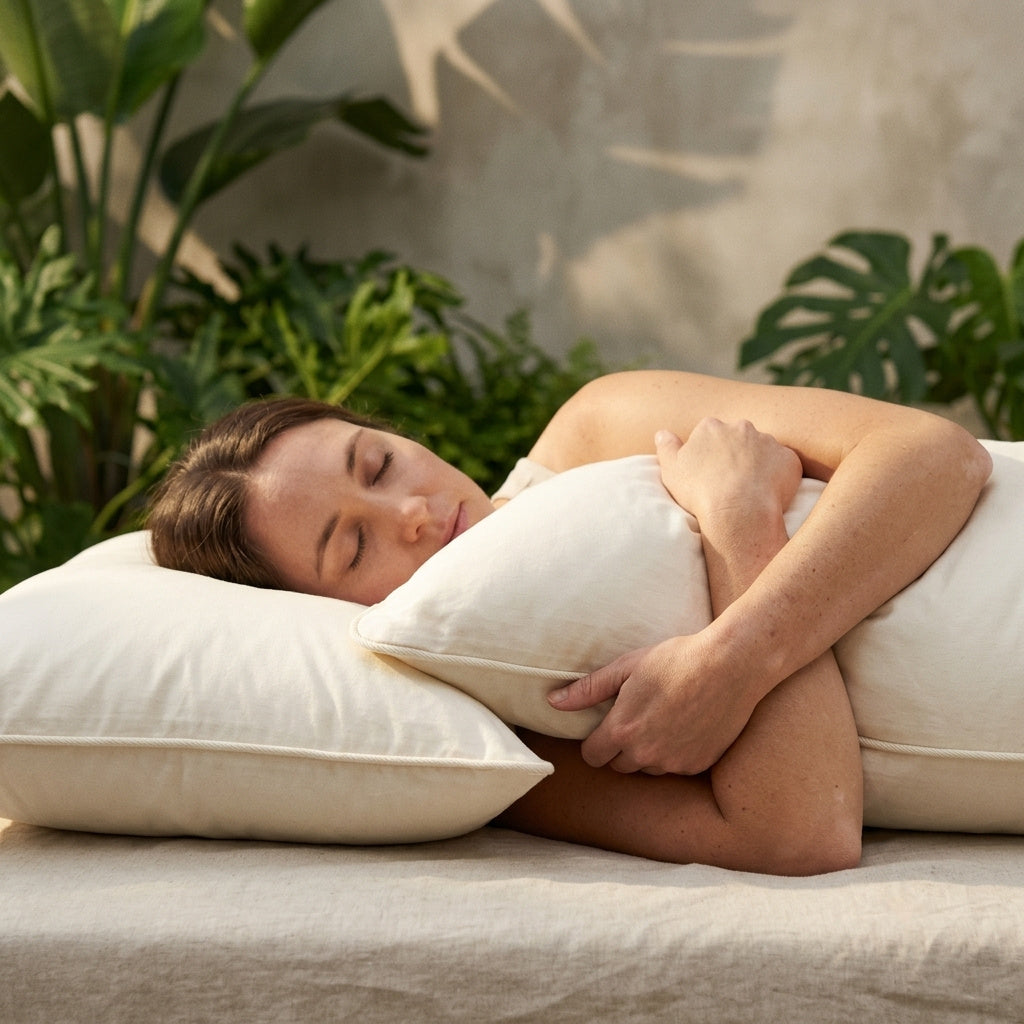
Kapok feels soft and silky, closer to down than to anything else. It gives under your head and wraps around your cheek and shoulder without the slow sinking hug of memory foam. If you've ever pressed your face into a good hotel pillow and thought, yes, this, kapok is in that family.
Weight
Buckwheat pillows are heavy. A full one takes two hands to pick up, which matters more than you'd think when you're rearranging it at two in the morning. Kapok is famously light, light enough that it filled life jackets for most of the twentieth century. A kapok pillow is easy to lift, flip, fold in half or tuck under an arm.
Sound
Every time you turn on a buckwheat pillow, the hulls crunch and rustle. Some people find it soothing, like sand on a beach. Light sleepers and anyone sharing a bed tend to notice it more. Kapok is silent. You can roll over all night and nobody hears a thing.
Adjusting the height
Both fills are adjustable, which is a big reason people pick either one over a sewn shut pillow. With buckwheat you scoop hulls out through the zipper to go lower and keep the extra in a bag. Kapok works the same way: open the hidden zipper, pull out a handful to go lower, or add from a refill bag to go higher. If you don't know where to start, the loft guide walks through it by sleeping position.
Heat
Both sleep cooler than foam. Buckwheat has air gaps between the hulls and kapok has air inside every fiber, and neither traps body heat the way a dense block of foam does. I wrote a whole piece on how kapok sleeps in a room with no AC.
Settling and daily fluffing
Kapok settles under your head through the night, the same way down does. In the morning you give it a few squeezes and a shake and it comes right back. That thirty second habit is part of owning any natural fill pillow. Buckwheat doesn't need fluffing so much as reshaping, and over the years the hulls slowly break down and get replaced. With kapok, if the pillow ever feels lower than you like, you top it up from a refill bag instead of buying a new pillow.
Care
Neither fill goes in the washing machine. Buckwheat owners sun the hulls now and then to keep them dry and fresh. Kapok wants the same thing: keep the filled pillow dry, air it in the sun when you can, and put the washing effort into the cover. Our organic cotton sateen cover zips off and goes in a cold wash with your sheets.
About the flammability posts
If you've been researching, you've probably seen buckwheat brands point out that loose kapok catches fire easily. Loose fiber of almost any kind does, which is why you don't smoke in bed with any pillow. I wrote a straight answer to that question in is kapok flammable.
Which one fits how you sleep
If you want a pillow that feels like a firm, sculpted block and you don't mind the weight or the sound, buckwheat delivers exactly that. If you want something soft, light and quiet that feels like a hotel pillow but is entirely plant based and adjustable, that's kapok, and it's the reason I built MAREA. Side sleepers in particular tend to like how kapok fills the gap between the shoulder and the ear without pushing back.
Every MAREA pillow comes with a 100 day sleep trial, so you can sleep on kapok for a few months and decide for yourself.
Quick answers
- Is kapok or buckwheat softer? Kapok is much softer. Buckwheat is firm and grainy; kapok is silky and feels closer to down.
- Is a kapok pillow lighter than a buckwheat pillow? Yes, by a lot. Kapok fiber is mostly air, while buckwheat hulls are dense shells.
- Are buckwheat pillows noisy? Buckwheat hulls rustle every time you move. Kapok makes no sound.
- Can you adjust both? Yes. Both are loose fills behind a zipper, so you remove fill to go lower and add fill to go higher.
- Which is better for side sleepers? It depends on whether you want firm or soft support. Many side sleepers prefer kapok because it fills the space between the shoulder and the head while staying soft against the face.
Anthony
Founder, MAREA Sleep
If you find the Sleep Journal useful, you can add MAREA as a preferred source on Google. This is an optional preference for your own Google experience.






Leave a comment
This site is protected by hCaptcha and the hCaptcha Privacy Policy and Terms of Service apply.