
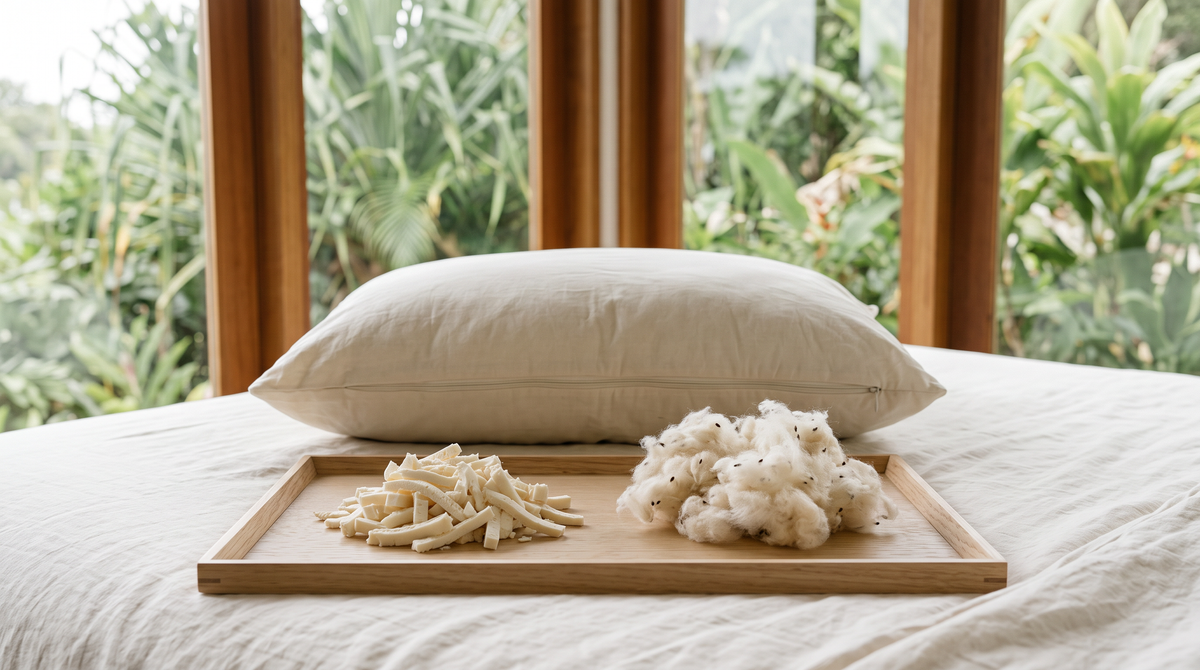
Kapok and natural latex both come from trees, and both make a pillow with no petroleum foam inside. They feel completely different. Latex is springy: it pushes back and holds its shape. Kapok is soft and silky: it gives under your head and molds around it, closer to down. If you want bounce, latex. If you want softness that you can adjust by the handful, kapok.
Content reviewed October 17, 2026.
When people start looking for a pillow without memory foam, latex is usually the first natural option they find, because it shows up in almost every "best natural pillow" list. Kapok tends to be the second. Here's how the two actually compare once they're under your head.
Where each one comes from
Natural latex starts as sap tapped from rubber trees. That milky sap is whipped into a froth and baked into foam, either the denser Dunlop process or the airier Talalay process. The result is sold as a solid molded block or chopped into shredded pieces. If organic certification matters to you, the standard for latex is GOLS, the Global Organic Latex Standard.
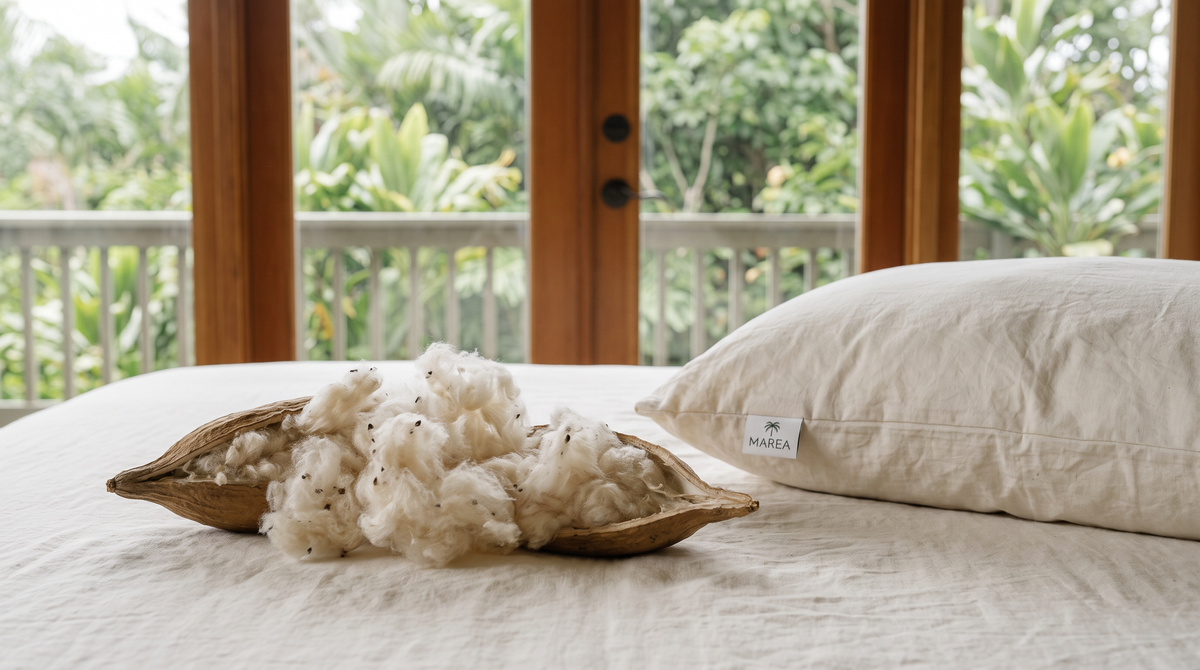
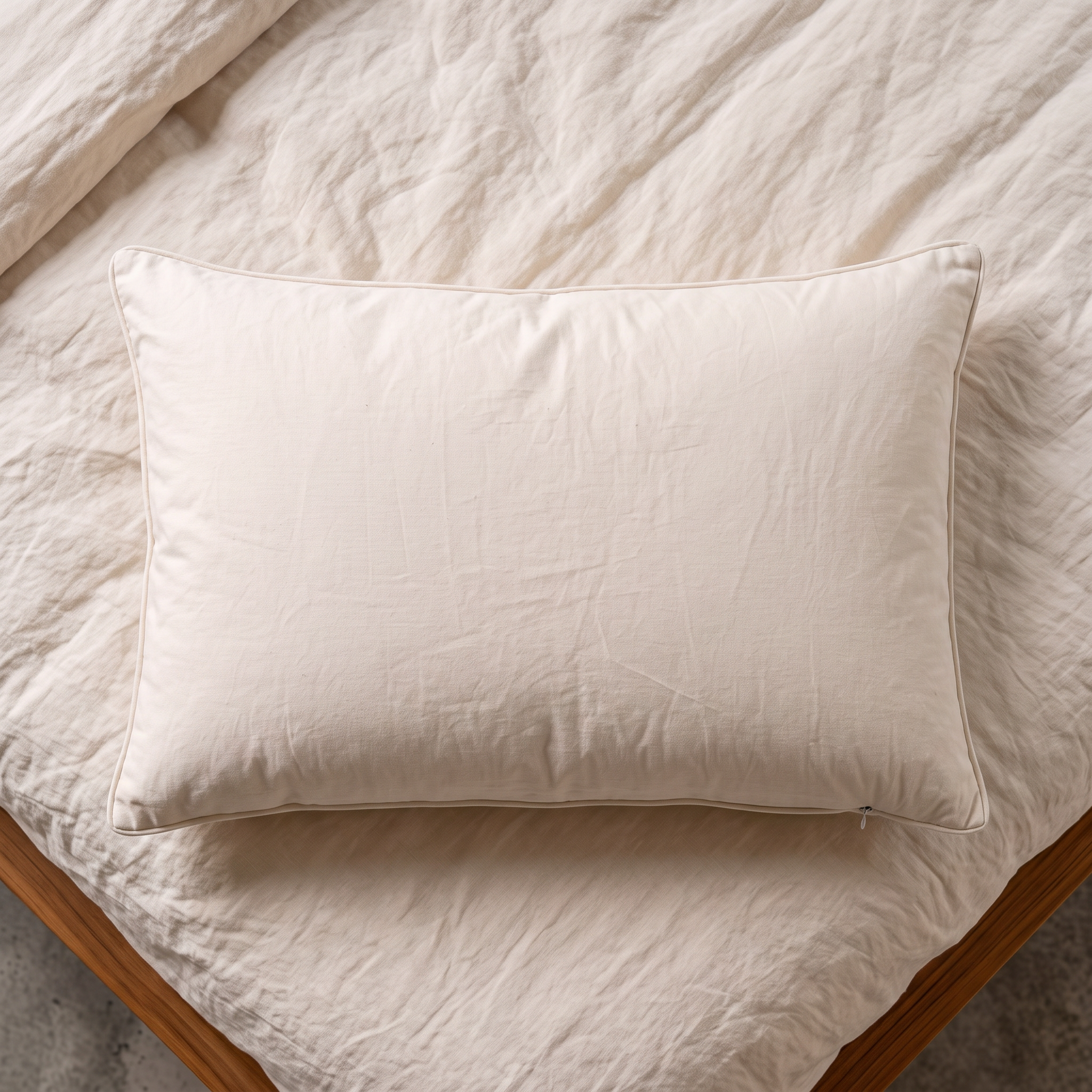
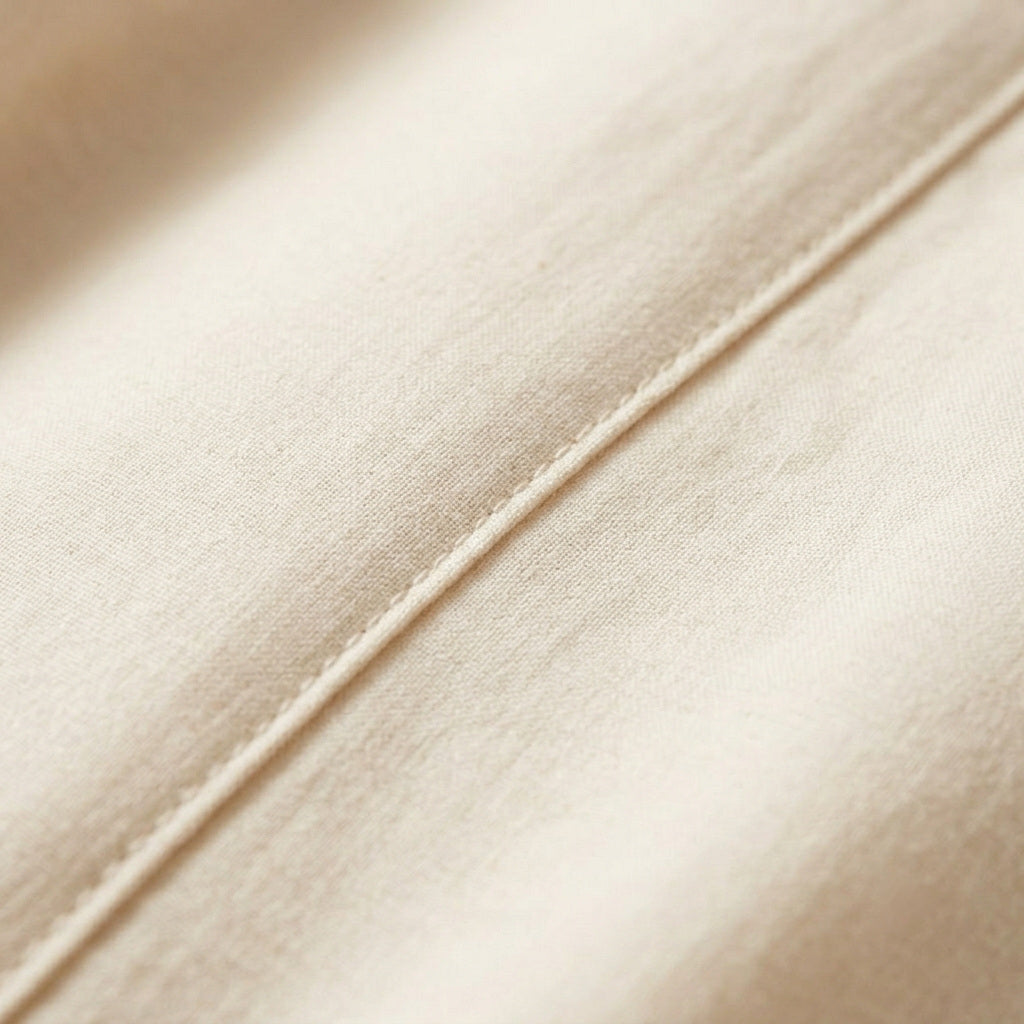
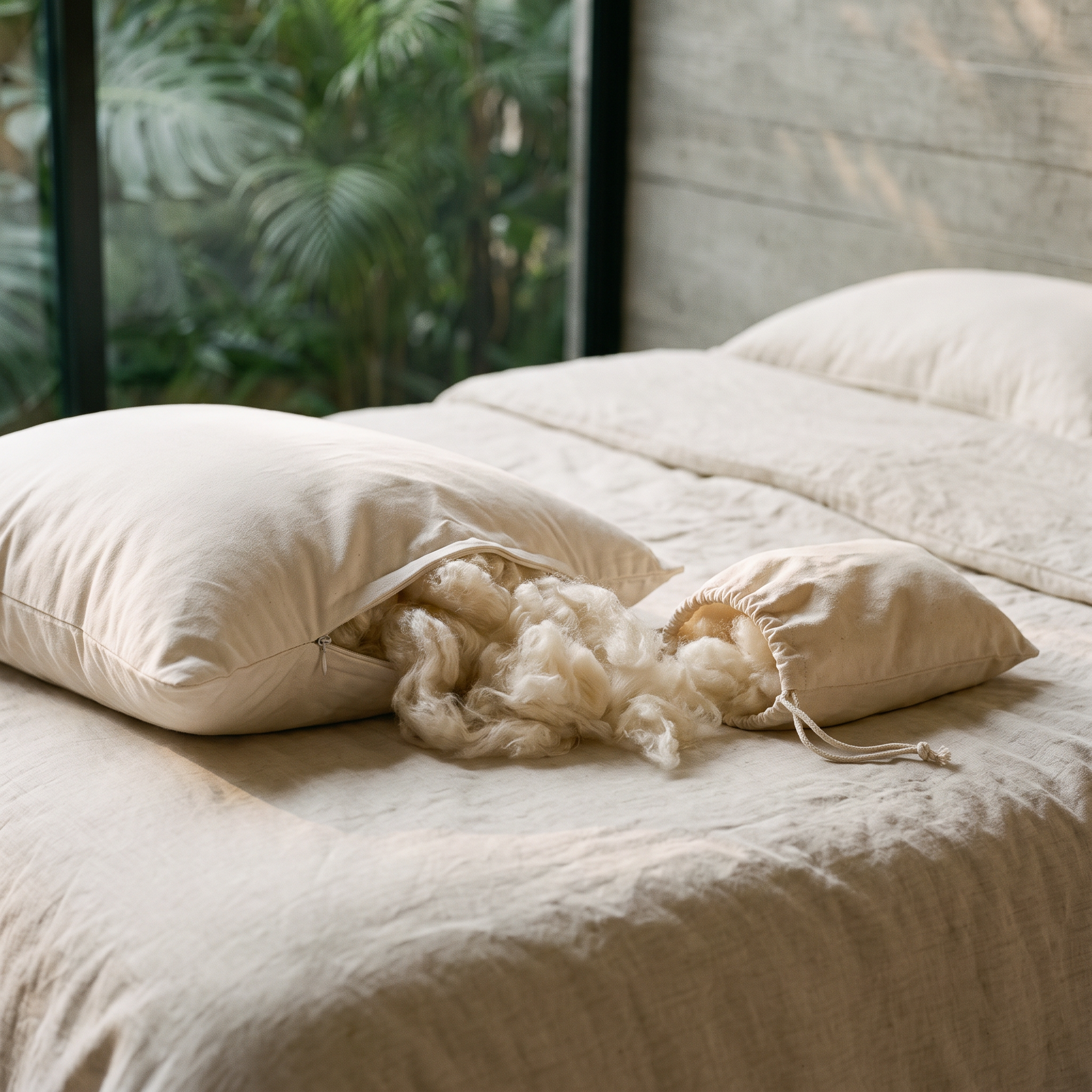
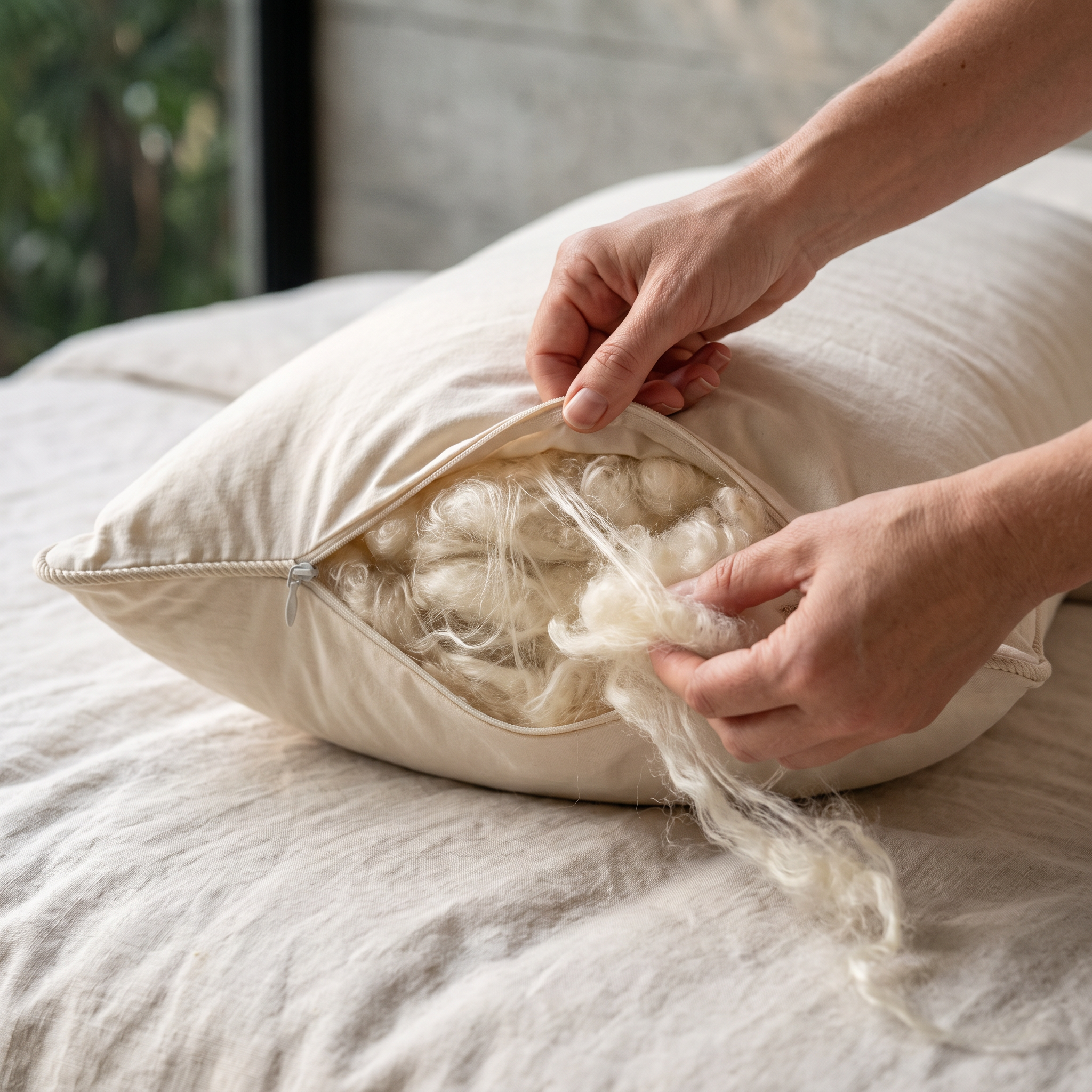
Kapok comes from the seed pods of the ceiba tree. The fiber inside the pod is already soft and fluffy when it's gathered, so it goes into the pillow as is, with no baking or foaming. Each fiber is a hollow tube that's roughly 80 percent air. Ours is wild harvested in Indonesian rainforests and sewn into a GOTS certified organic cotton sateen shell.

How they feel
Latex has bounce. Press into it and it presses back right away, which is why people describe it as supportive and responsive. A solid latex pillow keeps the same shape all night and all year.
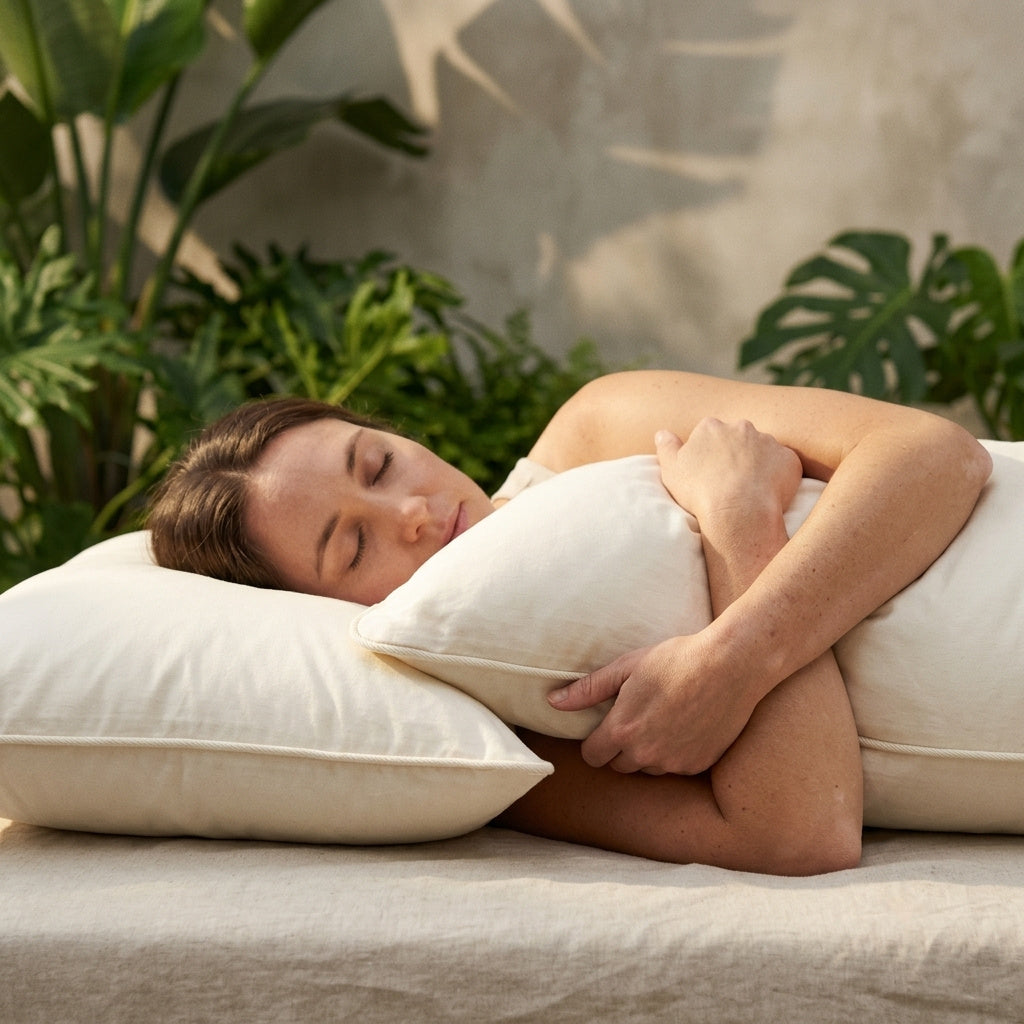
Kapok has give. It compresses softly under your head, wraps around your cheek and jaw, and feels silky rather than rubbery. It's the closest plant based fill to the feel of a down pillow. If latex is a mattress, kapok is a cloud.
Adjusting the height
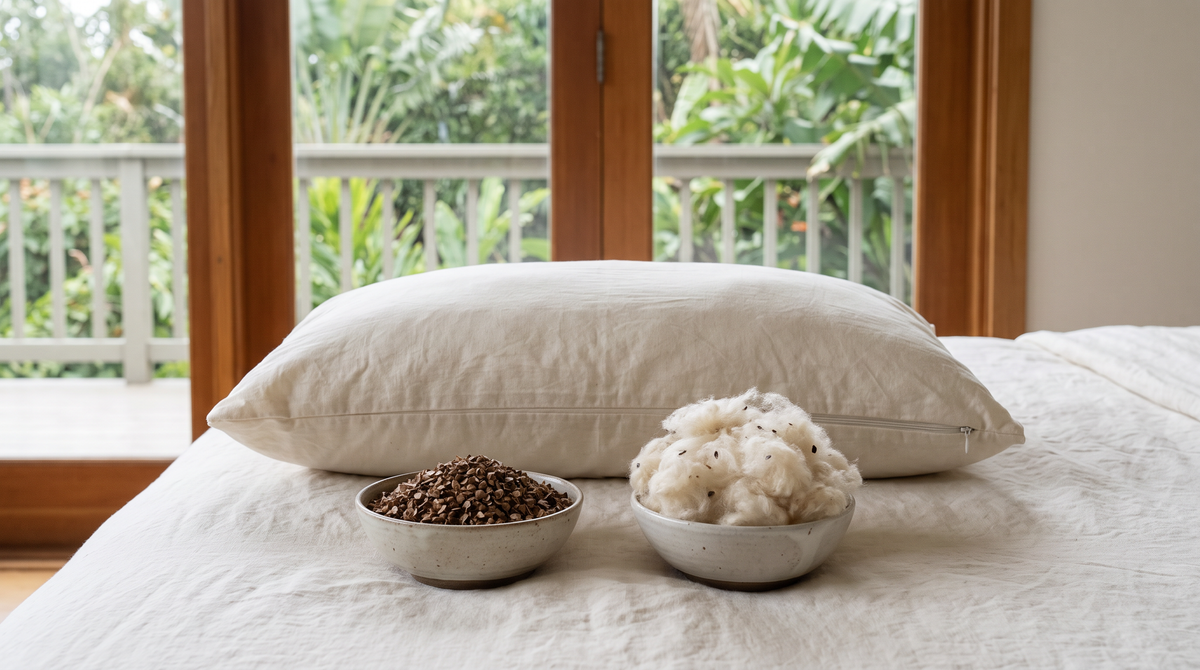
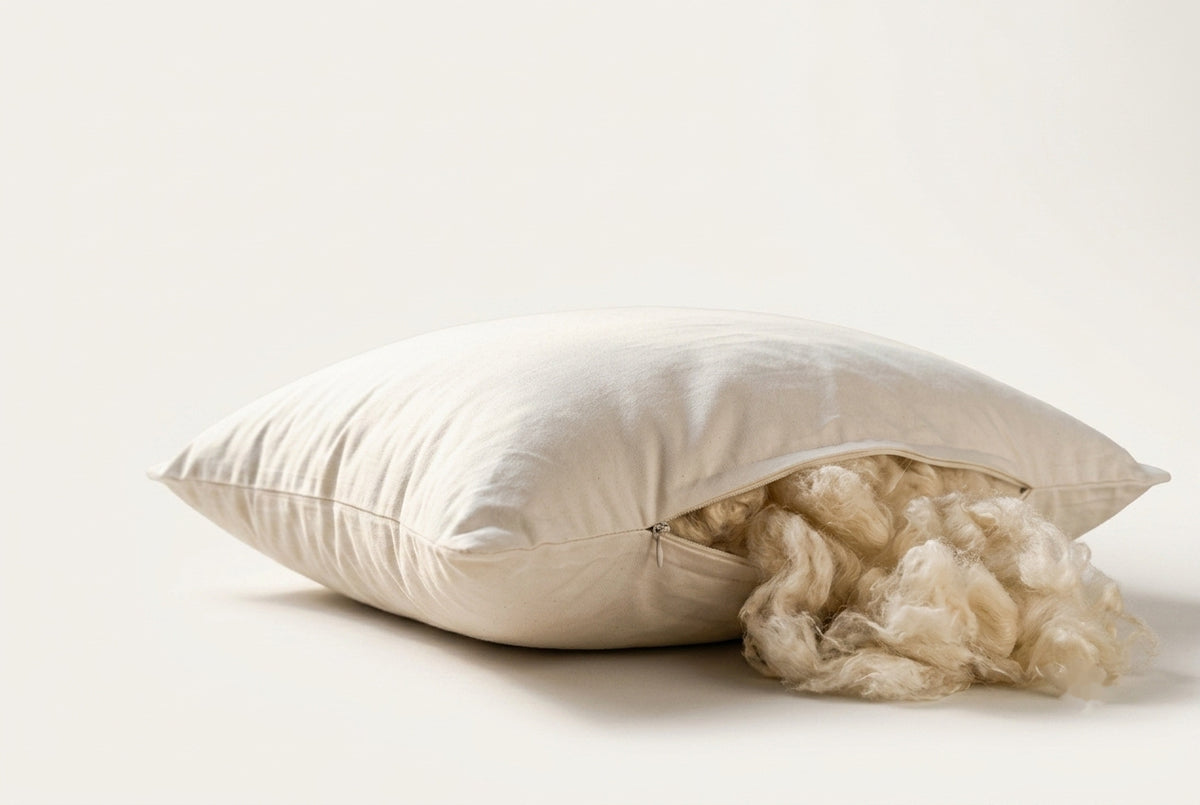
A solid latex pillow is one height, the height it was molded at. Shredded latex pillows are adjustable through a zipper, the same idea as kapok. MAREA pillows have a hidden zipper so you can take out a handful of kapok to go lower or add from a refill bag to go higher, and set the height for how you sleep. The loft guide walks through it by sleeping position.
Weight
Latex is dense, so a latex pillow has real heft. Kapok is one of the lightest natural fibers there is, light enough that it filled life jackets for decades. A kapok pillow is easy to lift, fold, flip and tuck under an arm.
Heat
Kapok sleeps light and airy because of the air inside every fiber. Solid latex is a dense block, which is why makers punch pinholes through it for airflow, and shredded latex lets more air move between the pieces. I wrote about how kapok sleeps in a room with no AC.
Smell
Many people notice a mild rubbery scent from a new latex pillow that fades over the first weeks. Kapok has very little smell of its own, and there's no foam in a MAREA pillow to air out.
Latex allergies
Natural latex comes from rubber, so anyone with a latex allergy should talk to their doctor before sleeping on it. Kapok contains no latex. Allergies are individual either way; the kapok allergy guide has more.
Care
Neither fill goes in the washing machine. Latex is spot cleaned and kept in a cover. With kapok, keep the filled pillow dry, air it in the sun now and then, and wash the zip off organic cotton sateen cover cold with your sheets.
What about latex and kapok blends?
Some pillows mix shredded latex and kapok to get some bounce and some softness. They can be very good pillows. They just aren't pure kapok, and they feel firmer and springier than a pillow filled only with kapok. I wrote about the difference in pure kapok vs kapok blend pillows.
Which one fits how you sleep
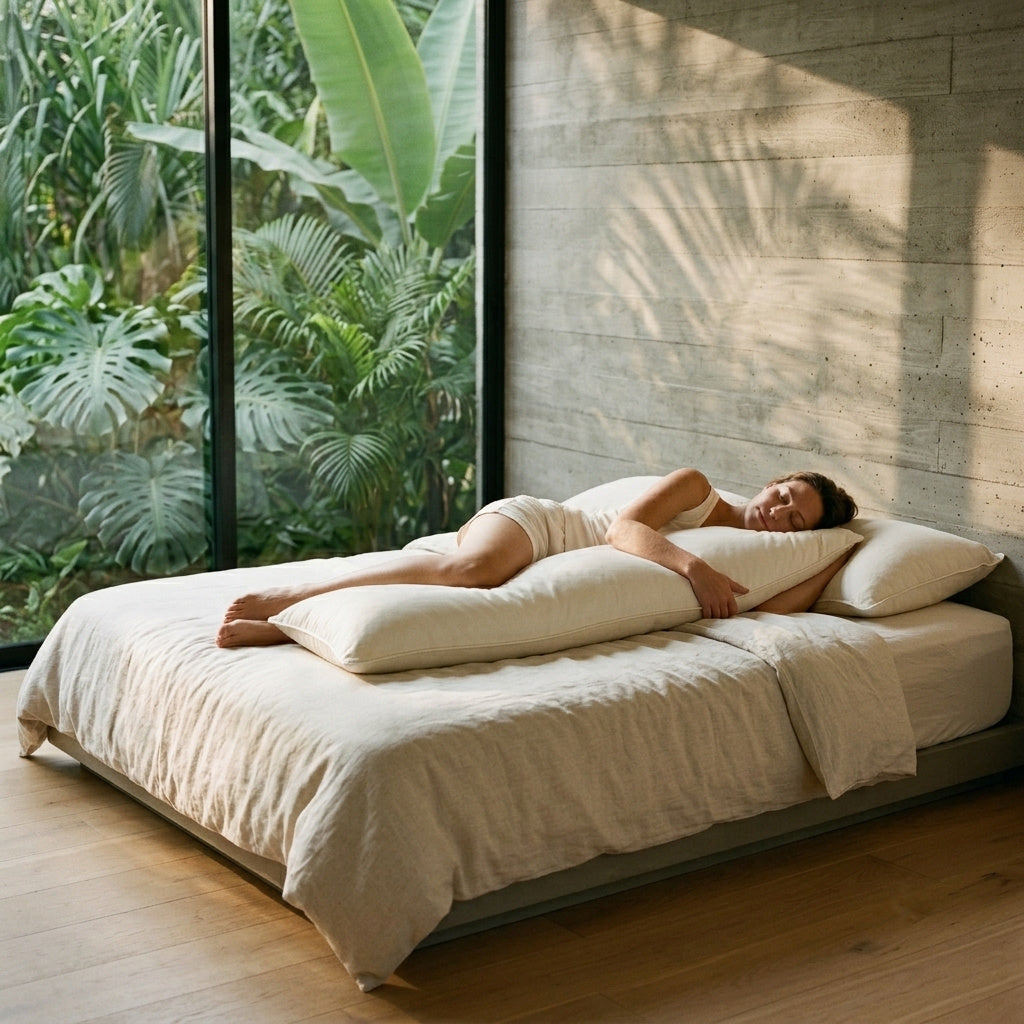
If you want a pillow that pushes back and never changes shape, latex does that well. If you want a pillow that's soft against your face, light in your hands, silent, and adjustable a handful at a time, that's kapok. It's what I sleep on, and it's what MAREA makes. Every MAREA pillow comes with a 100 day sleep trial, so you can find out which camp you're in.
Quick answers
- Is kapok softer than latex? Yes. Latex is springy and pushes back; kapok is soft and silky and feels closer to down.
- Are kapok and latex both natural? Both come from trees. Latex is made from rubber tree sap that's foamed and baked; kapok is a seed fiber used as it comes from the pod.
- Which pillow is lighter? Kapok, by a wide margin. Latex is a dense material and noticeably heavier.
- Can I adjust a latex pillow? Only shredded latex pillows adjust. Solid latex is one fixed height. Kapok pillows with a zipper adjust a handful at a time.
- Is kapok OK if I have a latex allergy? Kapok contains no latex. Talk to your doctor about any allergy.
Anthony
Founder, MAREA Sleep
If you find the Sleep Journal useful, you can add MAREA as a preferred source on Google. This is an optional preference for your own Google experience.



Leave a comment
This site is protected by hCaptcha and the hCaptcha Privacy Policy and Terms of Service apply.