
For about five years I didn't have a bed of my own. I had other people's beds. Airbnbs with sheets that had been through a thousand guests, homestays where the family washed the linens in a bucket and dried them on a line in the sun, boutique hotels that put a card on the pillow telling you what the pillow was made of, and a place in Biarritz, France, that charged more for one night than I want to admit in writing. Cheap places too, plenty of them. If you sleep in that many beds, you stop noticing the decor and start noticing the sheets.
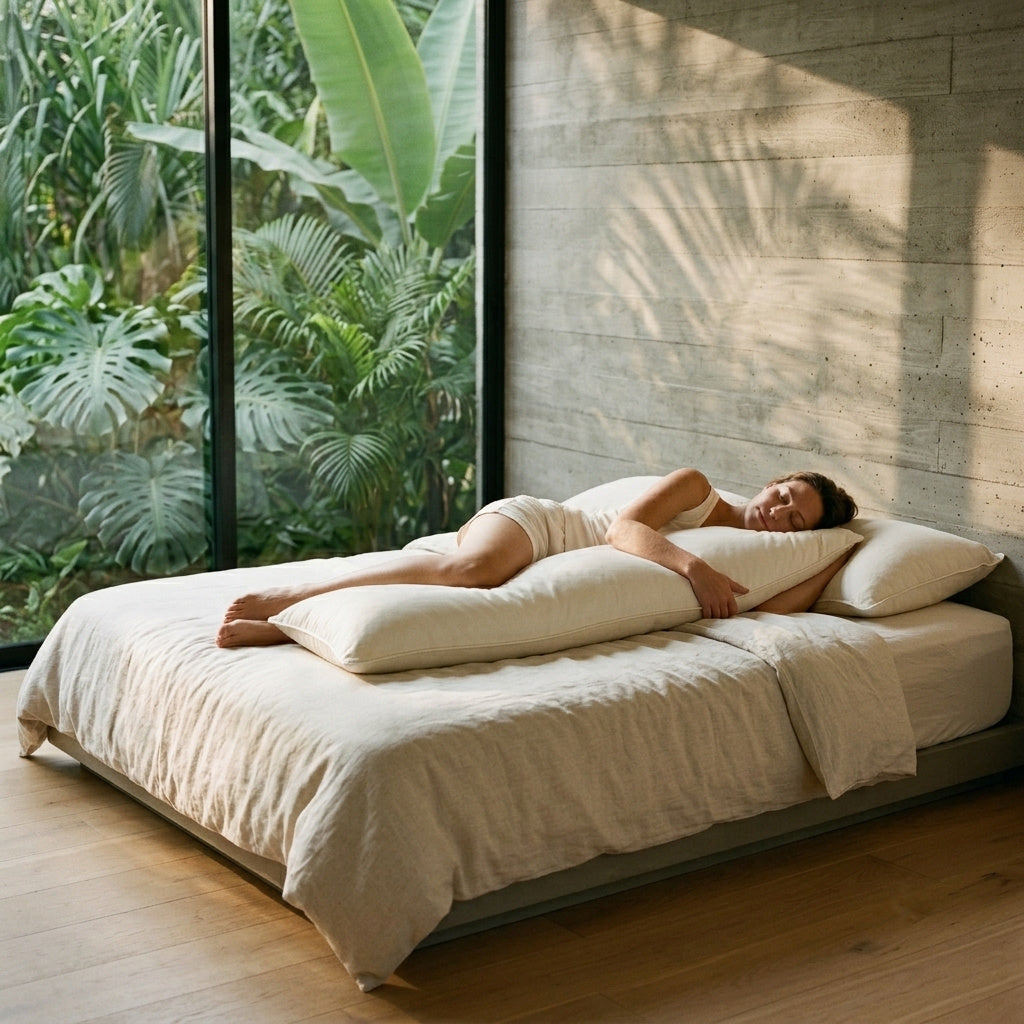
I'm not exaggerating when I say the sheets decided whether I slept. I could be dead tired from a full day in the water in Nosara, Costa Rica, and still lie there at two in the morning, sticky, peeling a sheet off my leg that felt like it had been dipped in something. And then the next place, with a mattress that was frankly worse, I'd sleep nine hours straight, because the sheet was cotton, it breathed, and it smelled like nothing.
The pattern I couldn't unsee
It took a while to figure out, because price was a terrible predictor. Some of the worst sheets I slept on were in expensive rooms. They looked incredible. Very white, very smooth, that slippery hotel gloss. And they slept hot and strange, with a slight slickness that never quite went away no matter how cool the room was. I learned later that a lot of hotels buy cotton and polyester blends because they survive industrial laundering better, and that finishes get added to keep sheets looking crisp through hundreds of washes. Makes sense for a laundry. Terrible for a person.
The best sheets were almost always the plain ones. A homestay on Sumbawa, in Indonesia, sheets that had faded to the color of oatmeal from years of sun, so soft they felt like they'd already given up trying to impress anyone. Nothing on them. Just cotton that had been washed a lot. I slept like a kid there.
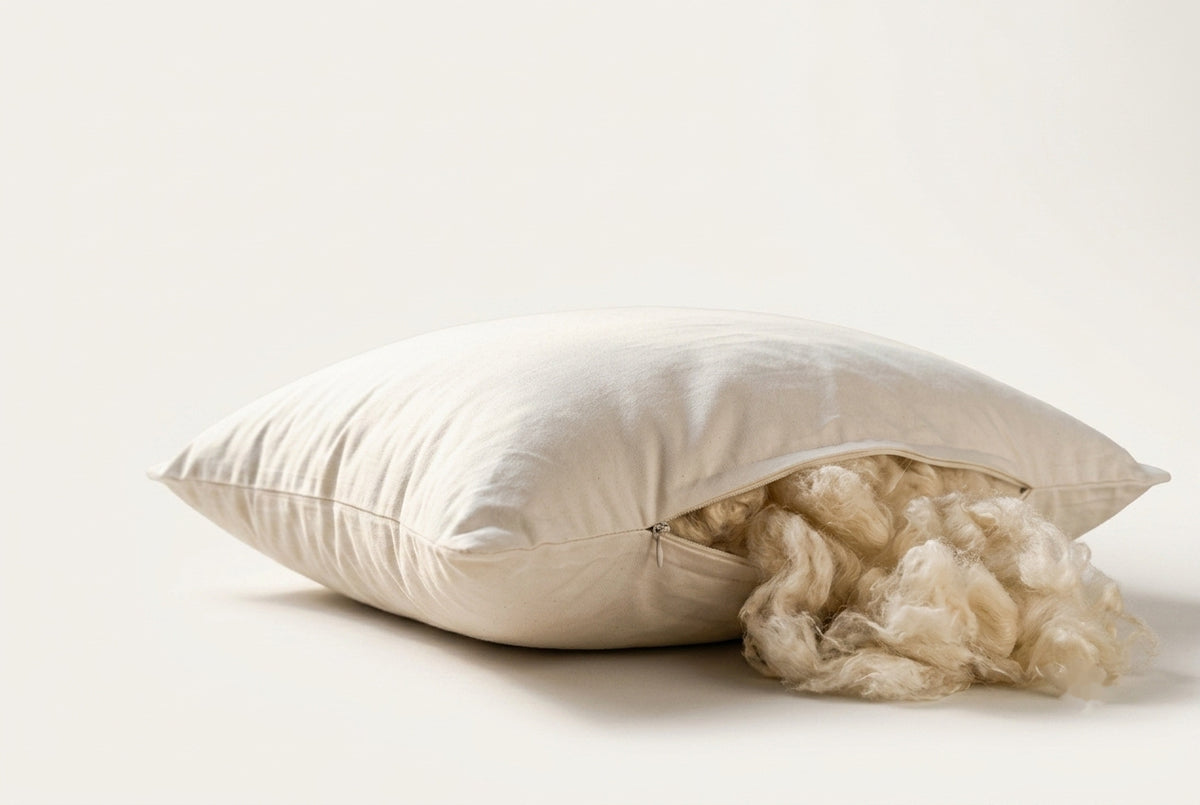
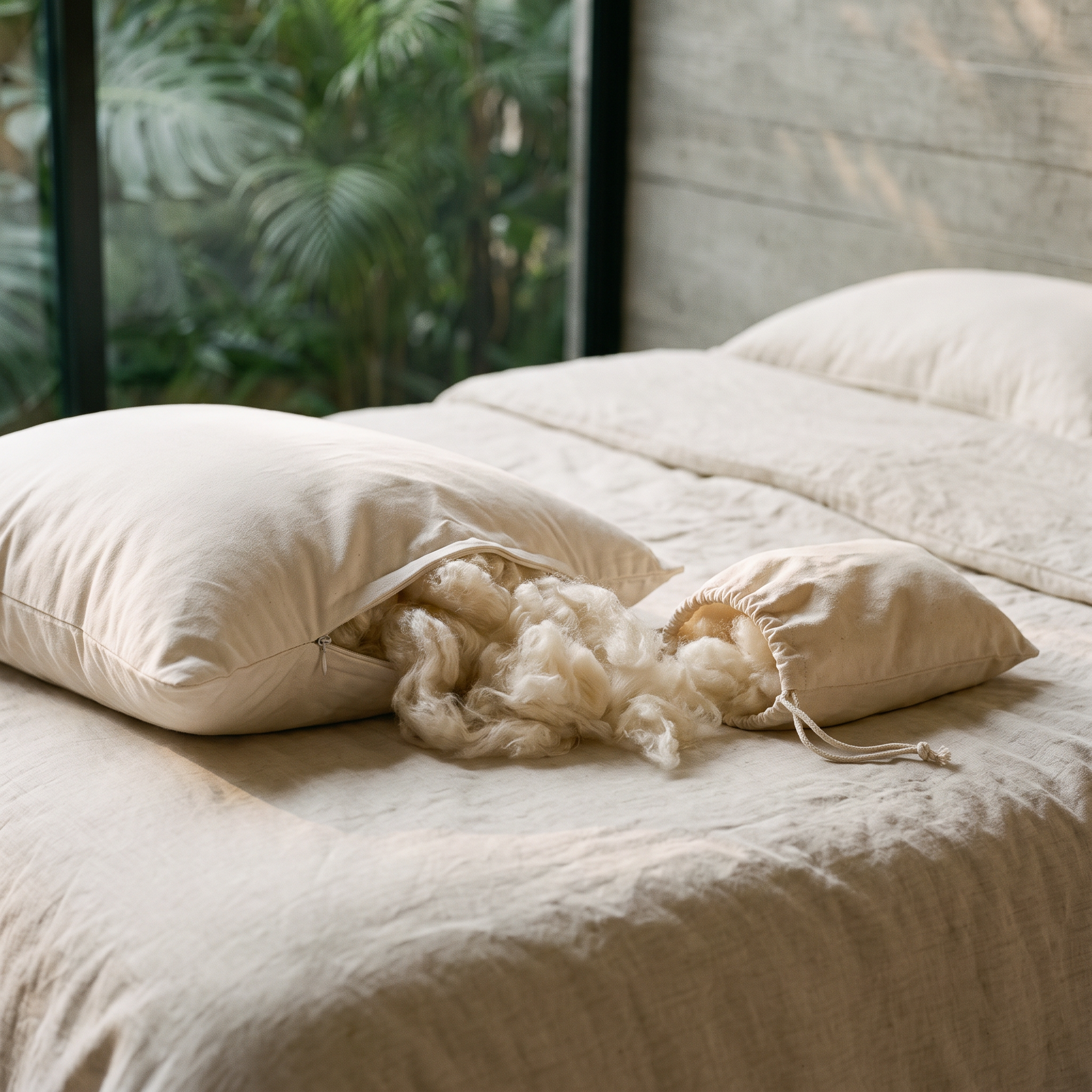
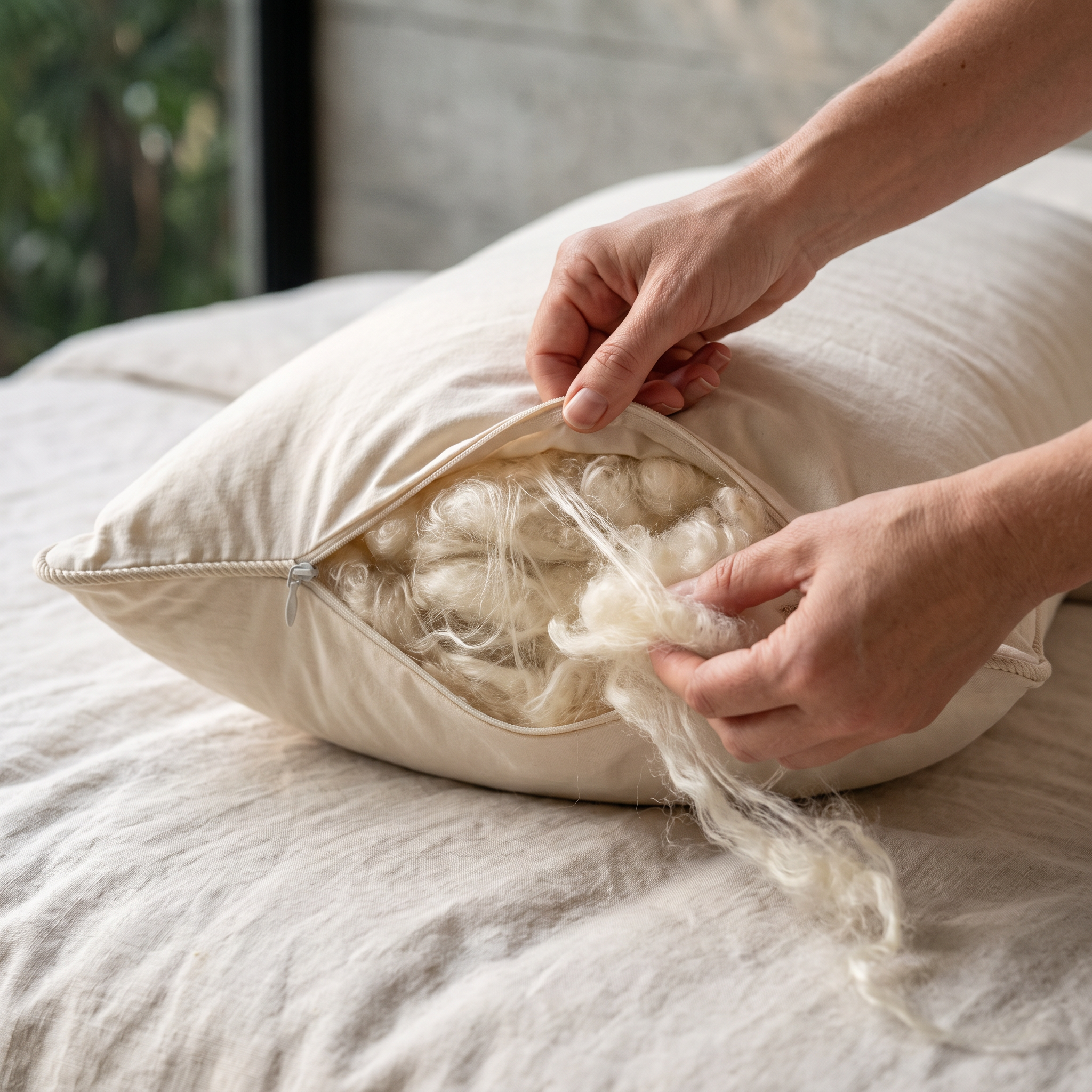
That trip was also where I found kapok, in a little home goods shop in Bali, and that discovery eventually turned into our pillows. I've told that story elsewhere. But the sheets thing was running in the background the whole time. When we started building MAREA, I knew the pillow would come first, and I also knew the sheets were coming, because a pillow on a bad sheet is still a bad night.
What I wanted, in order
First, cotton. Real cotton, all the way through, with nothing blended in to make it easier for someone else to launder. Second, organic cotton, grown without synthetic pesticides or synthetic fertilizers. Third, a weave that felt good against the face, because that's where the sheet meets you most. And fourth, I wanted the fabric to be the same fabric we already use on our pillows, so the whole bed feels like one thing under your hand instead of four different textures fighting each other.
We landed on organic cotton sateen, the same cloth we use on our pillows. If you're curious how textile certifications like GOTS work and how to check any brand's claim, I wrote what GOTS certified actually means.
Why sateen, why 300, why no color
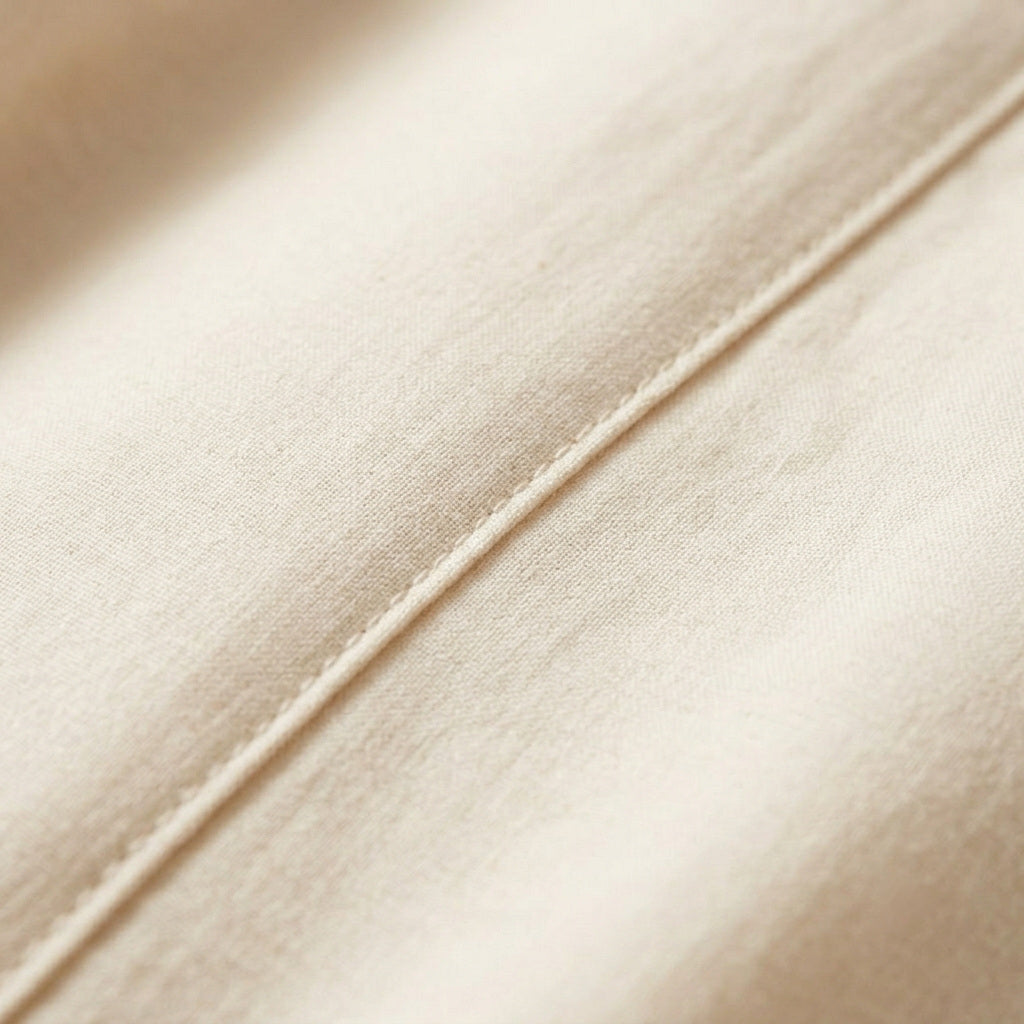
Sateen is a weave, not a fiber. Four threads pass over one, which leaves more of each thread lying on the surface, and that's what gives it the smooth glide and the soft, low sheen. It's the fabric on our pillow covers, and it's the one I reach for every night. I compared it with percale in sateen vs percale if you want to see why.
We stopped at 300 thread count on purpose. Higher numbers sell well and mean very little, and past a certain point a dense weave just stops breathing. At 300 the sheet has real weight without turning into a tablecloth. It drapes. It moves air. That was the whole brief, and I went into why the number lies to you separately, because it deserves its own rant.
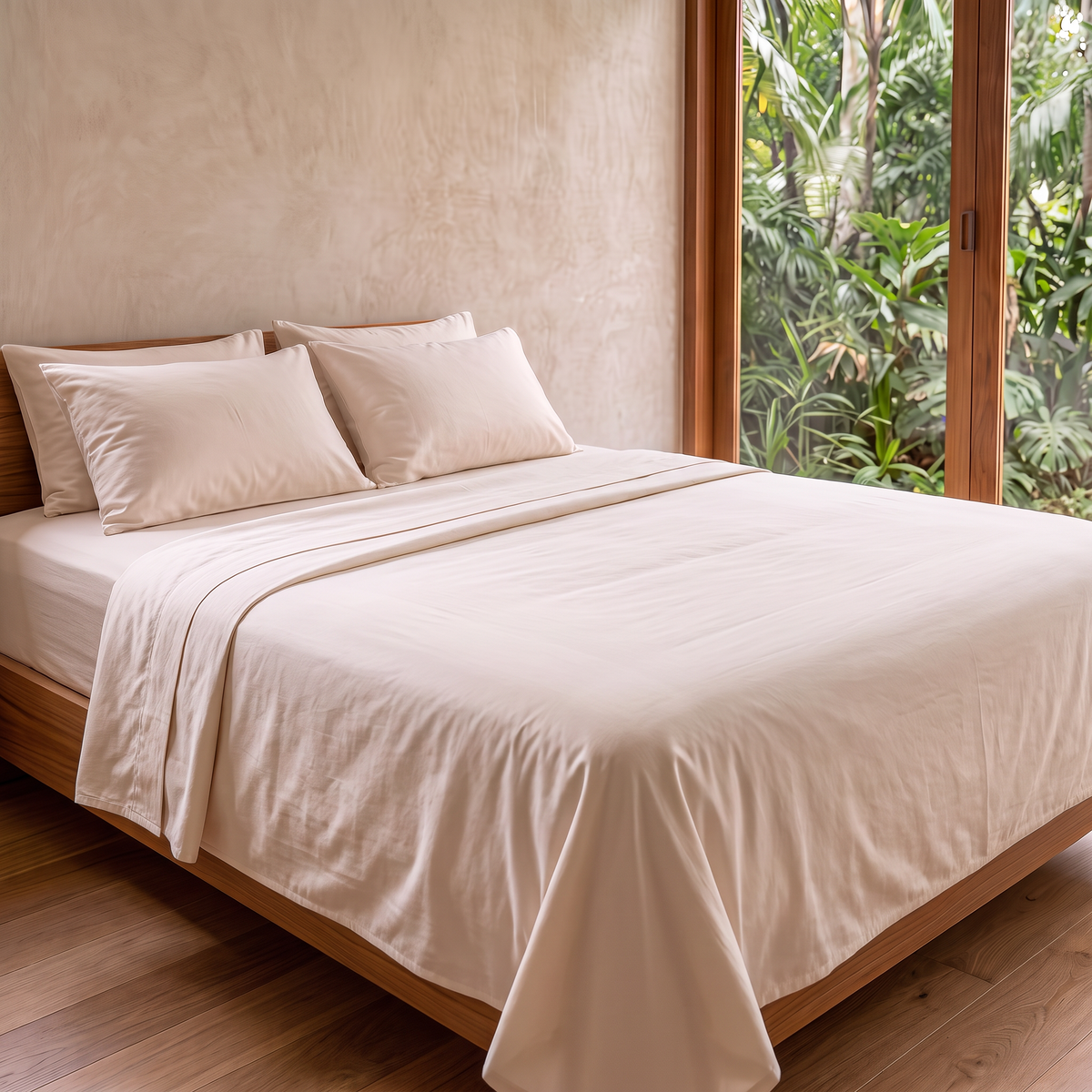
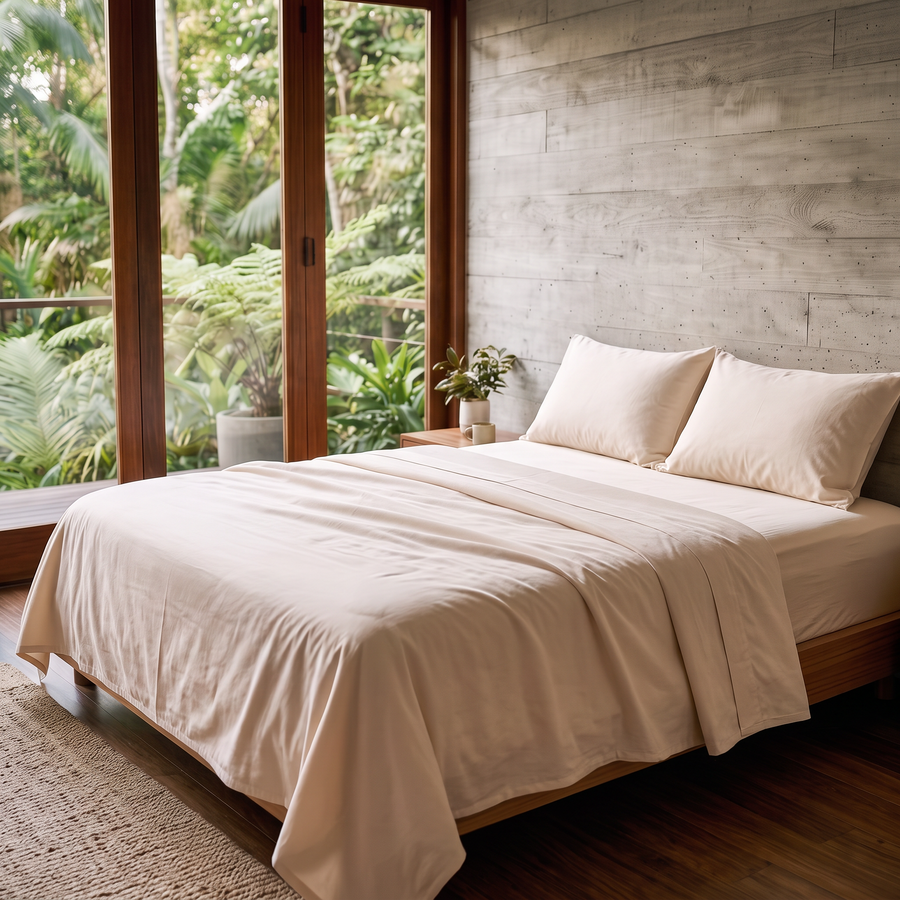
And we left the cotton its own color. No bleach, no dye. The sheets are a warm, light ivory with a little natural variation in tone, because that's what unbleached cotton looks like, and skipping those two steps also skips two of the heaviest chemical stages in making a sheet. I was nervous about this decision for a while. Then I remembered the oatmeal sheets on Sumbawa and stopped being nervous.
What's actually in the box
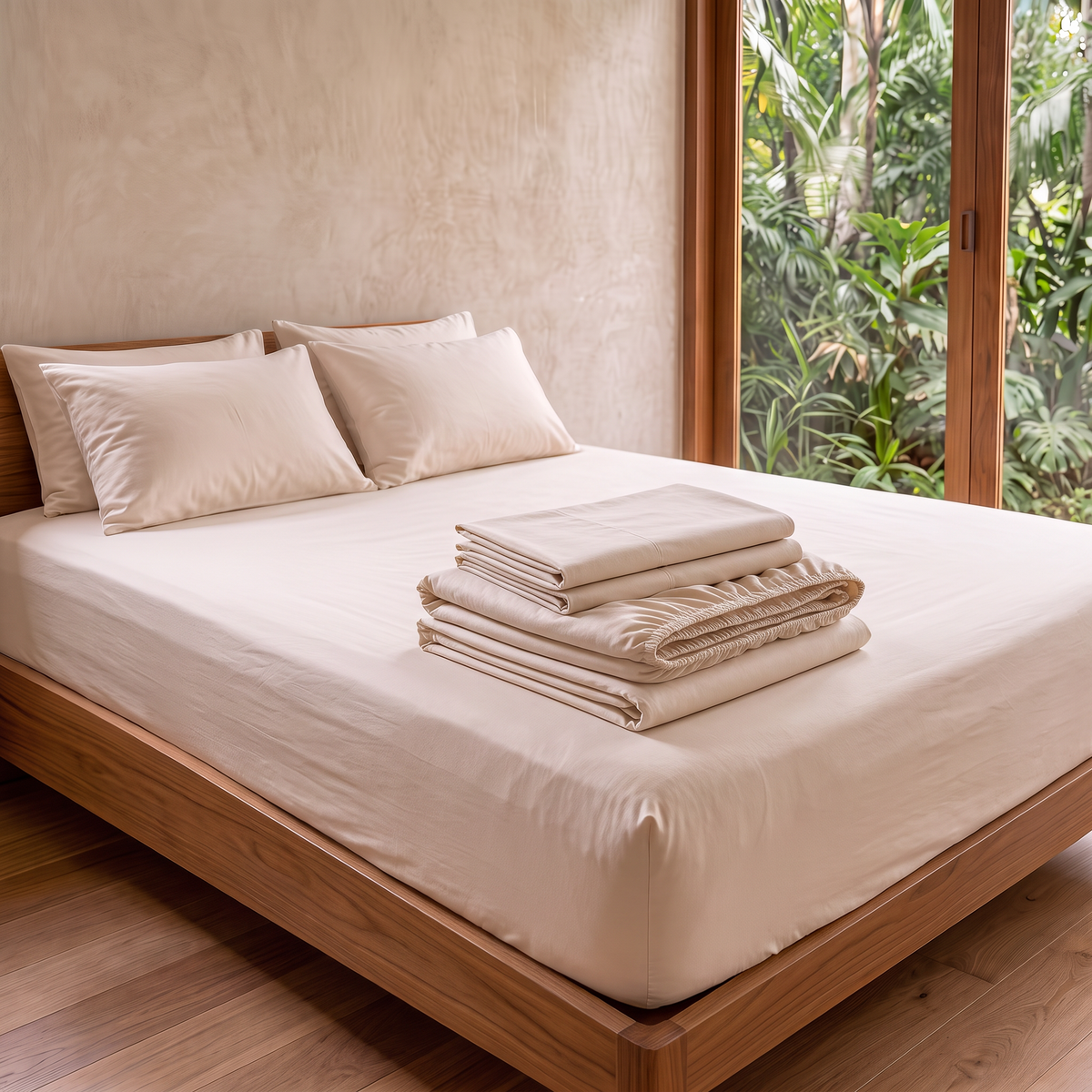
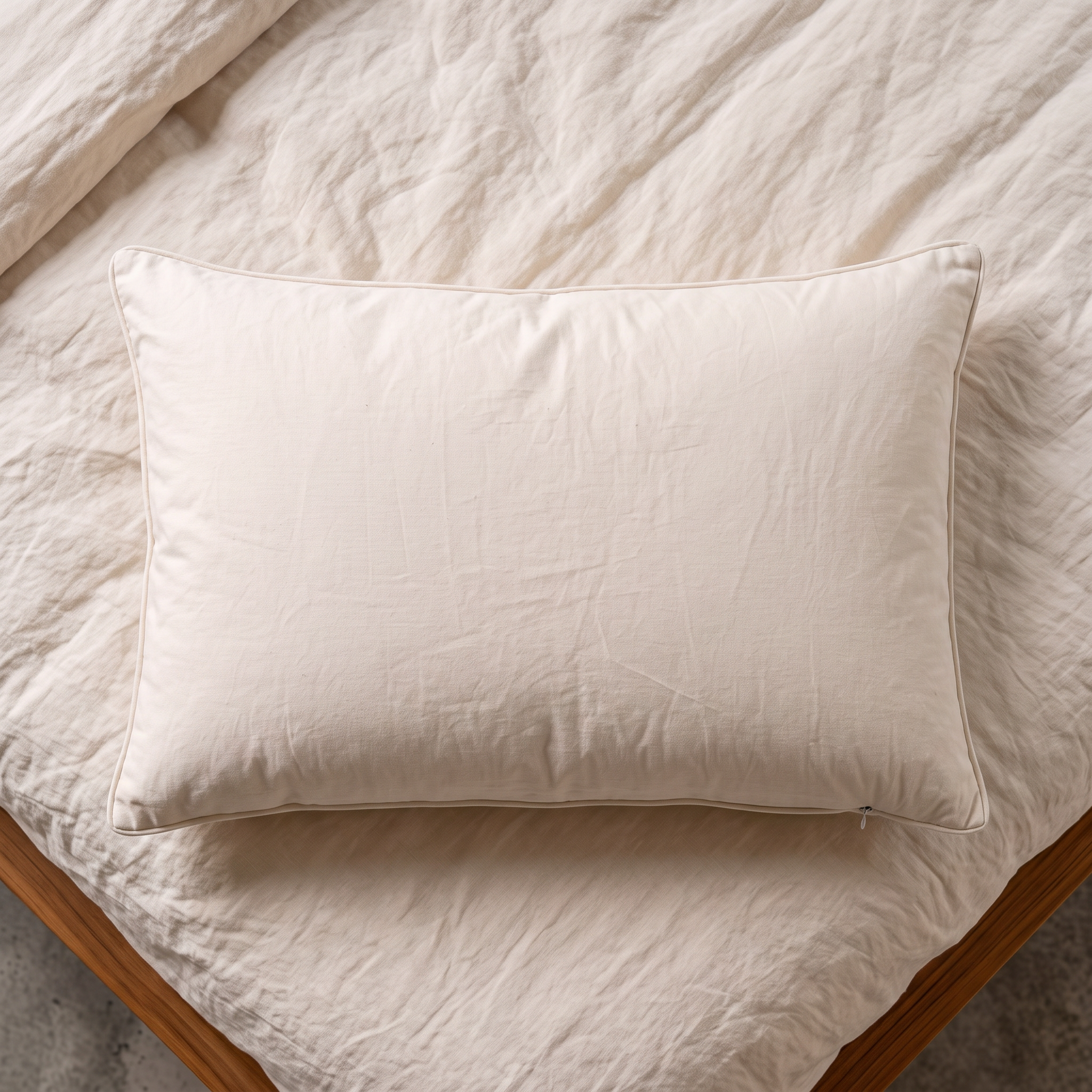
A fitted sheet with a 15 inch pocket and elastic the whole way around, a flat sheet, and pillowcases cut to match our pillow sizes: one Standard case with a Twin set, two Queen cases with a Queen, two King cases with a King. The cases slip on with no zipper, so nothing but fabric touches your face. If you use our zip on cover to protect the pillow, the case goes over it. Every piece is cut and sewn by hand in the USA from that same organic cotton sateen, in a small workshop, not a line. Designed in Hawaii, where four months of trade winds through open windows taught me more about what a breathable bed feels like than any spec sheet.
The sheets are coming soon, after the pillows. If you want to know the day they're ready, the email list on the sheet set page is the place. I've also written up how to wash them, because sateen has one trick to it that makes ironing unnecessary, and I want you to know it before the first wash.
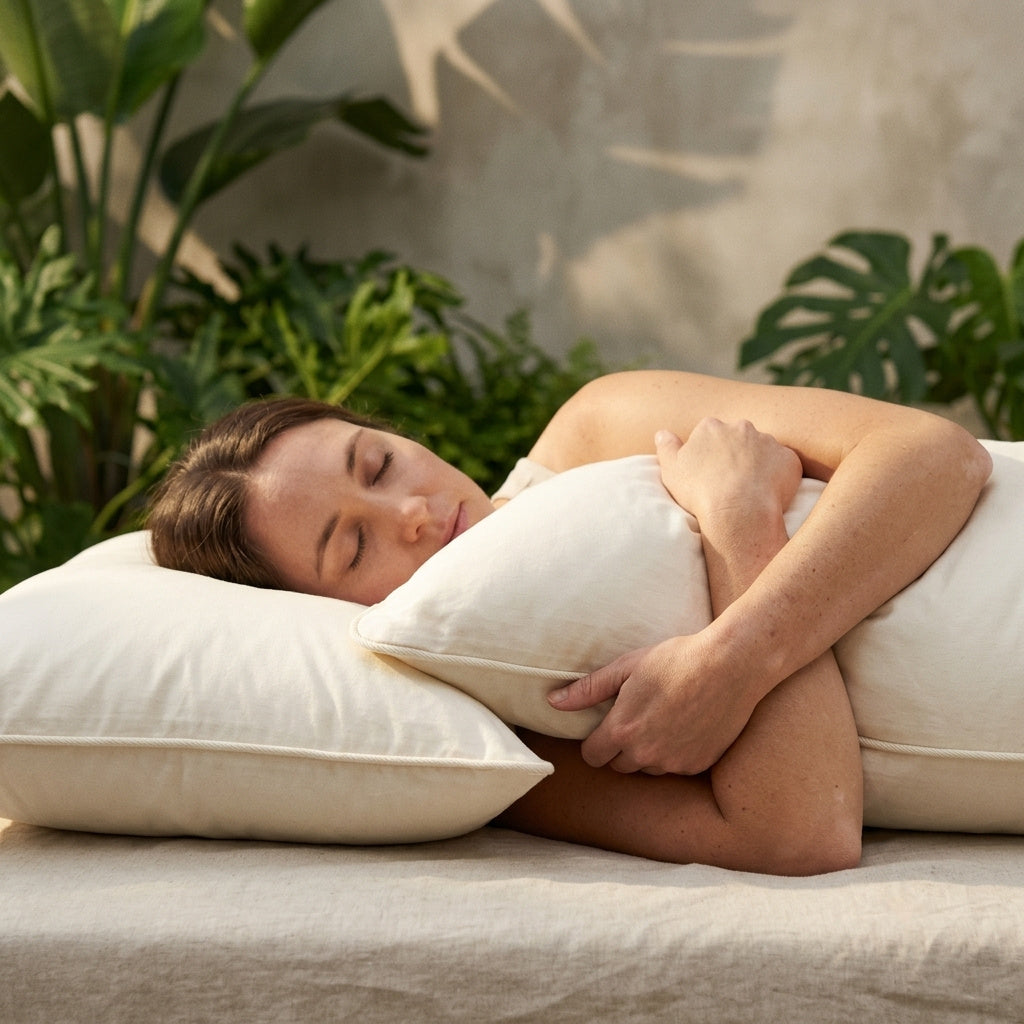
I still sleep in other people's beds sometimes. Old habits. But I bring my own pillowcase now, and it's this fabric.
Anthony
Founder, MAREA Sleep
If you find the Sleep Journal useful, you can add MAREA as a preferred source on Google. This is an optional preference for your own Google experience.





Leave a comment
This site is protected by hCaptcha and the hCaptcha Privacy Policy and Terms of Service apply.