
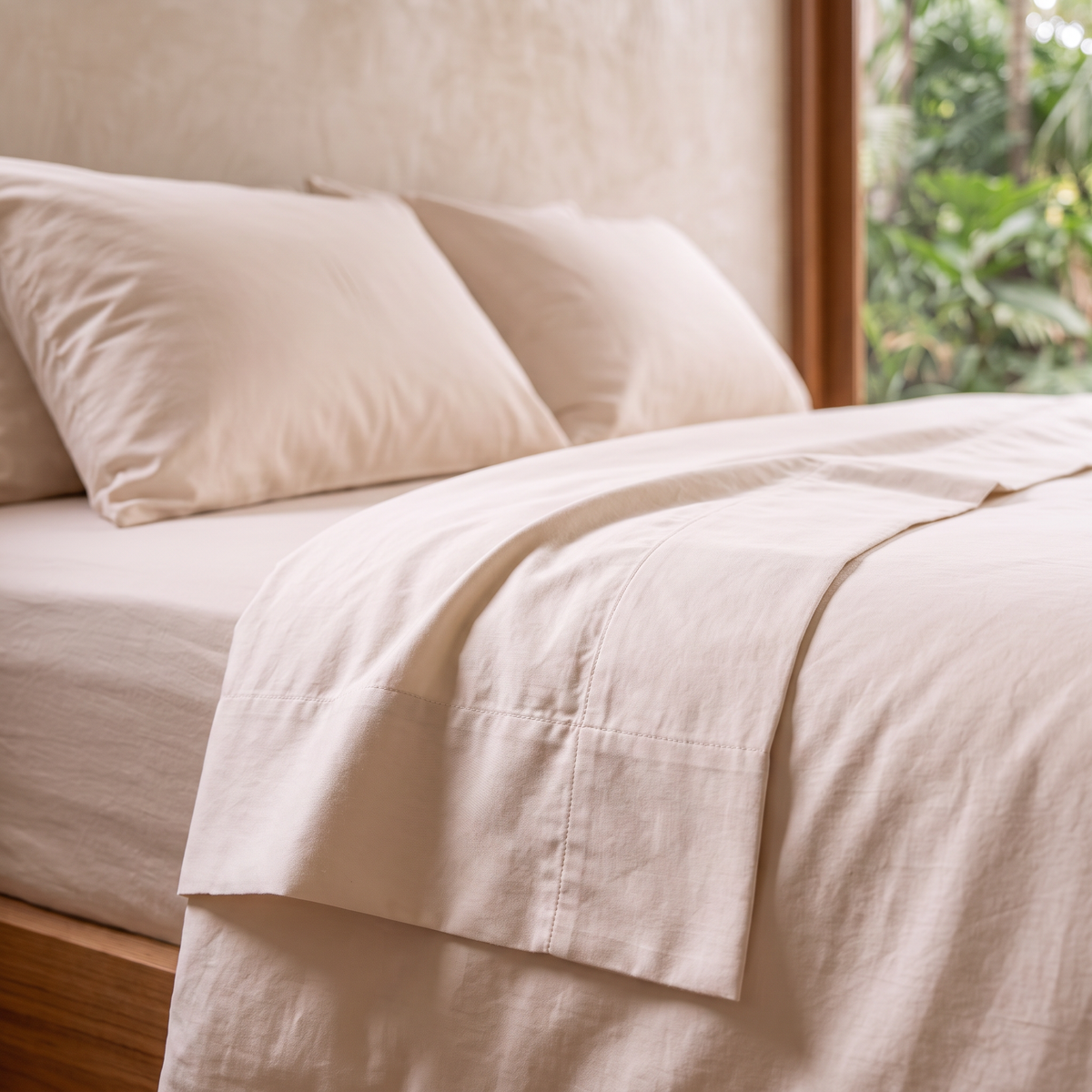
I have ruined nice things in washing machines. A wool sweater that came out sized for a toddler. A pair of linen pants that I shrank at a guesthouse on Sumbawa, in Indonesia, where the washing machine had one setting and the setting was hot. So when I say I've figured out how to wash sateen sheets, understand that it came from losing a few rounds first.
The good news is that cotton sateen is forgiving. It wants to get softer. Almost everything that goes wrong with it comes from heat, or from adding things to the wash that it never needed. Here's what I do, and why.
Before the first wash
Check the fit first. Put the fitted sheet on the bed, make sure the pocket clears your mattress and any topper, and look at the flat sheet against your bed. Unwashed bedding can be returned. Washed bedding can't, which is true almost everywhere, and I'd rather you know before the sheets are wet. Cotton can also shrink a little on the first wash, so if your mattress is on the deep side, a snug fit out of the bag is worth thinking about.
The wash
Cold water. Gentle cycle. A mild detergent, and less of it than the cap suggests, because too much detergent leaves a residue that makes cotton feel stiff and dull. That's it. Wash the sheets with other sheets or towels, not with anything that has zippers or hooks, which chew at the surface of a sateen weave over time.
Skip fabric softener. I know. It seems like it should make sheets softer, and it does for one night, because it coats the fibers with a waxy layer. Then that layer builds up, the sateen loses its sheen, the cotton stops absorbing, and the sheets start feeling slick instead of soft. Cotton sateen softens on its own with every wash. Let it.
Skip bleach, even on an ivory sheet. Especially on an ivory sheet. Our sheets are undyed and unbleached on purpose, and bleach would both weaken the fiber and pull the color toward a flat white that isn't what the cotton looks like.
Skip dryer sheets for the same reason as softener. They're a coating.
The dryer, and the trick
Tumble dry low. Heat is what actually wears cotton out, so the lower the better, and if you can line dry, line dry. In Hawaii I dried everything outside and the sheets came in smelling like wind, which I don't have a better way to describe.
Now the trick, and this is the one I wish someone had told me years ago. Take the sheets out while they're still slightly warm and a little damp at the seams, and either fold them immediately or put them straight on the bed. Sateen sets its creases as it cools. If you leave a load sitting in the dryer until it's cold and crumpled, that's the shape it keeps, and no amount of pulling fixes it. If you fold it warm, it stays smooth. I have never ironed a sheet in my life and mine look pressed. That's the whole secret.
Stains
Cold water first, always. Hot water sets most stains, especially anything with protein in it. Dab the spot with cold water and a drop of detergent before it goes in the wash. Don't rub, which pushes it deeper and roughs up the weave.
How often
Once a week for the sheets is my answer, and more often for pillowcases if you use hair product, work out a lot, or sleep hot, because the pillowcase is where everything ends up. I wrote a longer piece on how often to wash sheets, pillowcases and pillows if you want the full breakdown, including the part about the duvet.
Two sets makes this easy. One on the bed, one in the wash, and you never sleep on a sheet you're not sure about.
The rest of the bed
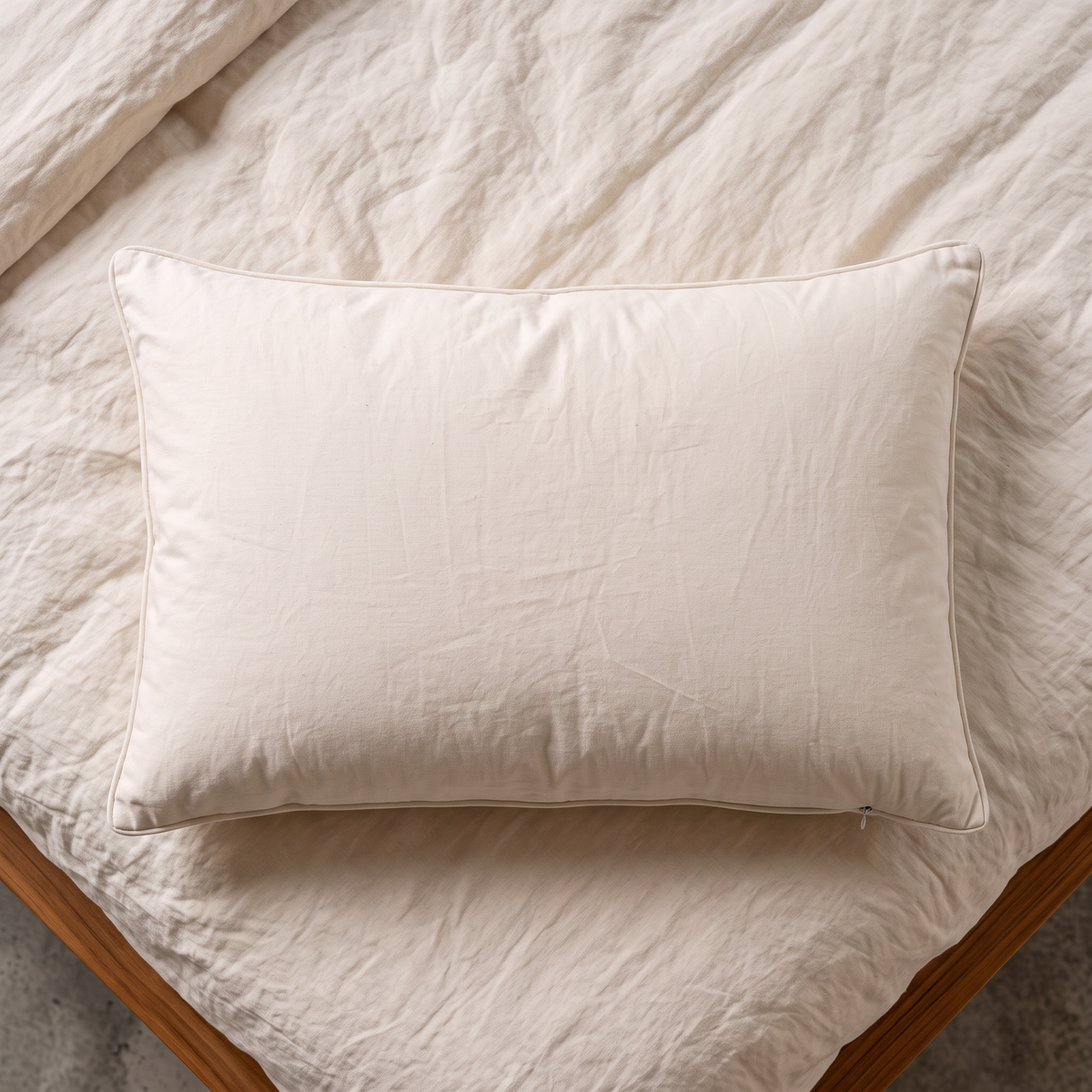
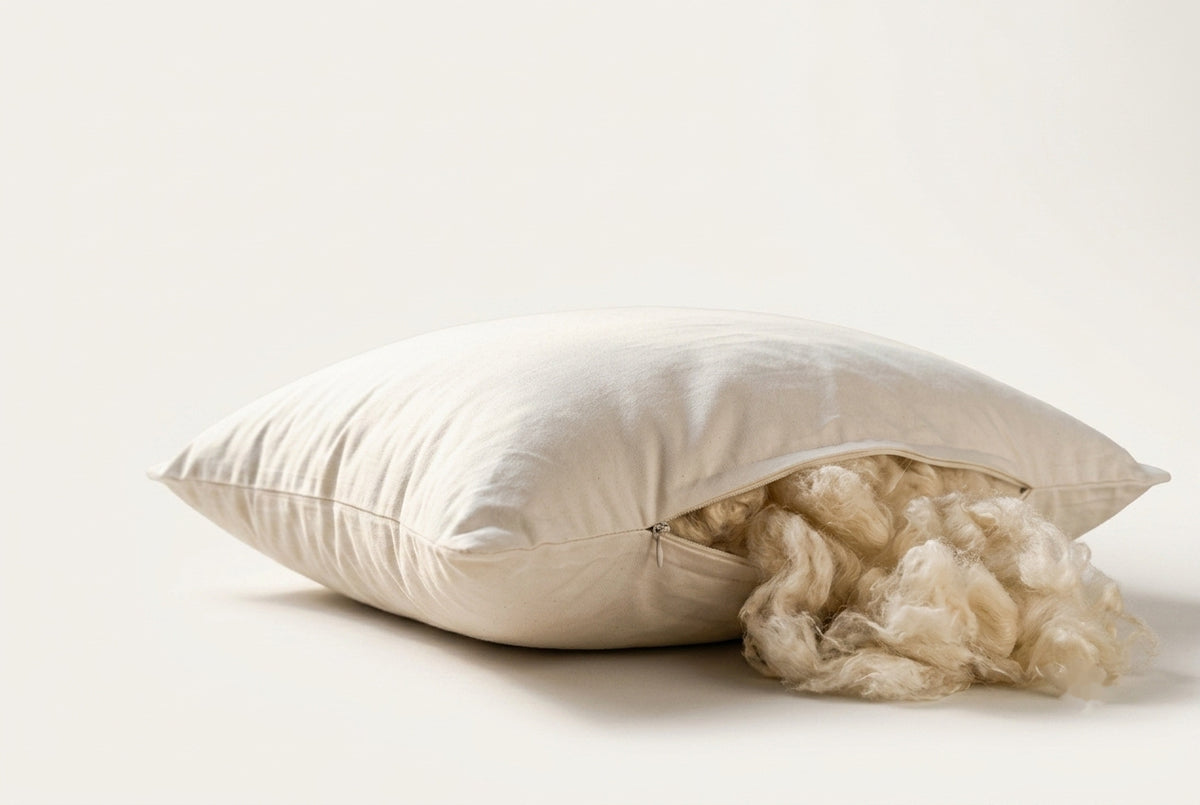
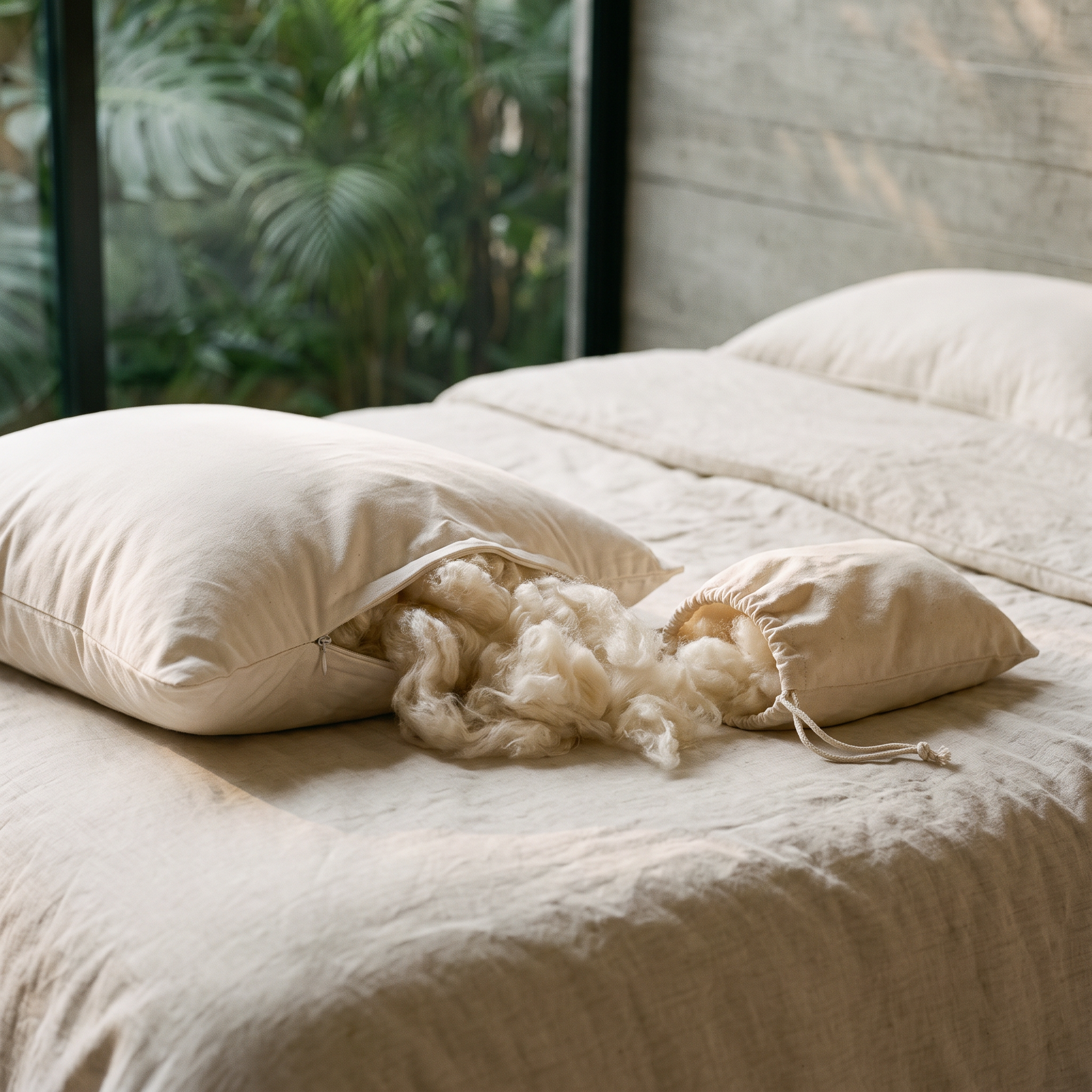
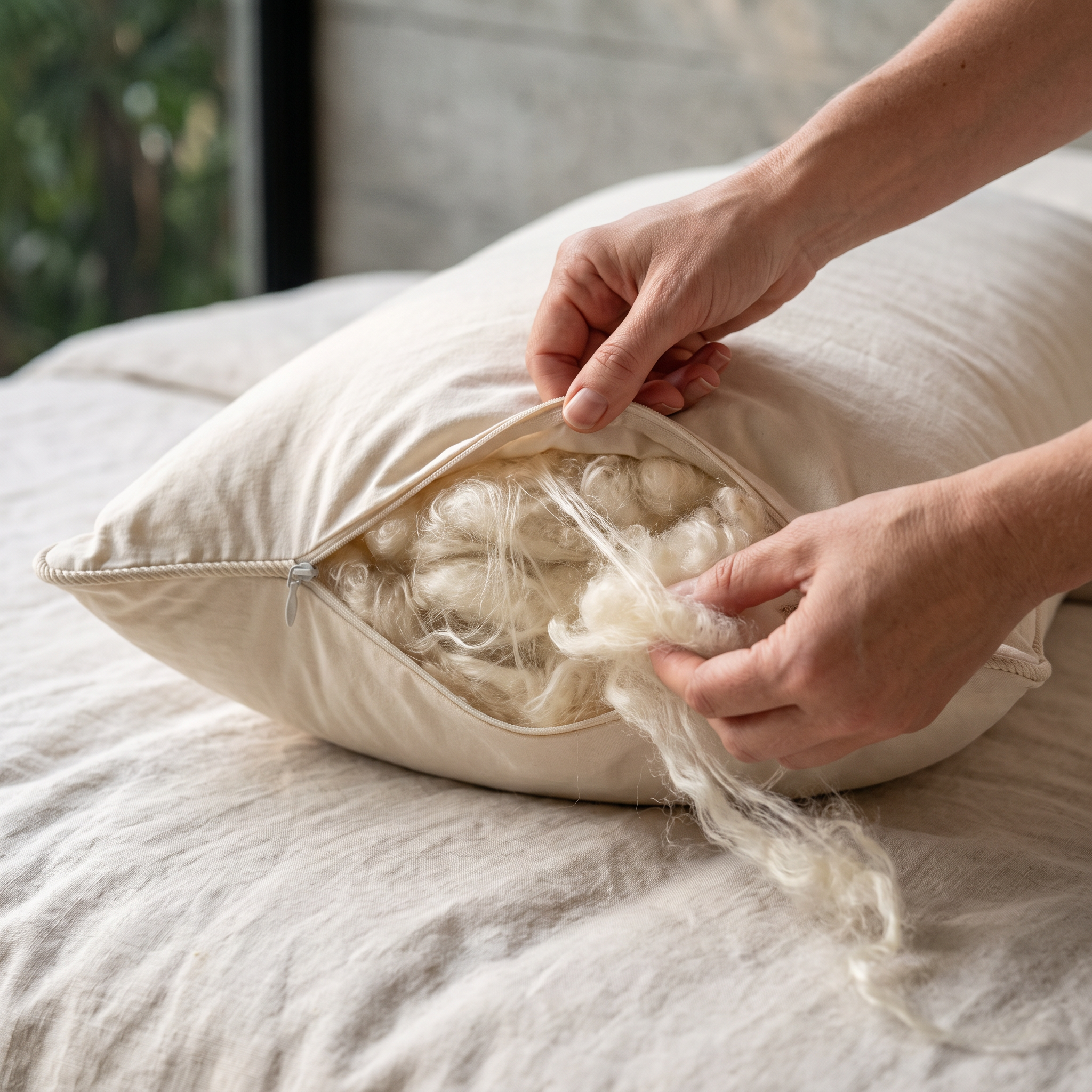
Our pillowcases slip over the pillow with no zipper. If you use the zip on cover underneath to protect the pillow, wash that cover on the same cold, gentle setting, less often. The kapok pillow itself never goes in a machine; I covered that in how to clean a kapok pillow. And the cotton duvet insert is spot clean only, which is why it lives inside a cover. Wash the cover. Leave the insert alone.
Follow the care label if it ever disagrees with me. But if you do the cold wash, low heat, fold it warm routine, these sheets will be softer in a year than they were on day one, and they'll look like you take care of them. Which you will.
Anthony
Founder, MAREA Sleep
If you find the Sleep Journal useful, you can add MAREA as a preferred source on Google. This is an optional preference for your own Google experience.







Leave a comment
This site is protected by hCaptcha and the hCaptcha Privacy Policy and Terms of Service apply.