
There's a specific kind of hotel duvet that I think about more than is normal. I met it in Biarritz, France, and a few times since. It's the one that lands on you like a cloud and then, around three in the morning, becomes a sauna you can't get out from under. Gorgeous to look at. Impossible to sleep under. Usually down, sometimes a synthetic pretending to be down, always overfilled so it photographs well.
And then there's the other kind, from the budget end of five years on the road, the thin polyester comforter that crackles faintly when you move and somehow manages to be both too hot and not warm enough. I've had that one on me in Indonesia, in Costa Rica, and in at least two countries I've mercifully forgotten.
When it came time to make a duvet for MAREA, those two were the things I was trying not to make.
Cotton, all the way through
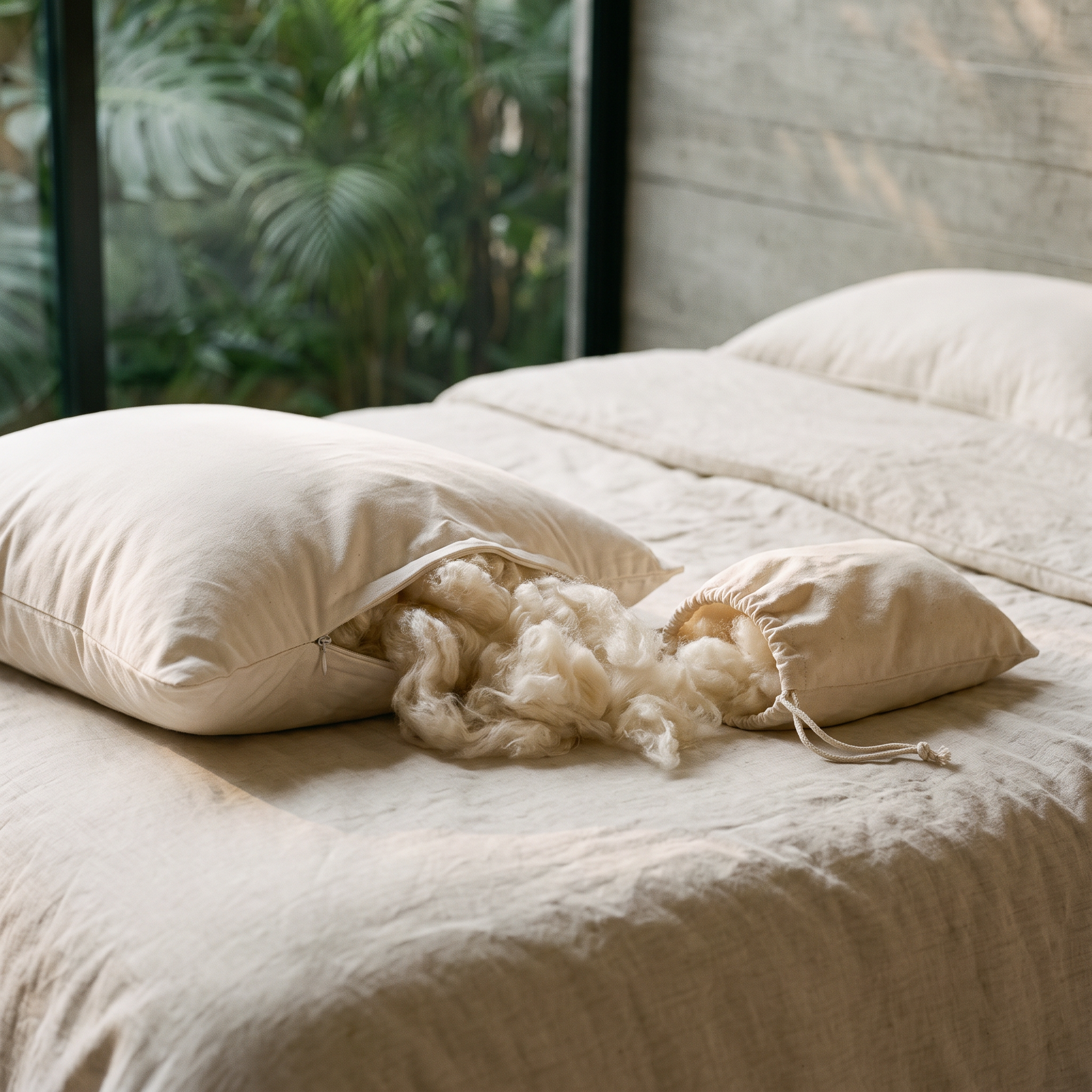
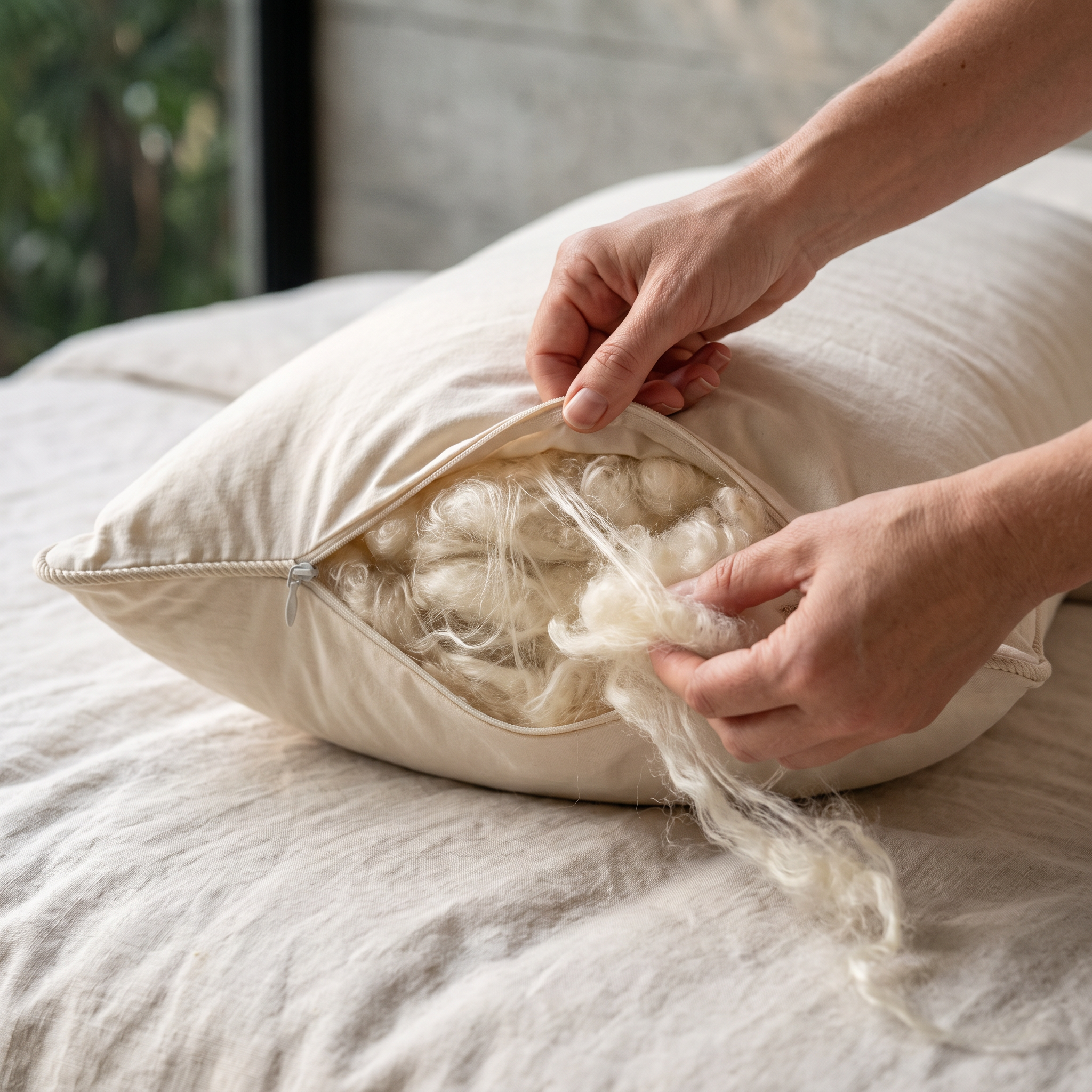
The fill is organic cotton batting, laid in even layers rather than loose clusters. No down, no feathers, no polyester, no foam. We already make a pillow with no feathers in it, so filling a duvet with down was never on the table, and polyester was never on the table for a different reason, which is that I have slept under it and would not do that to you.
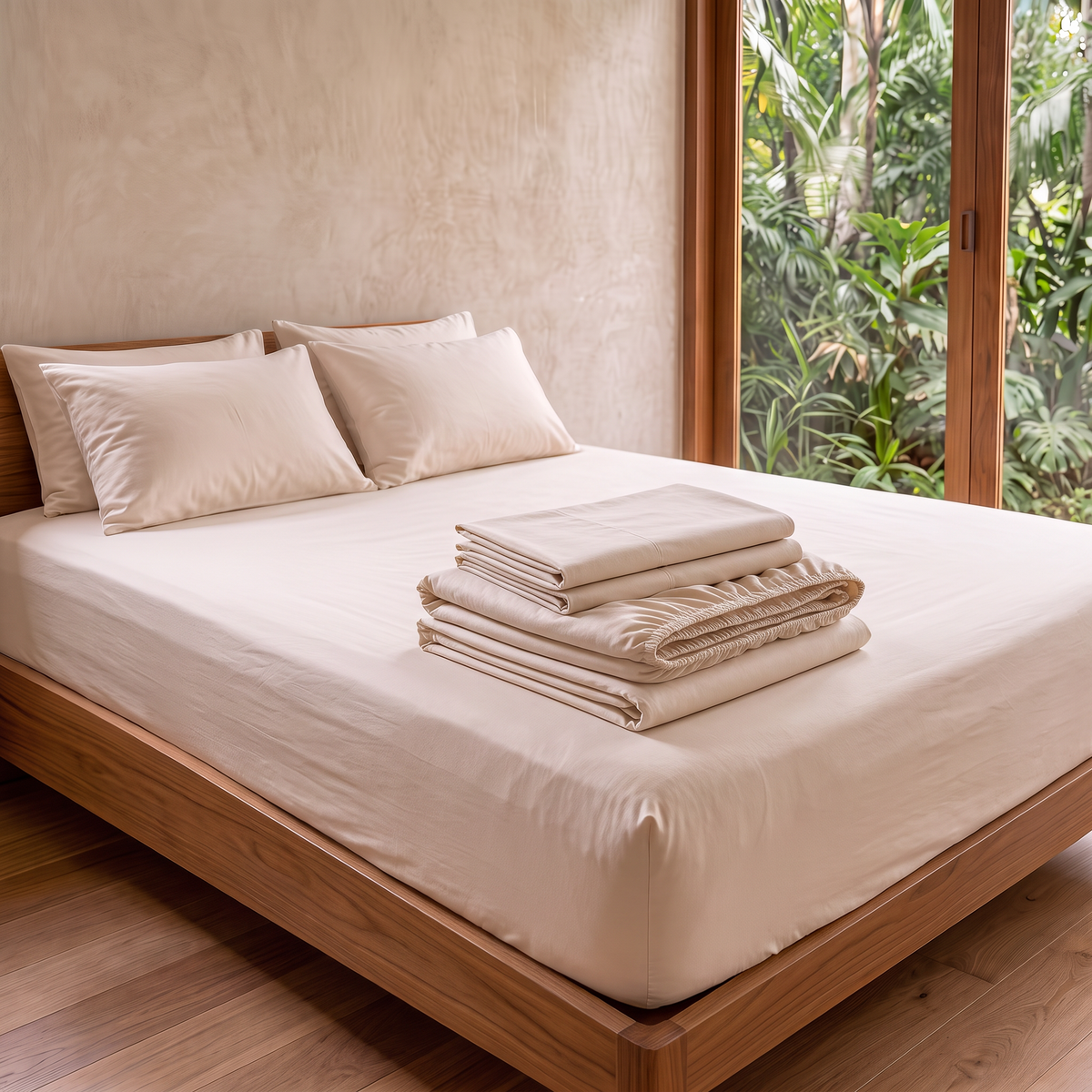
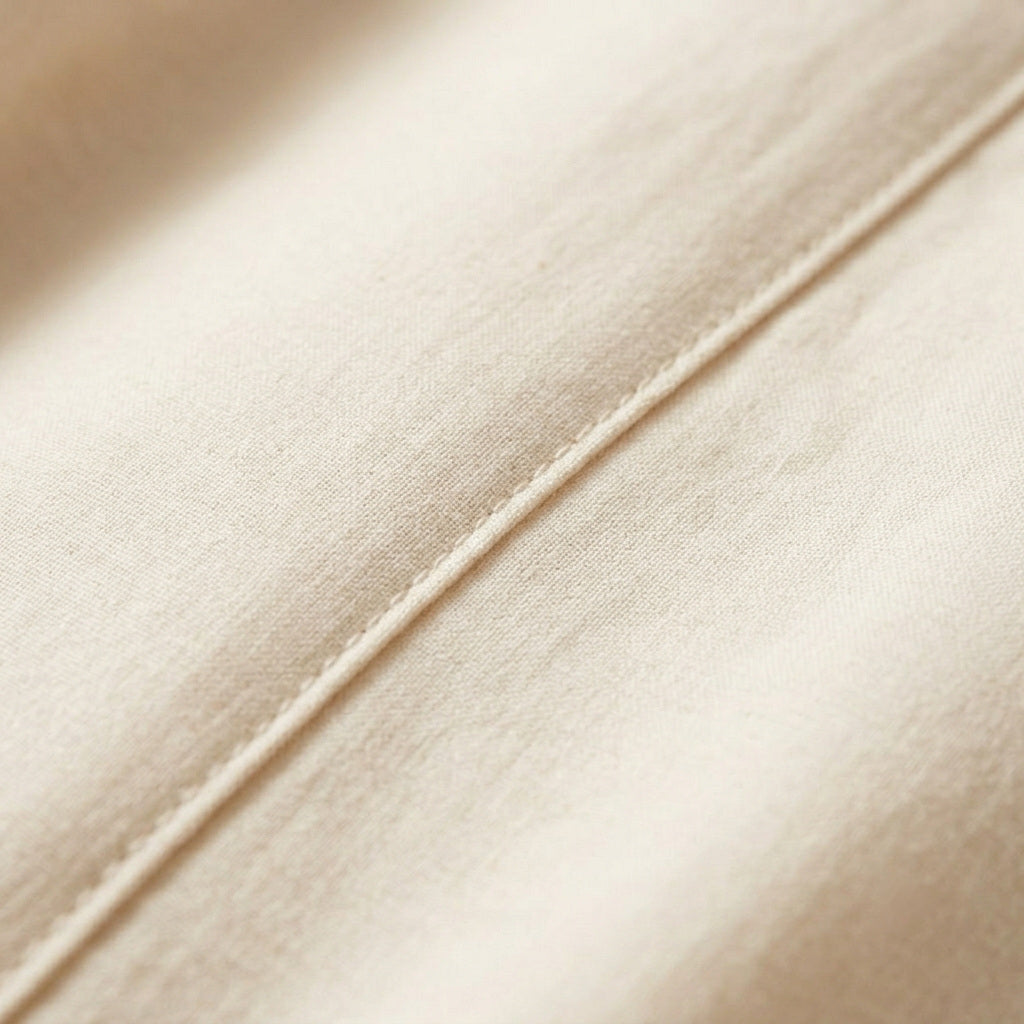
The shell is the same 300 thread count GOTS certified organic cotton sateen we use for our sheets, pillow shells and pillow covers, woven tight enough that the batting stays put and smooth where it meets your skin. Organic cotton outside, organic cotton batting inside.
The dimples
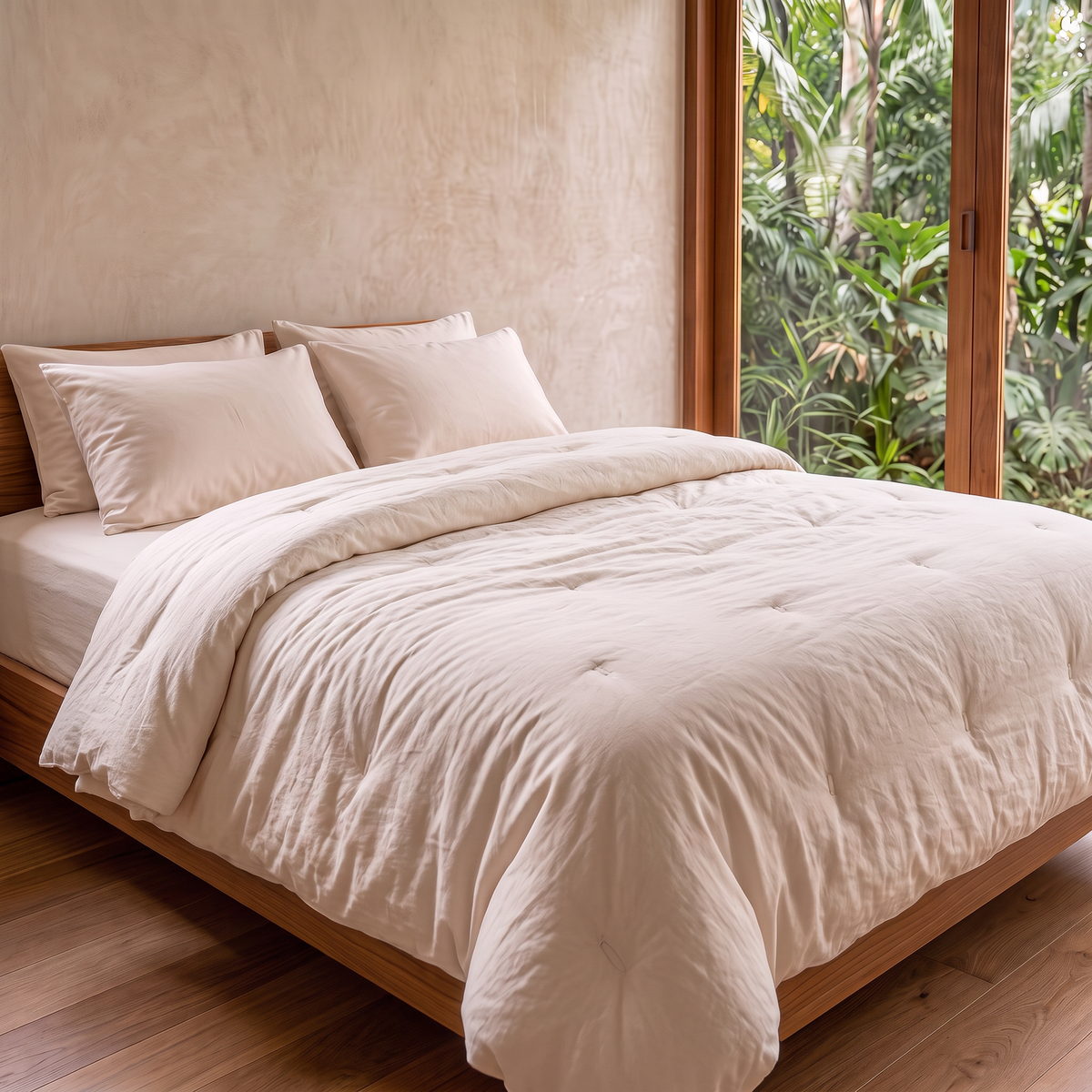
Most duvets are sewn into channels or boxes to keep the fill from migrating. Ours is hand tufted instead. A cotton tie is worked through every layer at points across the surface and knotted off, and the small dimples you see are those ties. It's an older way of making a bedcover, it takes longer, and it means the batting is held as one piece instead of being chopped into compartments. It also looks like something a person made, which I like more every year.
It's heavy, and that's the point
This is the thing that makes people fall for this duvet. It has weight. A Queen comes in at about 12 pounds spread across the bed. A Twin is about 7 and a half, a King about 13 and a half. Layered cotton doesn't loft up into a cloud the way down does. It drapes and settles, more like a serious blanket than a puffy comforter, and there's a calm, tucked in feeling to it that I didn't expect and now can't do without.
Who it's for: people who sleep cold, people who like being held down a little, anyone with a bedroom that gets cool at night, and anyone who's tired of a duvet that slides off the bed at two in the morning. On the hottest summer nights, fold it to the foot of the bed and sleep under the flat sheet, then pull it up when the room cools off.
How to care for it
The insert stays out of the washing machine and away from the dry cleaner; layered cotton batting likes to stay dry and in one piece. So it lives inside a washable duvet cover, the way a good down duvet does, and the cover takes all the routine washing. The insert has corner loops, so any cover with interior ties in the right dimensions will hold it in place. Spot clean the insert if something gets through. Air it in the sun for an afternoon every few months, which freshens cotton and wakes the loft back up. Store it loose in a breathable bag, never compressed, never in plastic.
If you've ever slept under a duvet that felt like it was made from something real, and you've missed that, this is what I was trying to bring back.
Sizes, and a quick word on what a duvet even is
Twin is 72 by 90 inches and fits Twin and Twin XL. Queen is 92 by 96 and fits Full and Queen. King is 96 by 110 and fits King and California King. These are handmade, so the numbers are approximate, and you'll want to check them against whatever cover you're planning to use.
If you've ever wondered what the difference is between a duvet, a comforter and a duvet cover, it's roughly this. A comforter is the whole thing sewn shut with a decorative outside, and it gets washed as one piece. A duvet, or duvet insert, is the filled part on its own. The cover is the bag it goes in, and the cover is what you wash. Ours is the insert.
Each duvet is layered, tufted and finished by hand in the USA, with a shell of imported GOTS certified organic cotton sateen. Designed in Hawaii, where I mostly didn't need it and wanted it anyway. Coming soon, after the pillows. The duvet page has the email list if you want to know the day.
Anthony
Founder, MAREA Sleep
If you find the Sleep Journal useful, you can add MAREA as a preferred source on Google. This is an optional preference for your own Google experience.





Leave a comment
This site is protected by hCaptcha and the hCaptcha Privacy Policy and Terms of Service apply.