
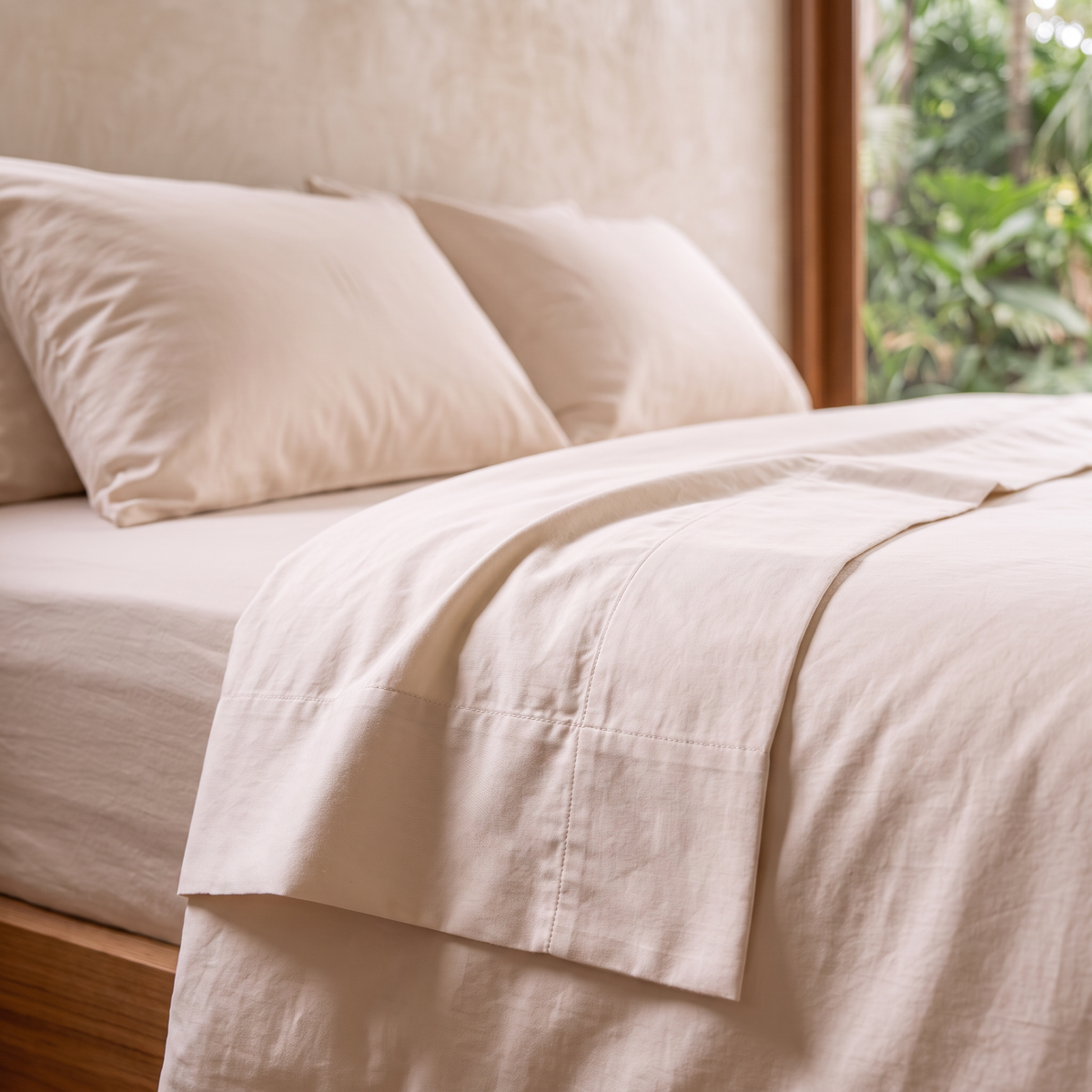
The first nice sheets I ever bought were 1,000 thread count. I was in my early twenties, I had a little money for the first time, and 1,000 was the biggest number on the shelf. I remember getting into bed the first night feeling like an adult. I also remember the sheets. They were heavy, they didn't breathe, and after a month they felt like sleeping under a very expensive tablecloth. I didn't understand why. Bigger number, better sheet. That's what the number is for, isn't it?
It isn't. Here's what it is.
What the number actually counts
Thread count is the number of threads in one square inch of fabric, the threads running one way plus the threads running the other. A 300 thread count sheet has roughly 150 threads across and 150 up in every inch. That's it. It tells you how tightly the loom packed the threads. It tells you nothing about what the threads are made of, how long the cotton fibers were, or what was done to the fabric afterward, and those three things are almost everything you feel.
The counting trick
There's a limit to how many threads you can physically pack into an inch. Above roughly 400 for a plain weave and roughly 600 for sateen, the fabric becomes so dense it stops moving air. So how do sheets get to 800, 1,000, 1,200? Mostly by counting differently. A yarn can be spun from two or three thinner strands twisted together, and some manufacturers count each strand as a thread. So a 300 count sheet made from three ply yarn gets sold as 900. Same fabric, tripled number. The FTC told the textile industry back in 2005 that counting plies this way would likely mislead consumers, and it still happens. The thinner strands are also usually shorter, weaker cotton, because that's what you can twist into multi ply yarn cheaply. Which is why my 1,000 count sheets felt worse than the 300 count ones I sleep on now.
The question that cuts through this is "is it single ply?" If a brand can't or won't answer, that's your answer.
What you're actually feeling
Fiber first. Long staple cotton makes long, smooth, strong yarns with fewer fiber ends poking out, and that's most of what softness is. Short staple cotton pills and gets rough. Nobody puts the staple length in big type on the package, which tells you something about what the big type is for.
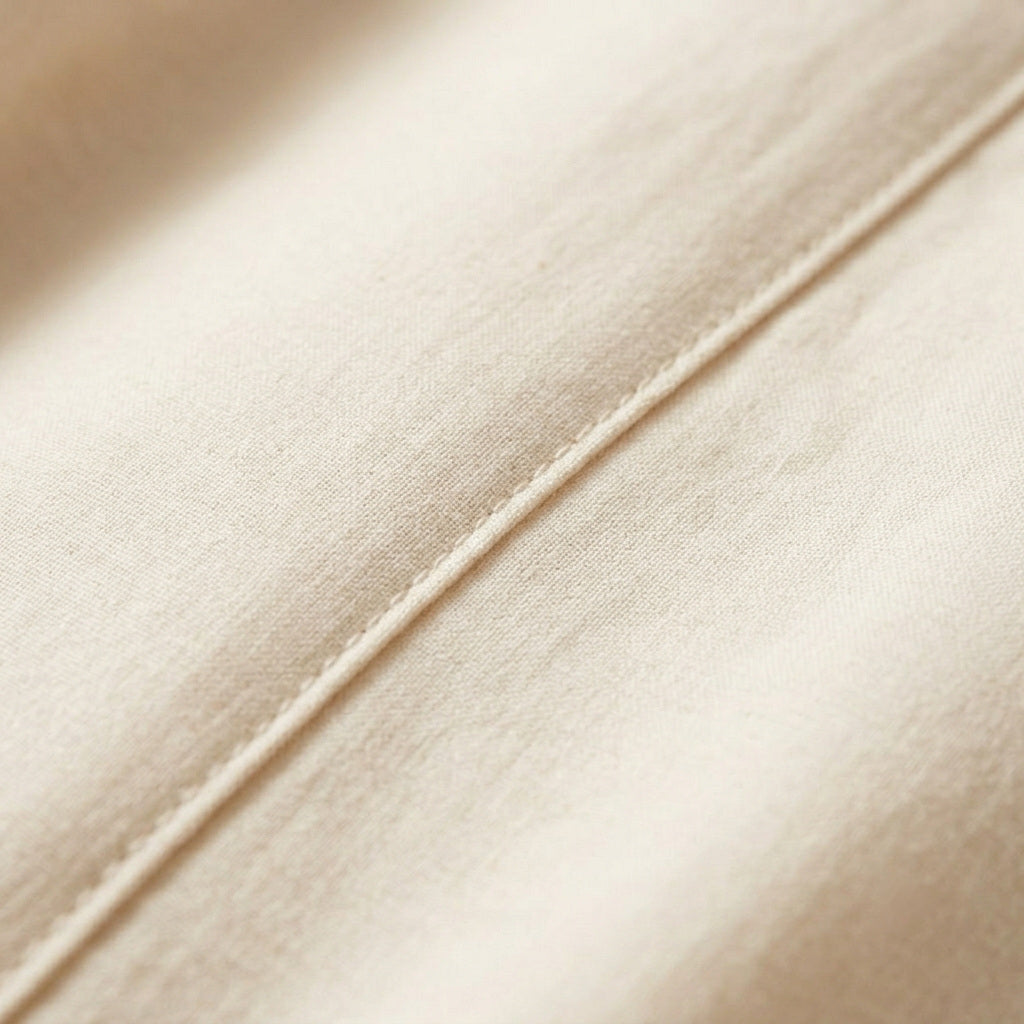
Then the weave. Percale is a plain over under weave, crisp and matte. Sateen floats four threads over one, so more thread lies on the surface and the sheet feels smooth with a low sheen. The same cotton at the same thread count feels completely different in these two weaves, which is why sateen vs percale is a more useful question than "what thread count."
Then the finish. A lot of the smoothness you feel in the store is a chemical finish that washes out in a few weeks, which is why some sheets feel amazing on day one and disappointing by week four. Wrinkle resistant finishes are usually formaldehyde based resins; the US Government Accountability Office reviewed them in 2010 and found levels in clothing generally low, but low isn't the same as absent. Sheets finished well do the reverse. They start a little firm and get softer for years.
Why we stopped at 300
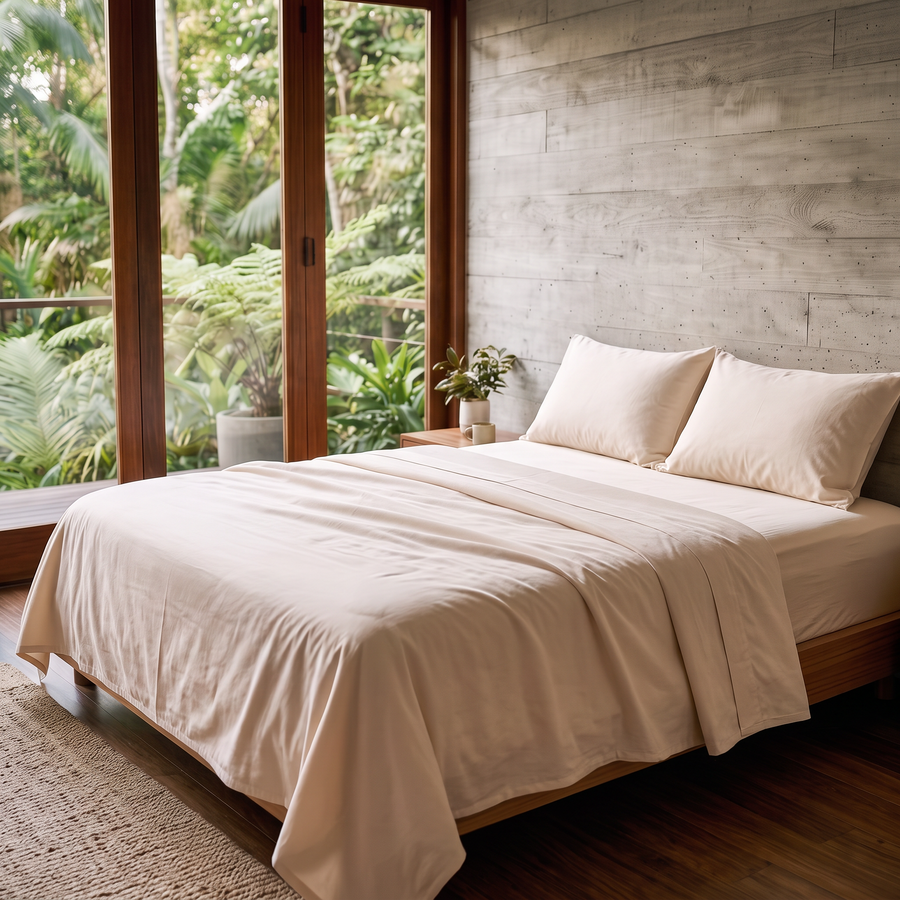
When we made our sheets, the fabric brief was simple. Organic cotton, sateen weave, dense enough to feel substantial and open enough to breathe. That landed at 300. We could have chased a bigger number for the box. It would have made the sheet heavier and hotter and not one bit softer, and I'd already learned that lesson the expensive way.
The fabric is organic cotton sateen, undyed and unbleached, which means no finishing chemistry is doing the work the cotton should be doing. I wrote about what GOTS certification covers in what GOTS certified actually means, and about why organic matters at all in organic cotton vs regular cotton.
How to shop, if you remember nothing else
Ask about the cotton before you ask about the number. Ask if it's single ply. Be suspicious of anything above 600. Pick the weave for the feel you want, crisp or smooth. And if a sheet is described mainly by its thread count, it's because there wasn't much else to say.
Those 1,000 count sheets are long gone. I gave them away, which I feel a little guilty about now.
Anthony
Founder, MAREA Sleep
If you find the Sleep Journal useful, you can add MAREA as a preferred source on Google. This is an optional preference for your own Google experience.







Leave a comment
This site is protected by hCaptcha and the hCaptcha Privacy Policy and Terms of Service apply.