
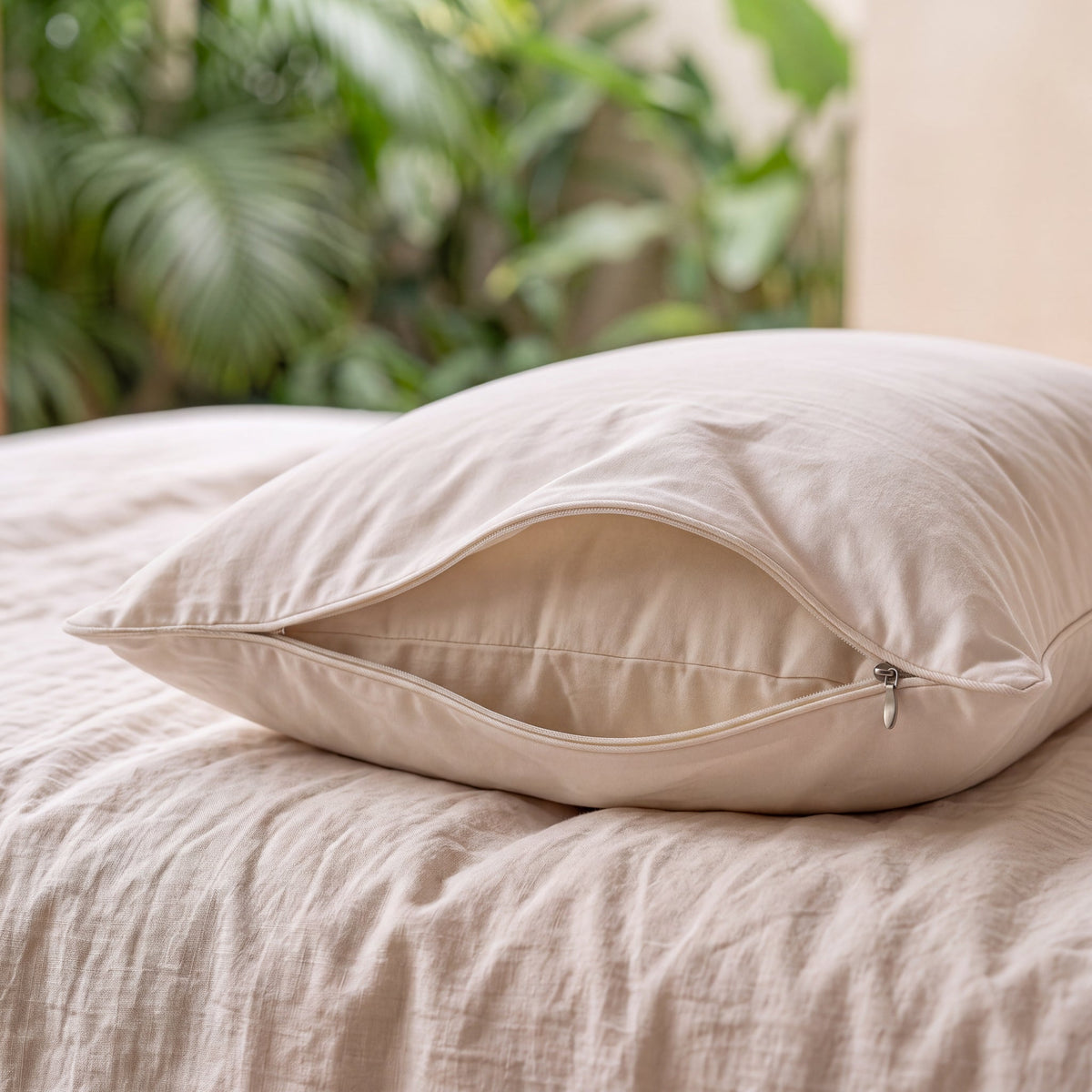
Percale feels crisp and matte. Sateen is smooth, drapes, and has a soft, low sheen. The weave creates that feel, with fiber quality and finishing doing the rest. Here's what each one is, who tends to love which, and why we put sateen on our pillows.
It's the weave, not the fiber
Both can be 100% cotton. Both can be organic. The words describe the weave, which is the pattern the threads take as they cross each other on the loom.
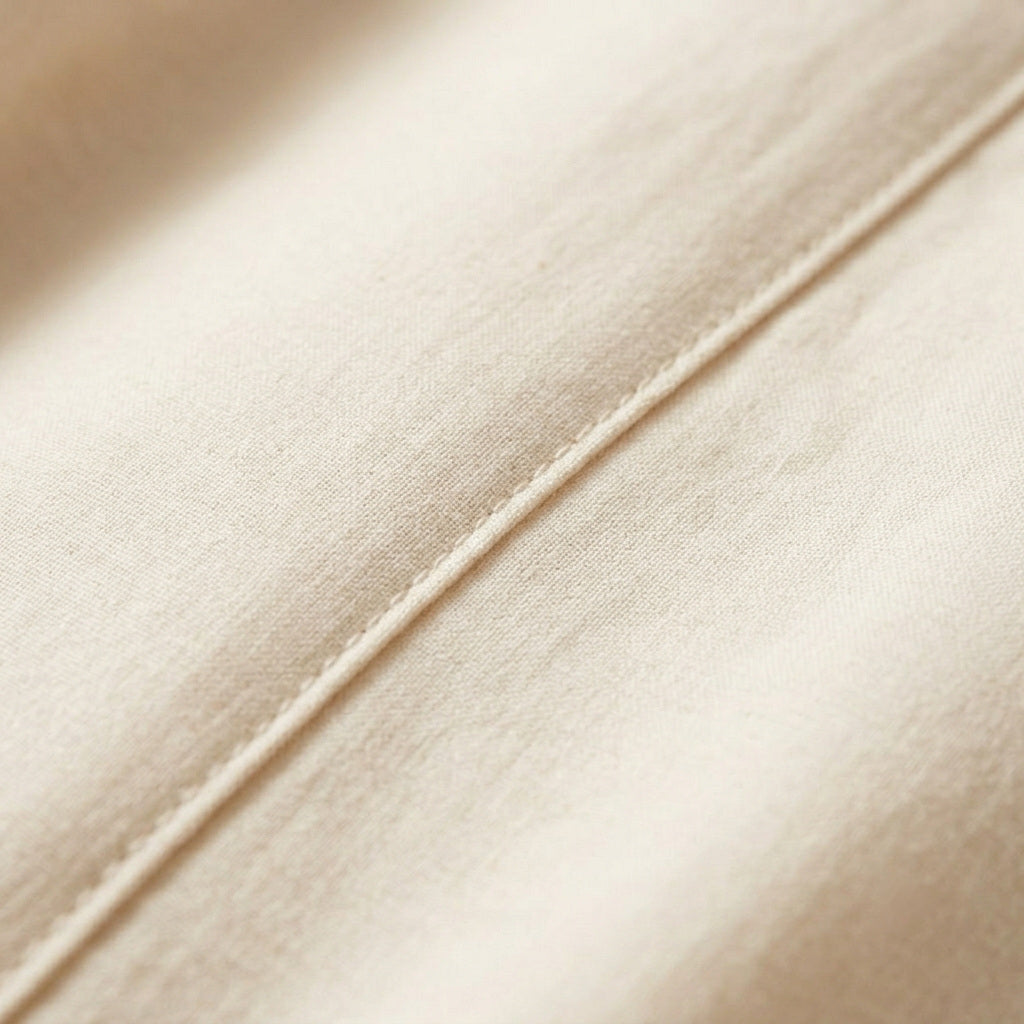
Percale is a plain weave: one thread over, one thread under, like a basket. Every thread gets locked down at every crossing, which makes a tight, even, matte fabric that feels crisp, a little like a good shirt.
Sateen is a satin weave, typically four threads over and one under. More of each thread lies exposed on the surface between crossings, and that's what you feel. The surface is smoother, the fabric drapes instead of standing up, and light catches the long exposed threads to give a soft, low sheen. Not shiny like polyester satin. Just richer looking than percale.
How they feel
Percale has a crispness that some people love and others find scratchy until it's been washed a few times. It's the classic hotel sheet feel.
Sateen is smooth and silky with a soft give, closer to a well worn tee than a dress shirt. It's gentle against your face and hair, resists wrinkling, and a lightweight cotton sateen still breathes the way cotton does.
Thread count, briefly
Percale is usually sold between roughly 200 and 400 threads per square inch, sateen between about 300 and 600, and beyond those ranges the number stops meaning much. A high thread count sateen made from short staple cotton will feel worse than a modest one made from long staple cotton. Ask about the cotton before you ask about the number. I went deeper on the number itself in Does Thread Count Matter?
Who loves which
Percale people like a crisp bed that feels like a pressed shirt. Sateen people want the fabric to feel smooth against their face, find percale scratchy, or care about how the bed looks. It comes down to the feel you want when you lie down.
Why we chose sateen for the pillow
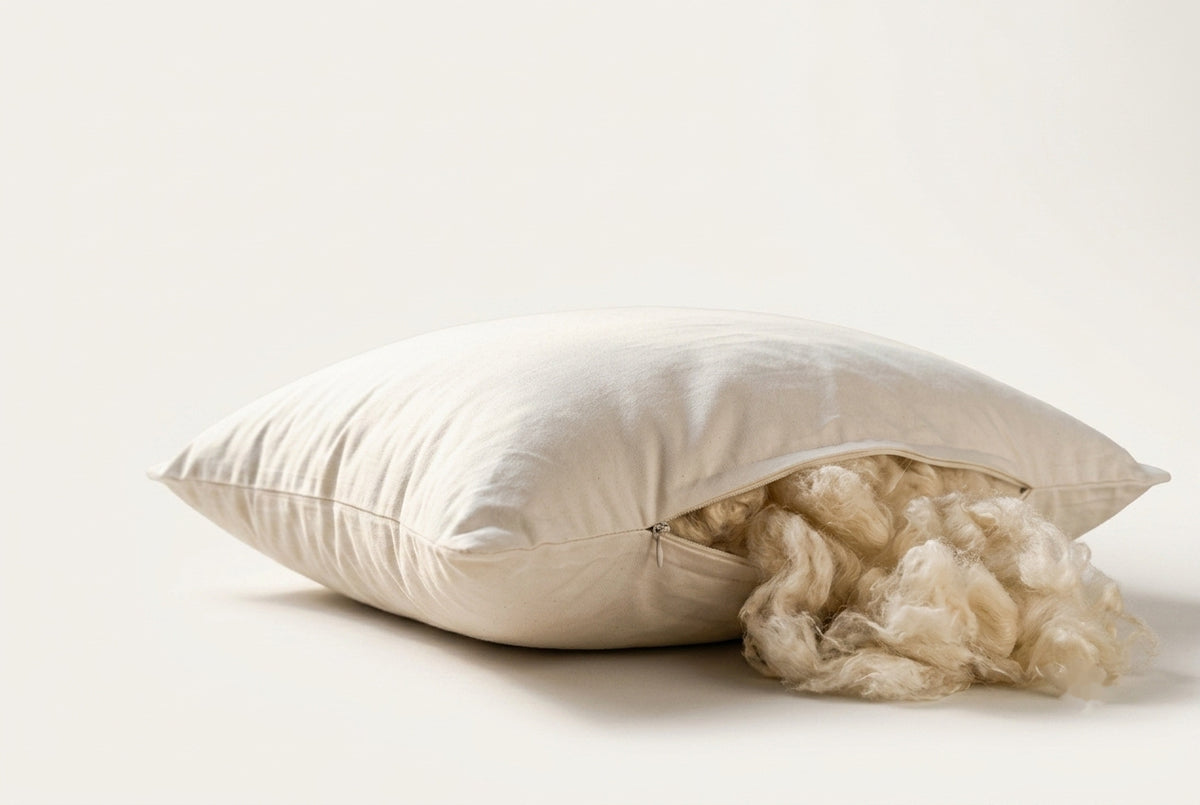
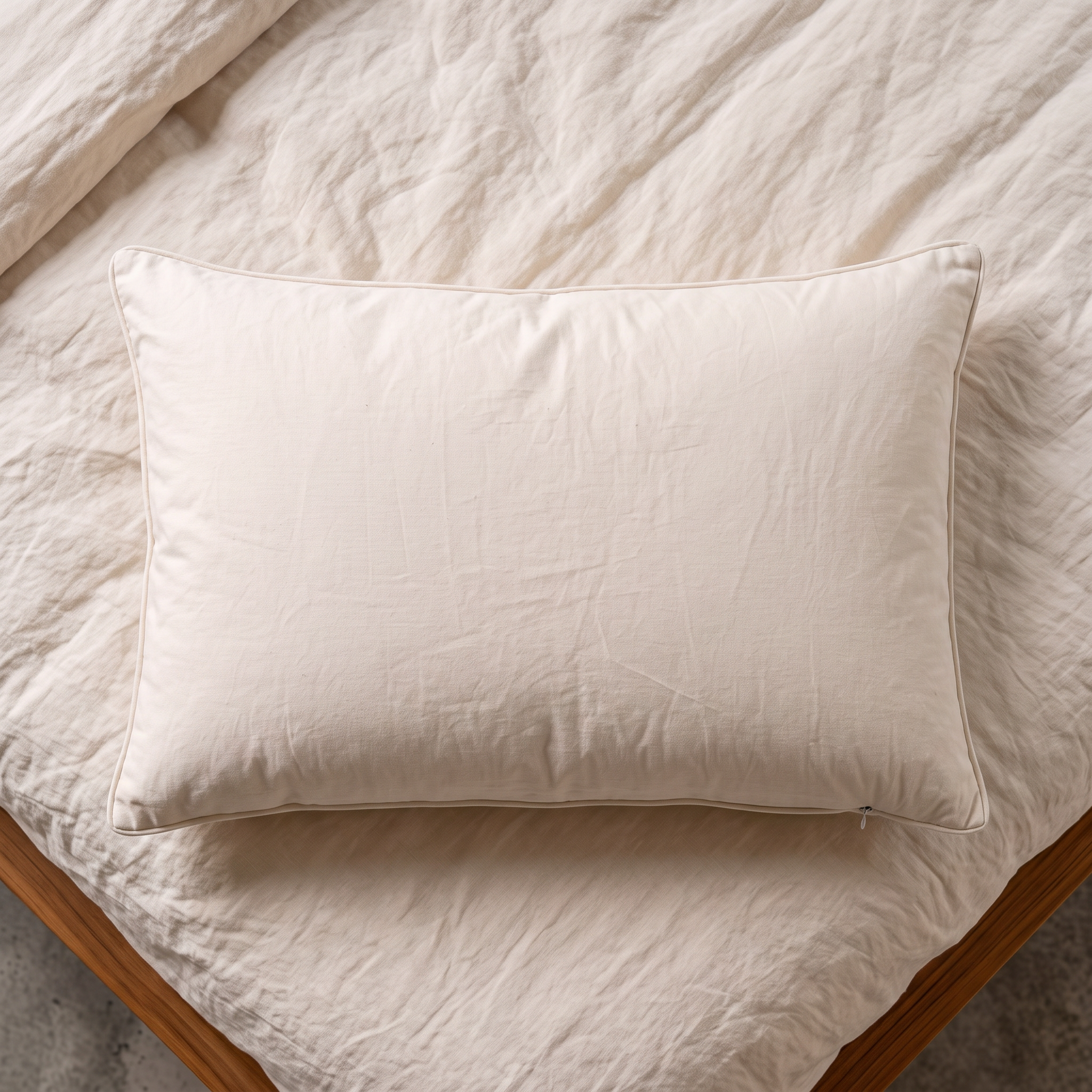
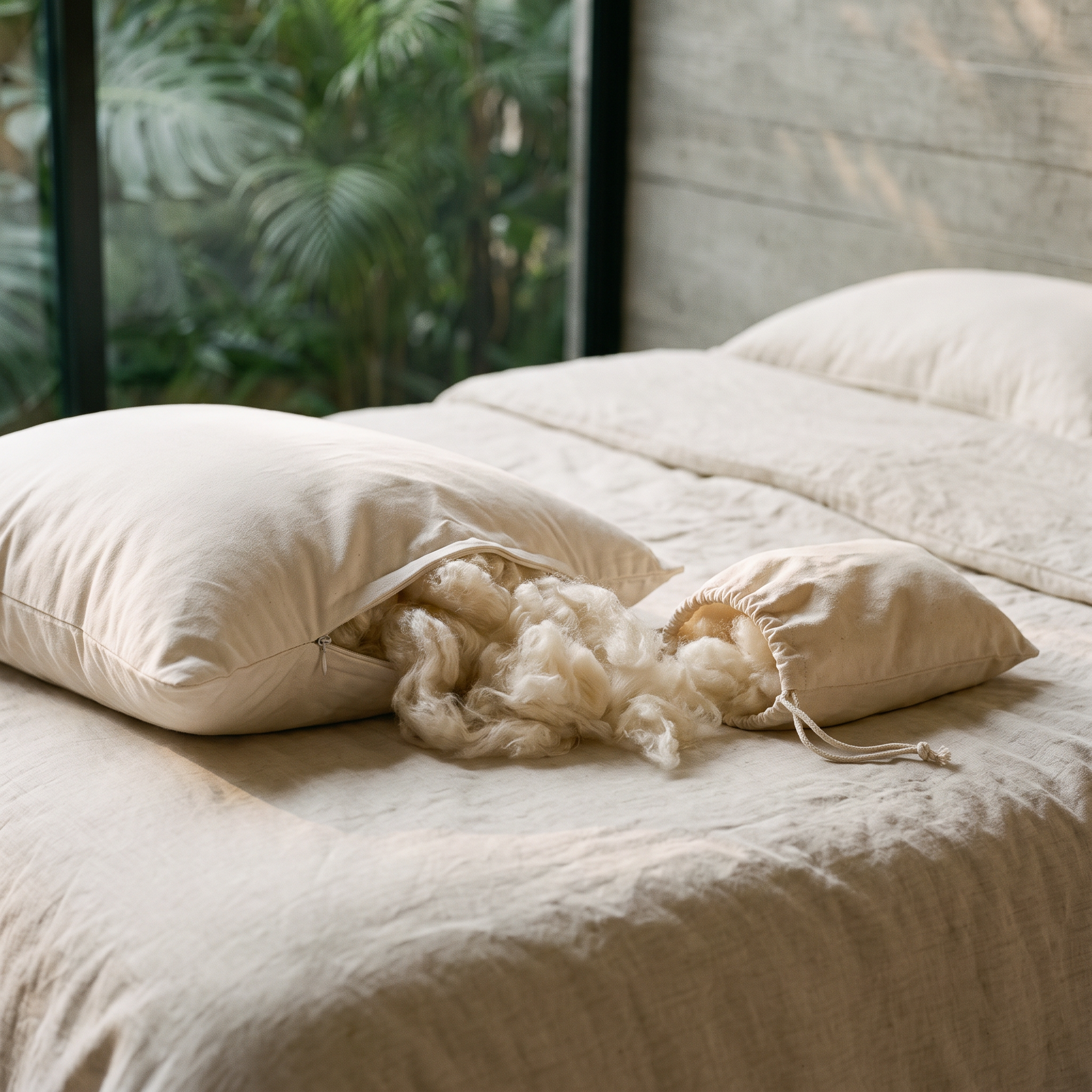
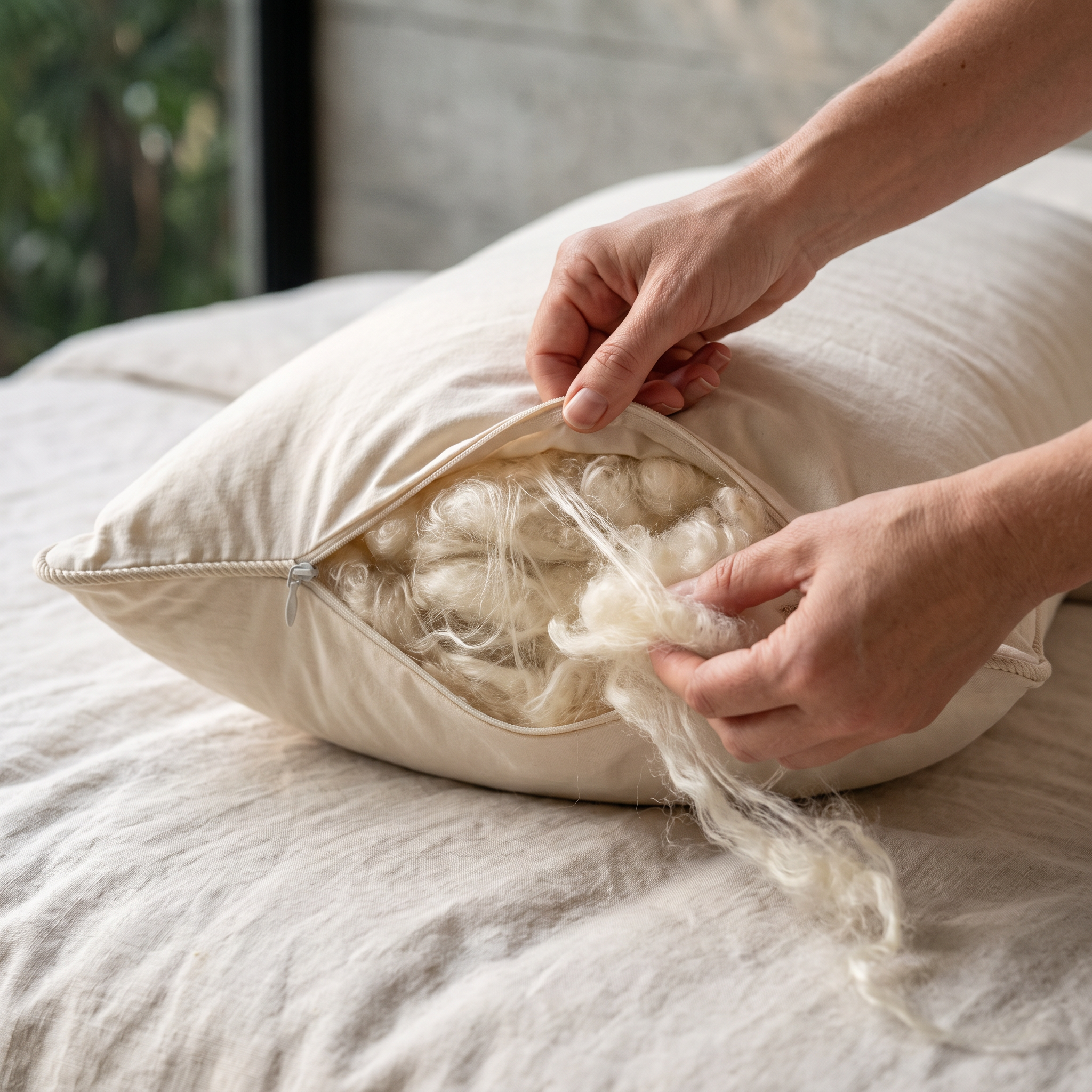
Your face spends all night on a pillow, so we wanted the smoothest cotton surface we could find. Both the MAREA shell and the outer cover use the same 300 thread count organic cotton sateen. Underneath, the kapok keeps the pillow light and airy.
If you're a committed percale sleeper, put a percale pillowcase over the cover and you get both: the sateen protecting underneath, the percale on top. I covered how those layers stack in Pillow Cover vs Pillowcase vs Protector.
Choosing sateen or percale sheets
The same weave differences carry across the rest of the bed. Choose the surface feel you enjoy, then check set contents, fitted sheet depth and the care label. Our coming soon organic cotton sateen sheet set includes a fitted sheet, flat sheet and matching pillowcases. Compare the listed dimensions with your mattress, including any topper. You can also explore the organic cotton bedding collection. If you're weighing organic against regular cotton for the whole bed, here's what actually changes, and here's why I made ours.
Care
Follow the care label for each fabric and product. The filled MAREA kapok pillow stays dry; the outer cover is the washable layer. See our care guide. For sheets, this is how I wash sateen so it gets softer instead of sadder.
Anthony
Founder, MAREA Sleep
If you find the Sleep Journal useful, you can add MAREA as a preferred source on Google. This is an optional preference for your own Google experience.






Leave a comment
This site is protected by hCaptcha and the hCaptcha Privacy Policy and Terms of Service apply.